
Decision 01 / Product basis
Potato Chips Production Line
Review the process, equipment duties and project boundary from one defined basis.
A line starts with the chip, not a nominal capacity.
Decision 01 / Product basis
Potato condition and finished-product requirements change preparation losses, slice handling, frying behavior and the downstream equipment duty.
This is a connected processing route, not a fixed machine package.
| Raw potato | Variety, size range, solids, soil load, storage condition and representative product images. |
|---|---|
| Finished chip | Slice geometry, color, texture, seasoning style, breakage tolerance and pack format. |
| Production plan | Required output, operating hours, product changes, cleaning window and upstream availability. |
| Factory boundary | Room dimensions, water and drainage, heating utility, extraction, controls and packaging interface. |
A potato chip line starts with the chip, not with a nominal capacity. Record the potato variety, the slice thickness, the target moisture and the finished colour and oil content, because those define the duty of every stage. A thick-cut kettle chip and a thin standard chip need different slicing, frying and cooling, and the line is built for the chip you are selling.
Then record the production pattern: the output, the number of formats and the changeover frequency. A line that makes one chip format for a full shift is simpler than one that changes thickness and flavour several times a day, and that difference changes the equipment as much as the chip itself.
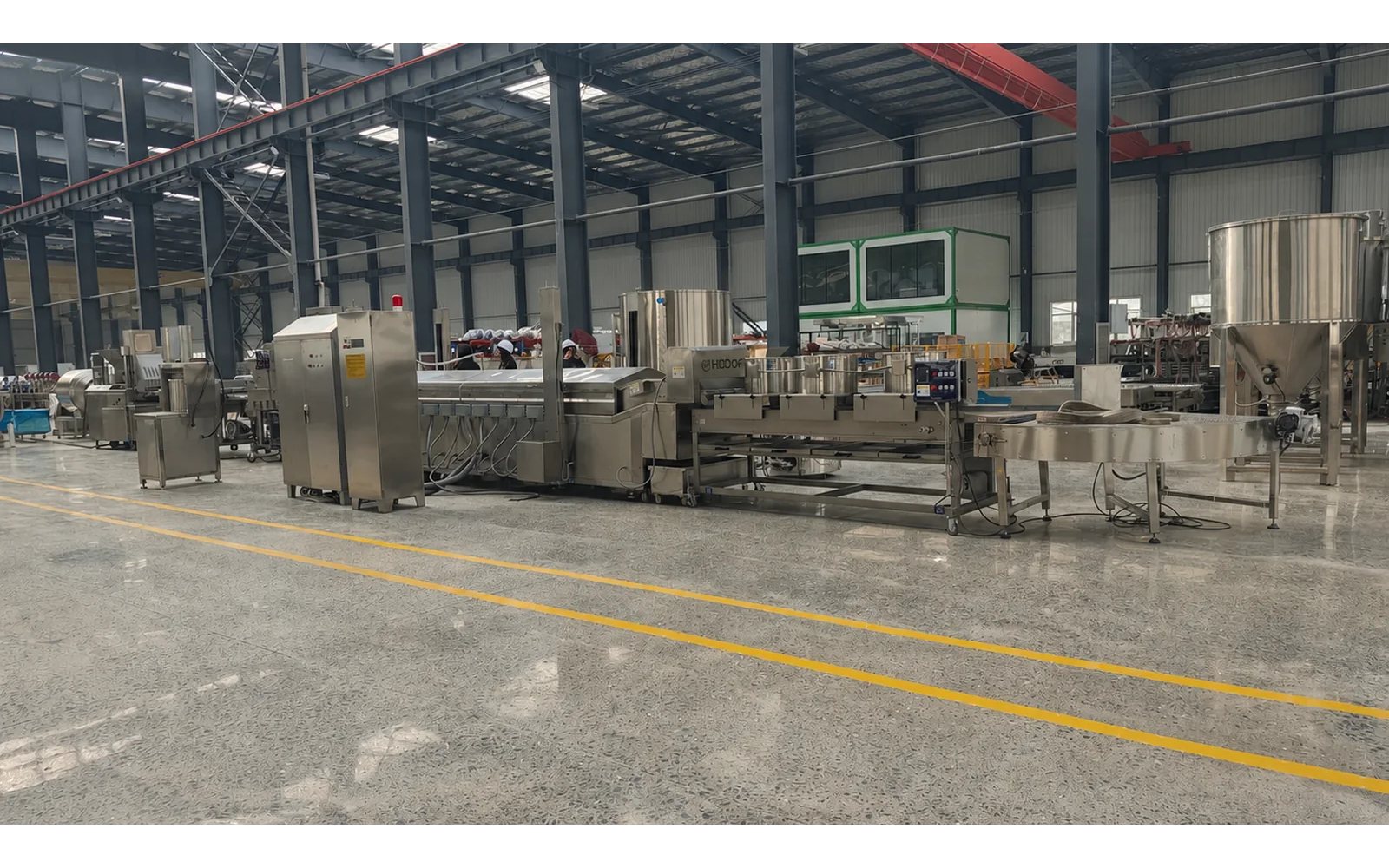
Inspect every handoff through the line.
Decision 02 / Process architecture
Select a stage to review its required input, output condition and supporting equipment duty.
Receive, inspect, wash and peel.
Prepare a consistent feed while making soil, peel, water and reject responsibilities visible.
- Declare incoming product and soil load.
- Confirm washing and peeling route.
- Define inspection and waste removal.
Create the agreed slice format.
Thickness distribution and damaged slices influence conditioning, residence behavior and finished-chip consistency.
- Record slice format and tolerance.
- Review feed orientation and loading.
- Inspect before the next wet stage.
Manage free starch and surface water.
The discharge condition from rinsing and dewatering becomes part of the fryer trial and loading basis.
- Define water contact and residence.
- Record surface condition at discharge.
- Control transfer time into frying.
Review frying and oil handling together.
Heating route, loading, residence time, circulation, filtration and cleaning form one system boundary.
- Compare electric and gas model values.
- Define oil-management responsibilities.
- Coordinate extraction and service access.
De-oil, inspect and season.
Protect fragile chips while controlling seasoning distribution and reject handling.
- Define de-oiling and transfer geometry.
- Confirm dosing and mixing responsibility.
- Review breakage-sensitive handoffs.
Cool and buffer without losing control.
Coordinate product condition, elevation, accumulation and signals with the buyer's weighing and packaging system.
- Set the discharge-condition review point.
- Confirm buffer and elevation changes.
- Record controls and signal ownership.
Inspect every handoff through the line, because the chip is fragile and every transfer can break it. From slicer to washer, washer to fryer, fryer to de-oiling, and de-oiling to seasoning and packing, each handoff must move the chip without crushing, scattering or holding it too long. The line's quality is created and lost at these transfers.
Test the handoffs with the real product at the production rate. A chip that survives a slow demonstration can shatter at full speed, and the only way to know is to run product through the actual transfers. The handoffs deserve the same engineering review as the fryer and the packer.
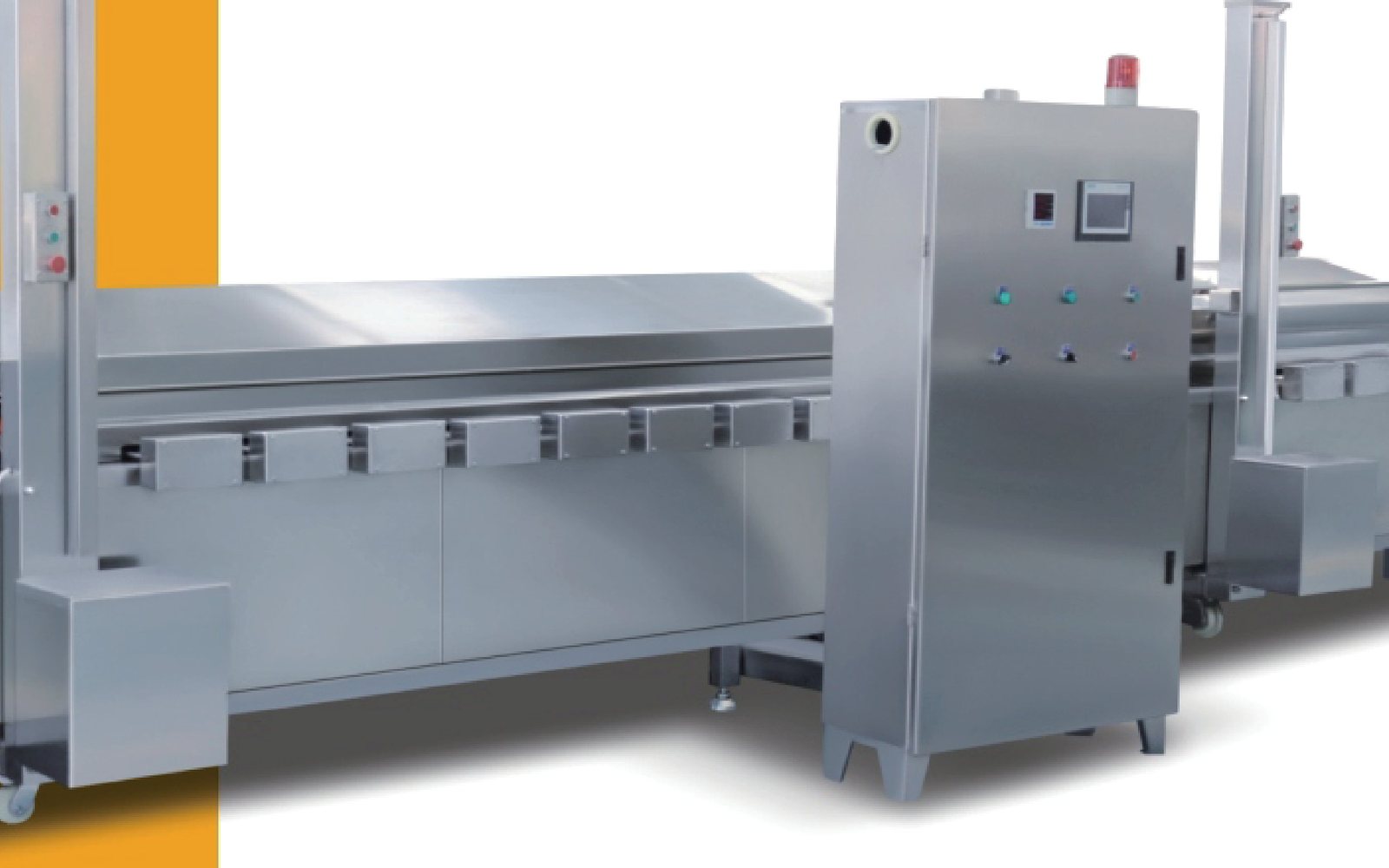
Four risks cross machine boundaries.
Decision 03 / Process control
These points should become review evidence rather than unsupported performance promises.
Slice loading
Surges and uneven distribution change the fryer duty.
Finished result
Color and texture depend on an agreed product basis.
Oil circuit
Circulation, filtration and cleaning must appear in scope.
Fragile transfer
Cooling, seasoning and elevations influence breakage.
Four risks cross the machine boundaries and must be managed as a system. The slice thickness variation, the surface moisture before frying, the fines in the oil and the moisture pickup after frying each start in one machine and affect another. Fixing them one at a time without the whole line in view simply moves the problem.
Assign each risk a control and a measurement. Cut uniformity is controlled at the slicer and measured on the line; surface moisture is removed by the drying stage; fines are controlled by oil filtration; moisture pickup is prevented by cooling and packing. When the four risks are named and measured, the line can be held to a result.
When the four risks are named and measured, the line can be held to a result instead of a hope.
Fixing them one at a time without the whole line in view simply moves the problem.
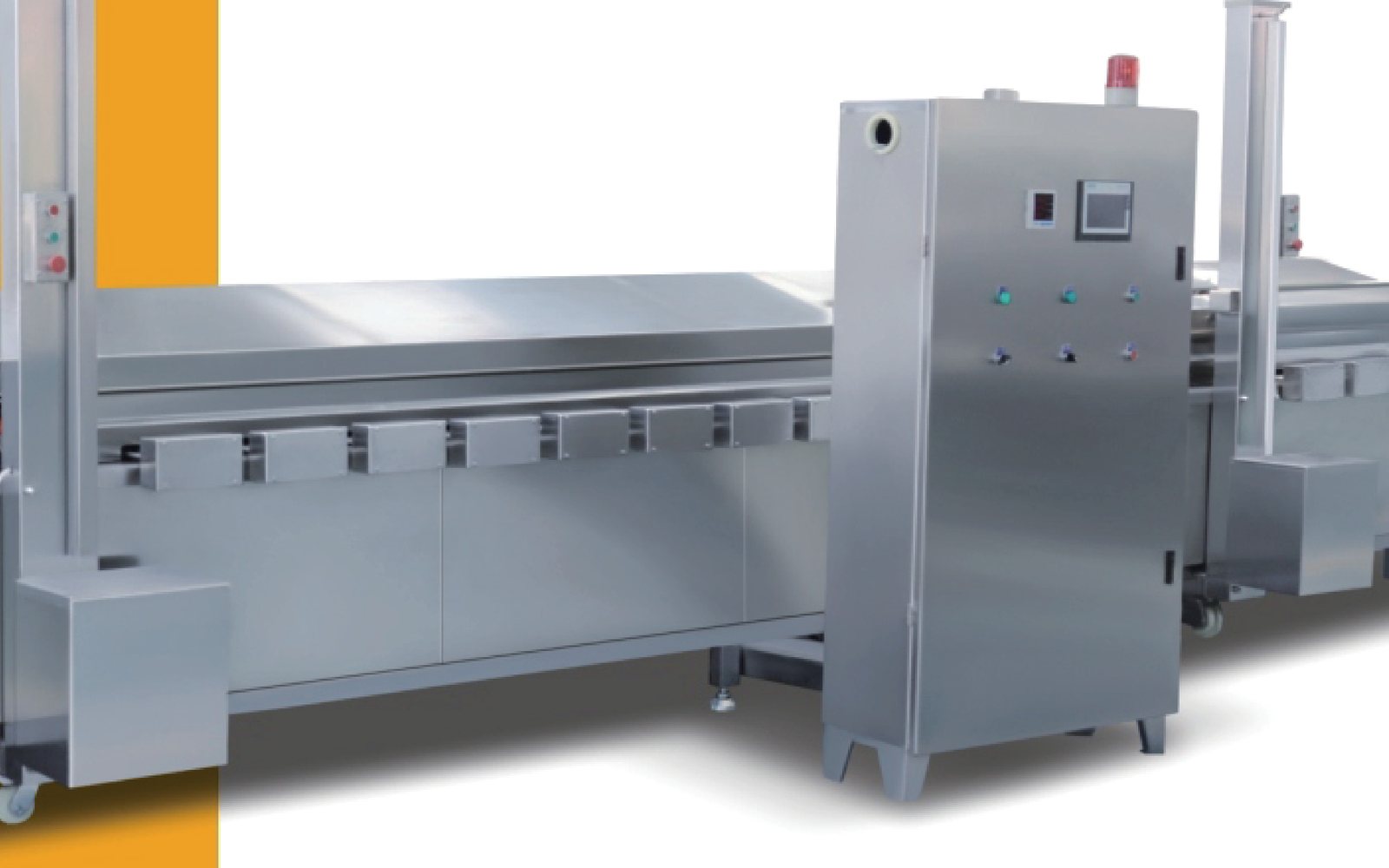
The fryer is selected inside the system.
Decision 04 / Equipment fit
The current catalog contains electric and gas references. Catalog output remains a reference until the potato, slice, feed and operating conditions are reviewed.
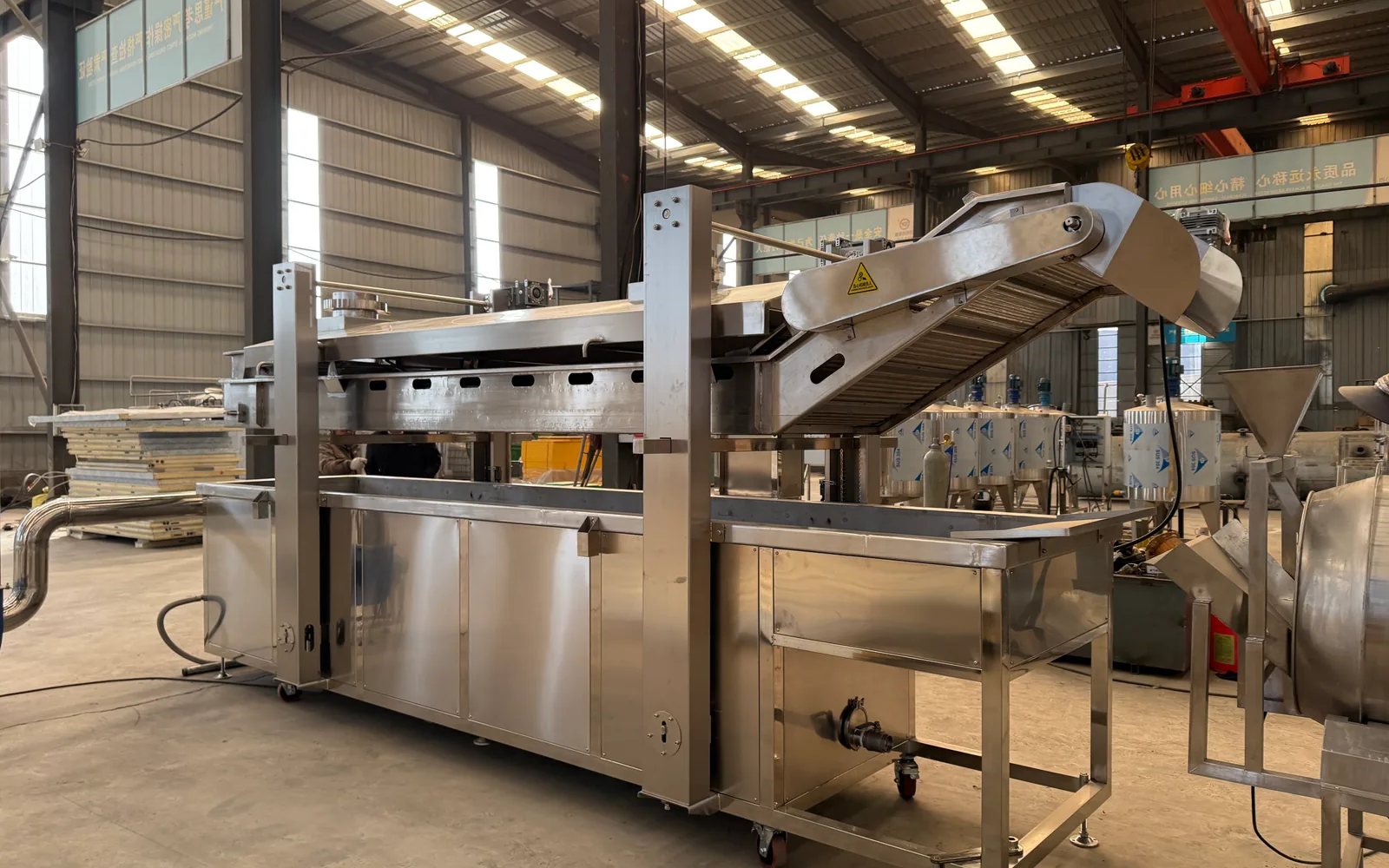
The fryer is selected inside the system, not in isolation. Its length, belt and oil volume depend on the chip thickness, the moisture the slice carries and the output the line must hold, and those depend on the stages before it. Selecting the fryer first forces the rest of the line to adapt to a machine that was chosen for the wrong reasons.
Then size the fryer against the system's thermal duty. Convert the output into belt loading and oil residence, and check the heat input against the moisture the slices release. The fryer that fits the system is the one whose belt, oil and heating can hold the duty the system creates.
The fryer that fits is the one whose belt, oil and heating can hold the duty the system creates.
Selecting the fryer first forces the rest of the line to adapt to a machine chosen for the wrong reasons.
Its length, belt and oil volume depend on the stages before and after it.
That is the only way the fryer and the line can hold the same duty.
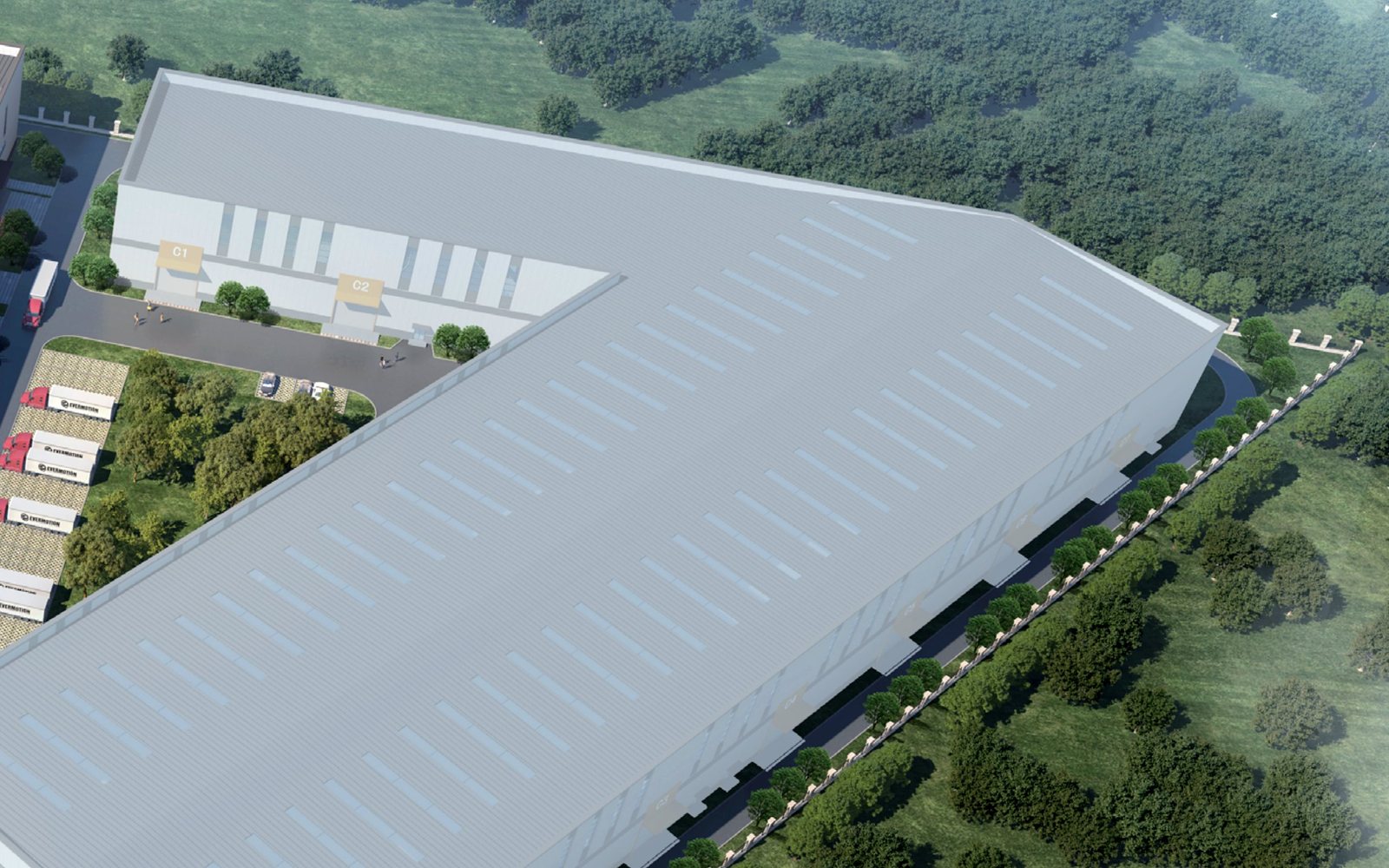
Plan product, people and utilities together.
Decision 05 / Factory fit
A footprint without access, drainage, extraction and downstream interfaces is not a complete layout basis.
Wet zone
Water, drainage, peel and waste removal, floor condition and separation from post-fry areas.
Thermal zone
Heating utility, extraction, oil handling, service access and project-party safety review.
Finishing zone
Seasoning, cooling, product protection and connection to weighing or packaging.
Service route
Maintenance clearances, component removal, electrical access and operator circulation.
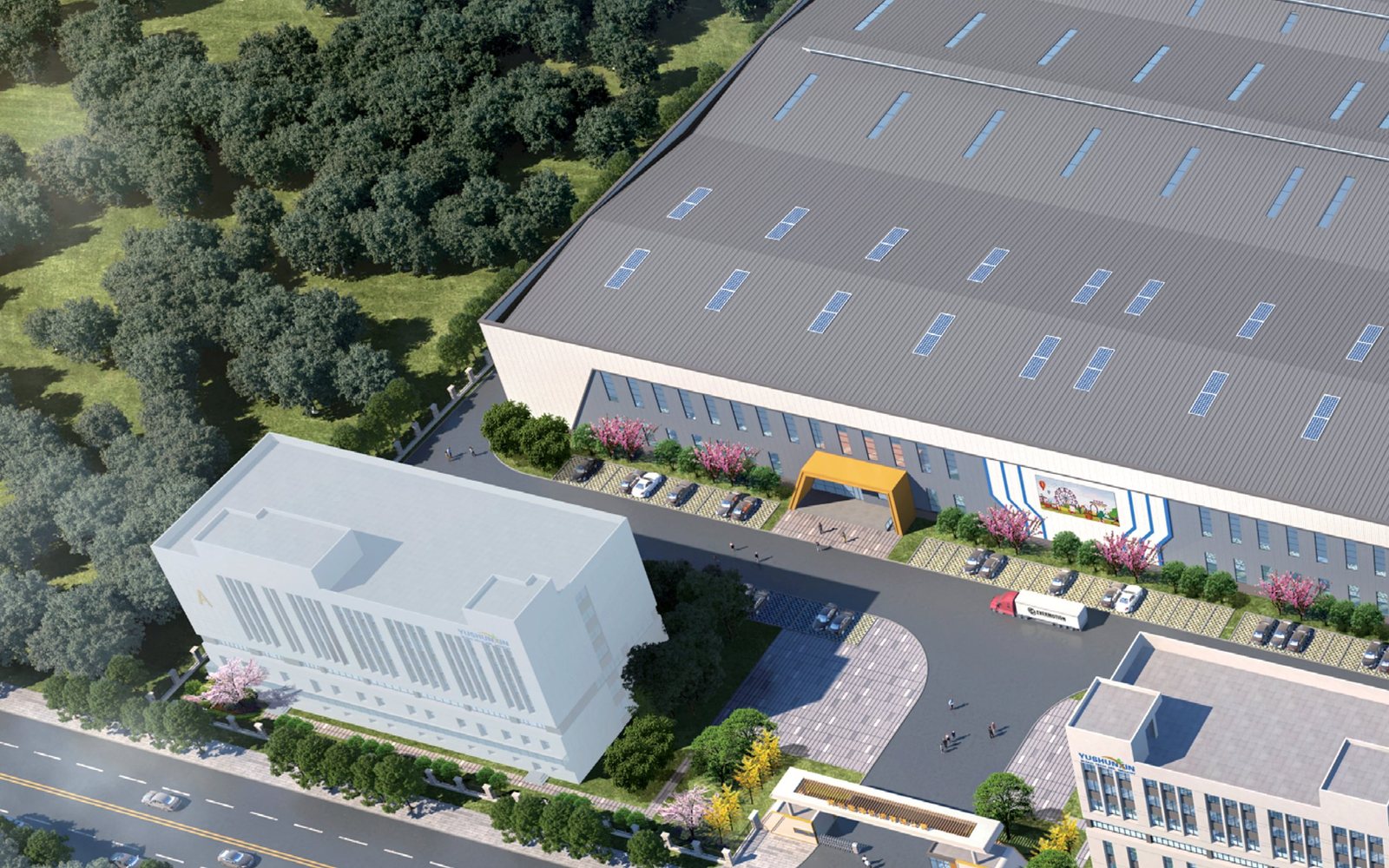
Plan the product, the people and the utilities together. The product flows through the line, the operators run it and clean it, and the steam, water, air and power keep it running. Each flow has its own requirement, and the line works when all three are planned as one layout rather than three separate decisions.
Confirm the utilities before the layout is frozen. A chip line needs water for washing, heat for frying, air for drying and cooling, and drainage for cleaning, and a shortfall in any one of them slows the line. The people need access to every stage for inspection and cleaning, so their routes are part of the same plan.
When all three are planned as one layout, the line keeps running instead of waiting on a missing service.
Freeze the project in evidence-backed stages.
Decision 06 / Implementation path
Each stage closes a different uncertainty before the project moves into the next commitment.
A change in potato, slice, output, utility, layout or packaging after scope approval must be reviewed against equipment duty and interfaces.
| 1. Requirement definition | Approve the product basis, finished criteria, output, schedule, destination and open inputs. |
|---|---|
| 2. Process and trial basis | Confirm stages, samples, inspection method, expected records and limits of available testing. |
| 3. Configuration and layout | Freeze equipment duties, transfers, utilities, controls, service access, documents and exclusions. |
| 4. Manufacturing and FAT | Use the approved inspection and factory-test plan, with named responsibilities and sign-off evidence. |
| 5. Packing and site handoff | Confirm shipping boundary, installation inputs, commissioning support and site acceptance responsibility. |
Freeze the project in evidence-backed stages rather than all at once. Approve the product basis first, then the line configuration, then the trial result, and only then the final scope. Each stage produces evidence that the next stage builds on, so a change early in the project is caught before it becomes expensive rework.
Record the evidence at every stage and keep it with the project. The product specification, the configuration decisions, the trial data and the acceptance criteria are the record that supports the final purchase. When the stages are evidence-backed, the project can be defended to a buyer, an auditor or a colleague.
Turn claims into acceptance records.
Decision 07 / Verification
Product results are verified against a named test basis.
Freeze the test basis
Identify potato specification, slice format, feed condition and run duration.
Define inspection
Agree how color, texture, breakage and other outcomes are assessed.
Confirm scope
List stages, transfers, utilities, signals, documents and exclusions.
Record open items
Track each unresolved value with an owner and required evidence until technical closure.
Turn the claims into acceptance records before the line is handed over. Every promised output, moisture, oil content and colour should be written as a measurement that can be checked at the factory and again on site. A claim without a measurement is an opinion, and an opinion cannot be accepted or rejected.
Run the same test at the factory and at the site, and compare the records. When the acceptance test repeats the trial conditions, the buyer gets evidence the line performs, and the supplier gets a clear definition of success. The acceptance record is the document that closes the project, and it should be written before the order is placed.
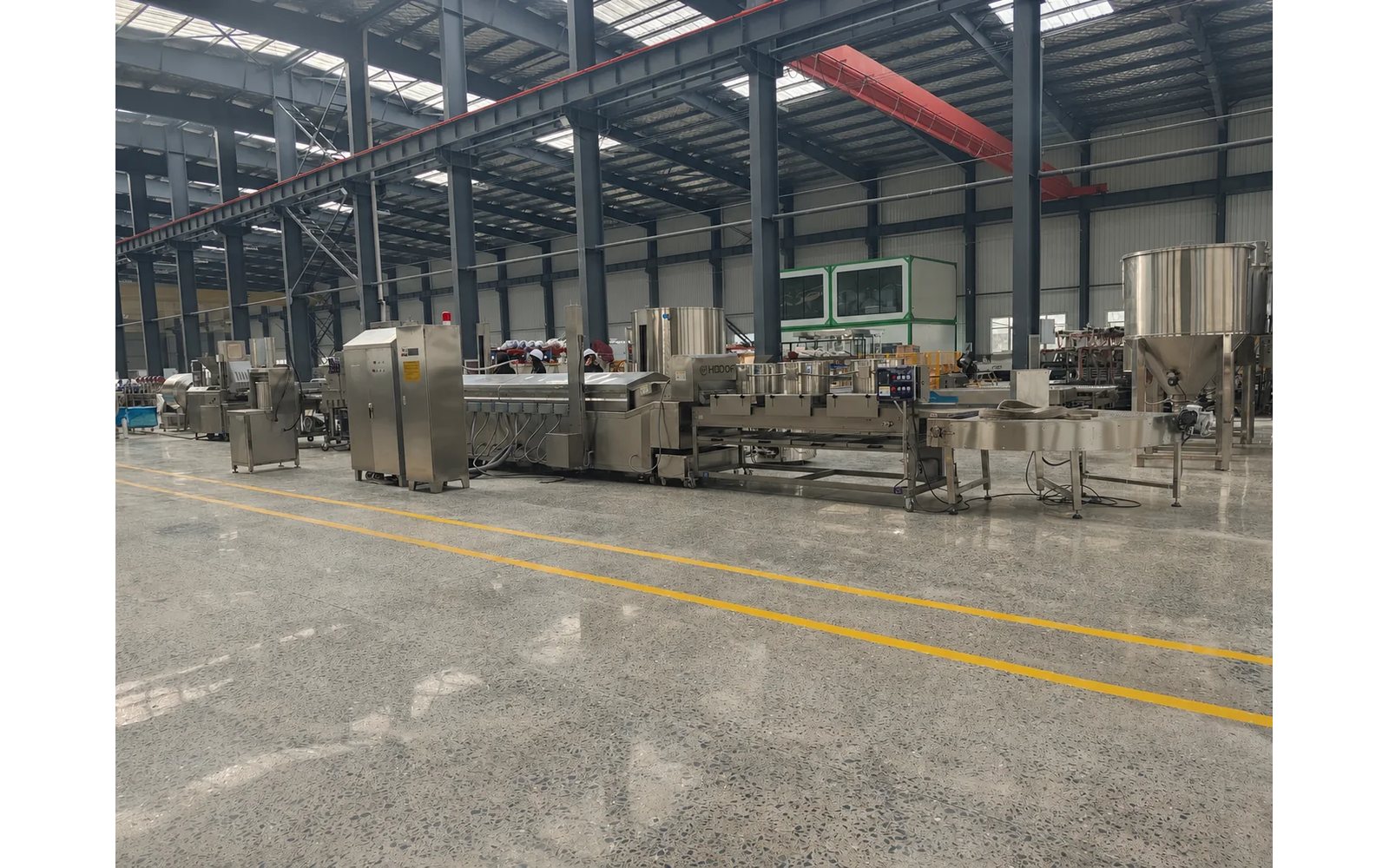
Keep the acceptance record beside the test basis for the life of the project. When a claim is later questioned, the record shows the potato, the slice, the run length and the measured result that supported it, so the answer is evidence rather than memory.
Evidence, equipment and preparation tools.
Continuous Fryer
Compare heating routes, model references and factory interfaces.
Potato Line Stability
Trace variation across preparation, frying and finishing.
Project Brief
Prepare the inputs needed for a technical configuration review.
Frequently asked questions
What information is required to configure a potato chips line?
Why is nominal capacity not enough to select the line?
How are electric and gas fryer options reviewed?
What should be agreed before acceptance testing?
Use this page together with the equipment and preparation tools it links to. The fryer reference covers the heating and oil route, the stability note covers diagnosis, and the project brief collects the inputs the technical team needs before a configuration is proposed.
Related pages
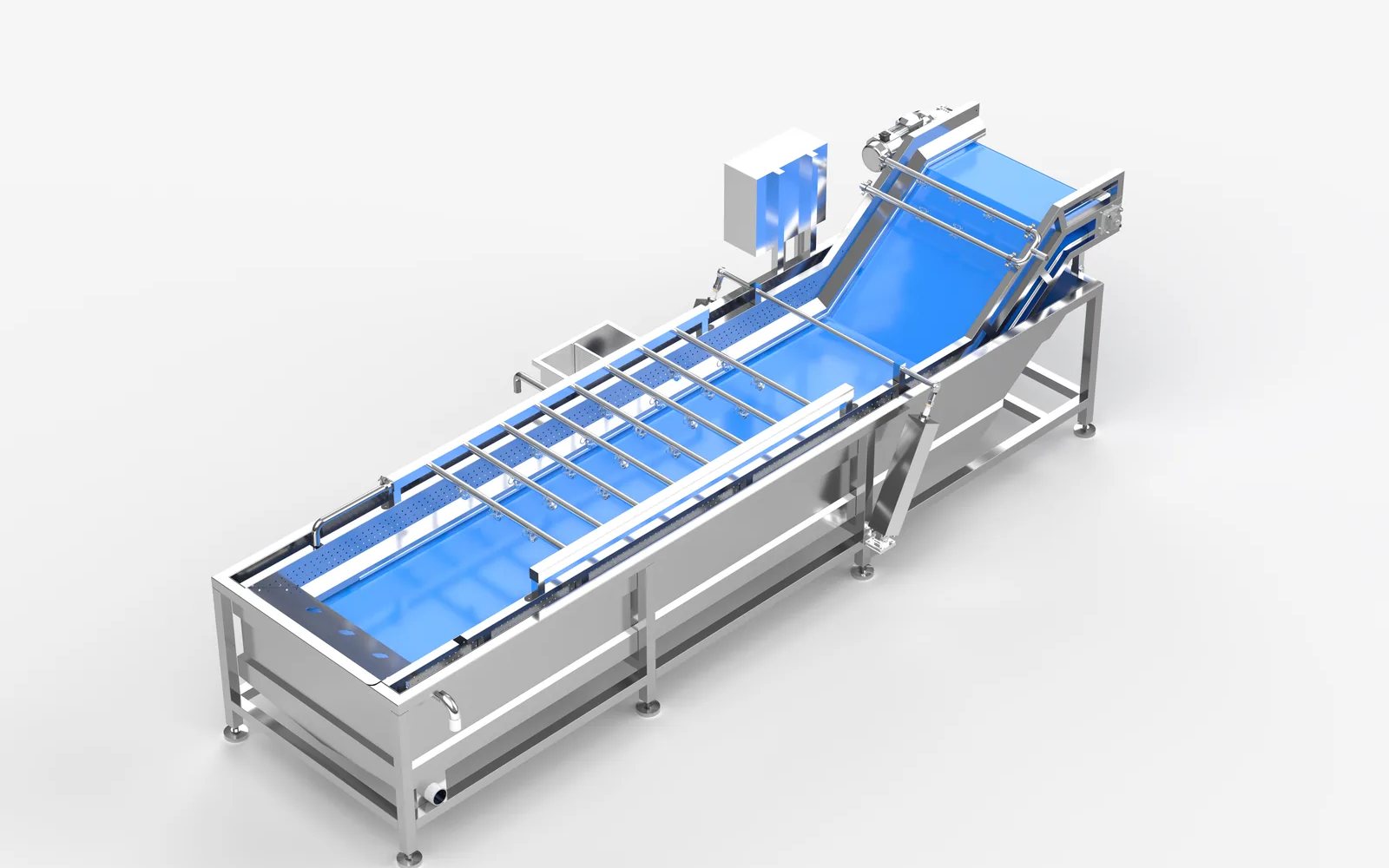
Vegetable Washing Equipment
Compare verified Hadof washer references, washing mechanisms, product risks, line interfaces, test evidence and project configuration inputs.
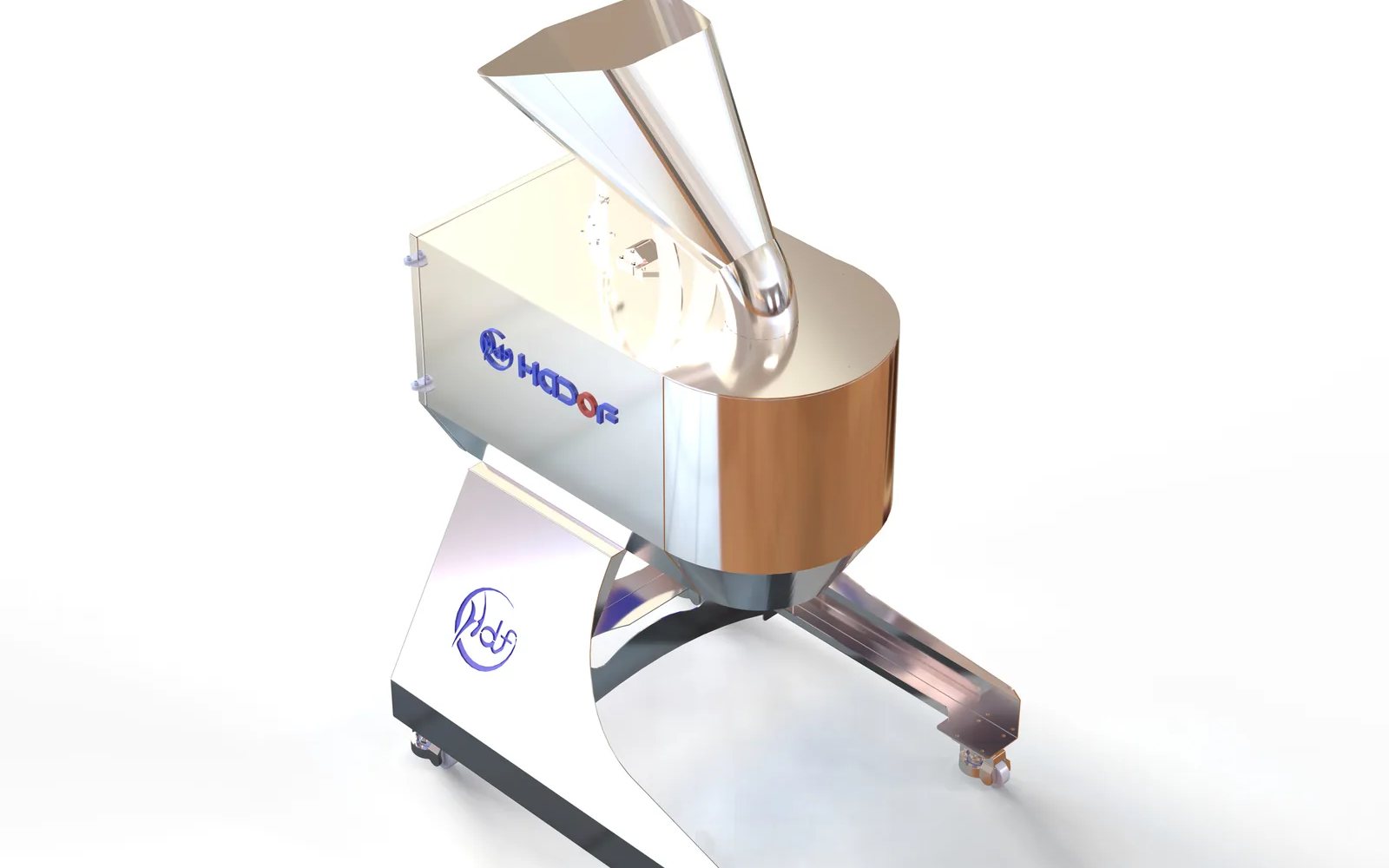
Vegetable Cutting Machine
Compare verified Hadof vegetable cutter references by crop, finished geometry, tooling, output, line handoff and acceptance requirements.
Continuous Fryer
Compare verified Hadof continuous fryer references, then review product loading, heating route, oil handling, factory interfaces and acceptance scope.
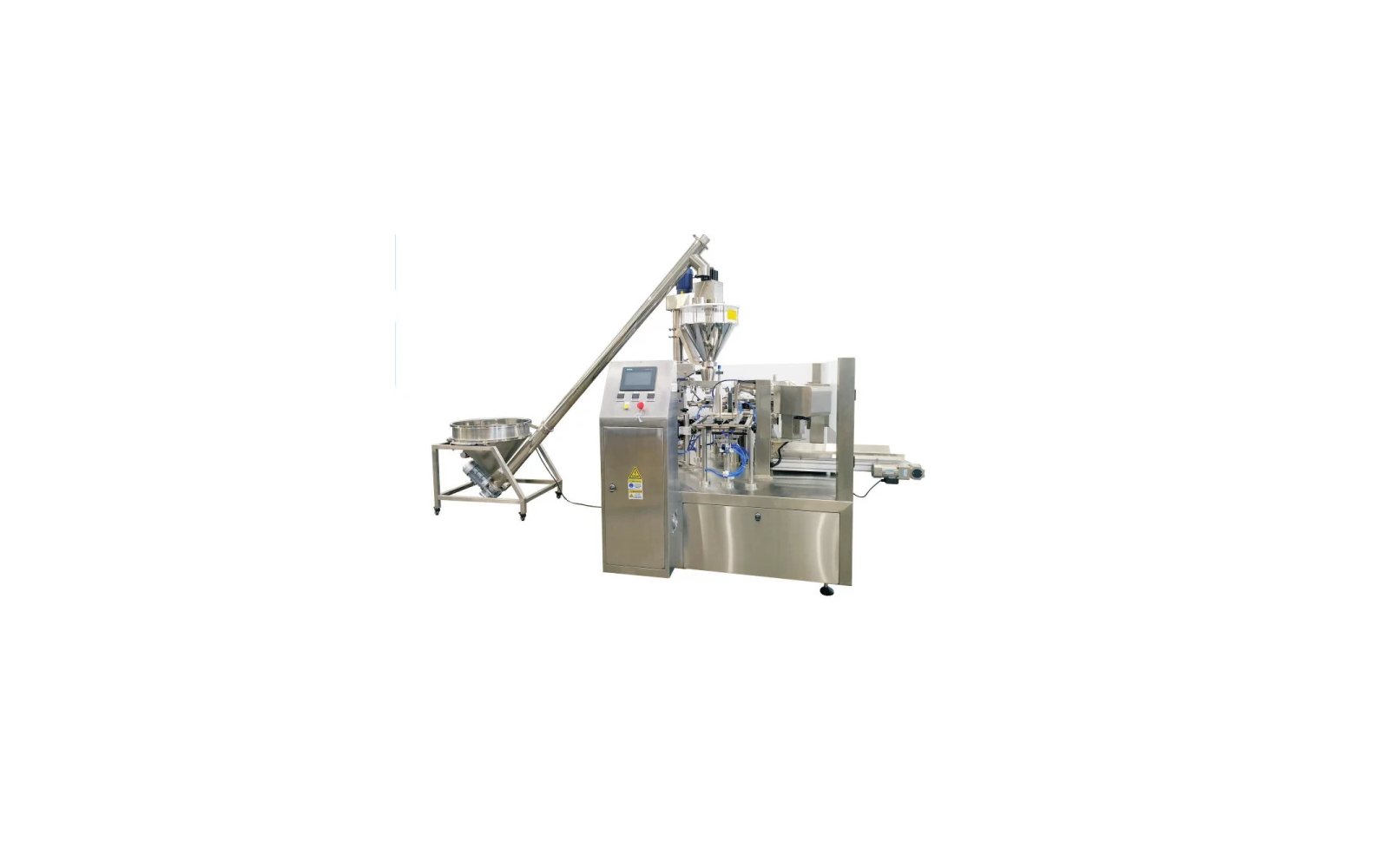
Premade Pouch Packaging Machines
Compare HDF premade pouch machines for powder and granules by bag size, dose, speed, accuracy reference, power, air and metering configuration.
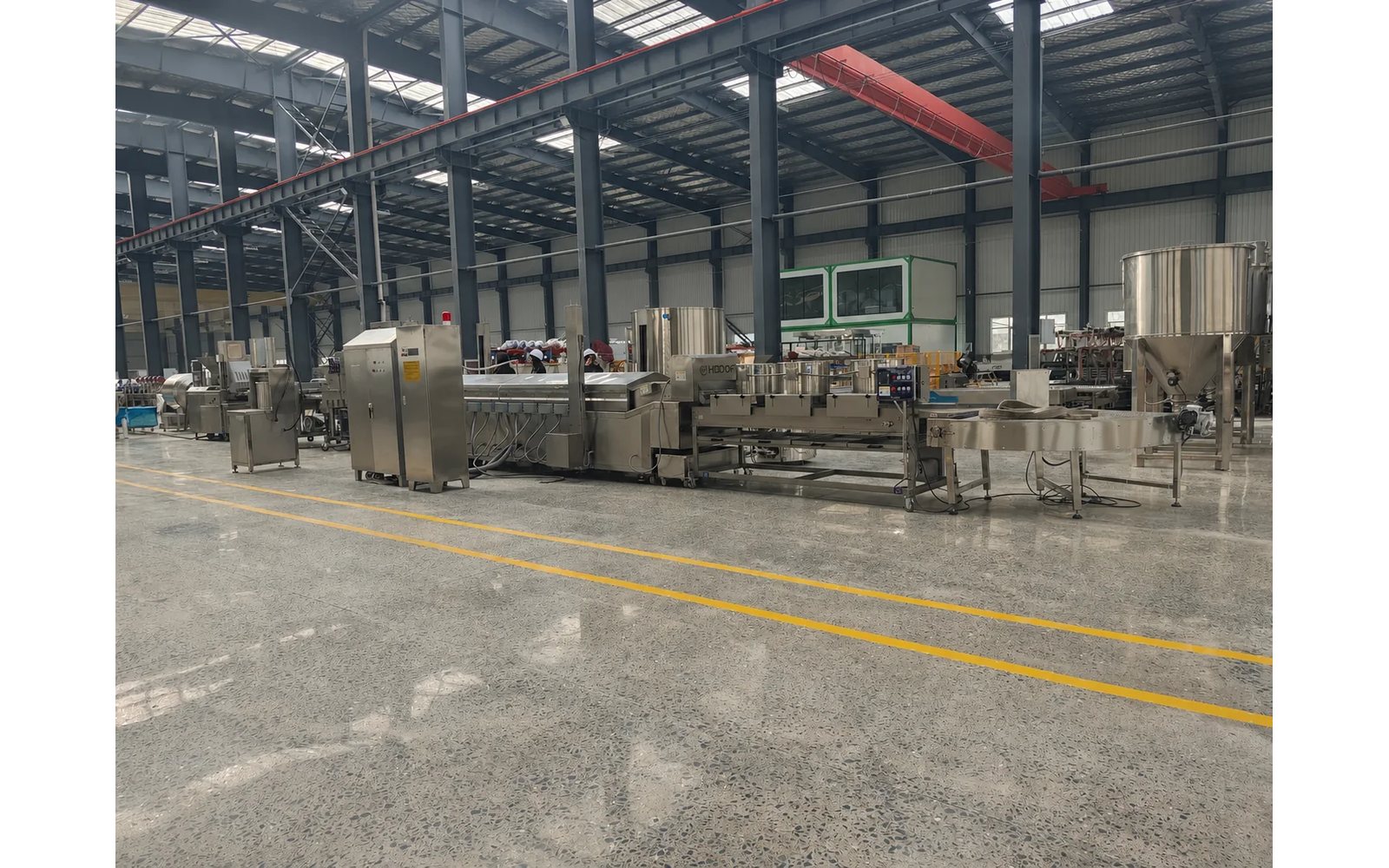
Potato Snack Line Stability Review
Trace potato chip variation across raw material, slicing, surface condition, frying, oil handling, finishing, testing and acceptance records.
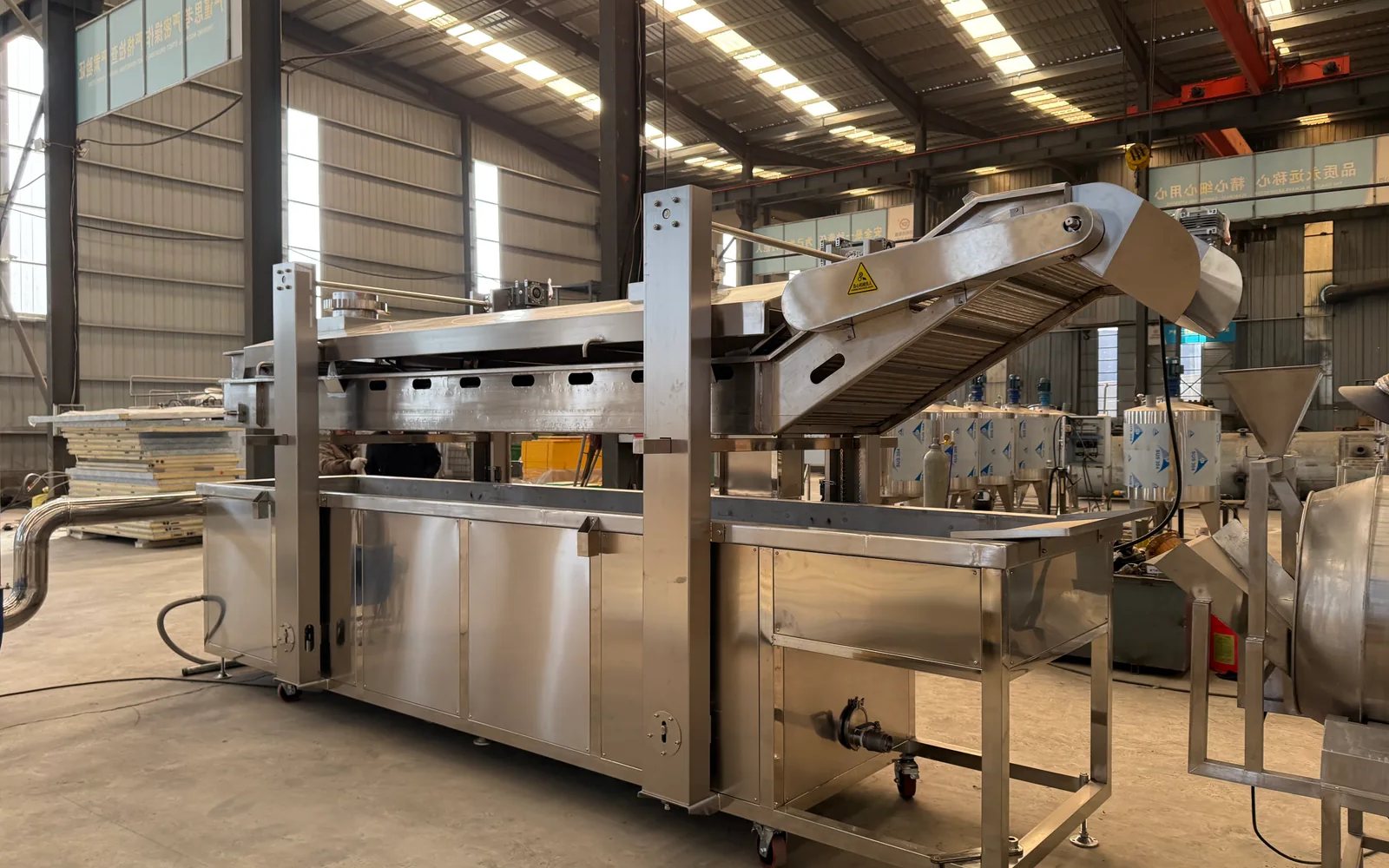
Continuous Fryer Selection Engineering
Understand how product condition, loading, heating route, oil management, factory interfaces and acceptance criteria drive continuous fryer selection.