
Vegetable Washing Equipment
Review the process, equipment duties and project boundary from one defined basis.
- 500 / 600 / 1500-2000Published output references
- 2.25 / 2.25 / 5.2Published power references
Match the Washing Mechanism to the Food
Switch product routes to review the handling risk, required evidence and connected duties. The selected route remains subject to sample and site review.
Control soil removal, impact and peel handling.
Protect fragile leaves while controlling flotation and carryover.
Balance surface cleaning with controlled product travel.
Review water contact, retention and downstream hygiene together.
Catalog-backed model references
Match the washing mechanism to the food rather than buying a generic washer. Record the product, its surface, its fragility and the soil it carries: field dirt, sand, pesticide residue, leaf fragments or surface starch. A root vegetable with heavy soil needs a different action from a delicate leafy green, and a machine that scrubs the first will bruise the second.
Then decide what the washing must remove and what it must preserve. Washing can remove soil, reduce microbial load or cool the product, and each objective changes the water action, the residence time and the water treatment. State the target condition after washing so the mechanism, whether bubble, spray, drum or brush, can be chosen to reach that condition without damaging the food.
State the microbial or visual result you must achieve, so the washing action is chosen against a target rather than against a vague idea of cleanliness.
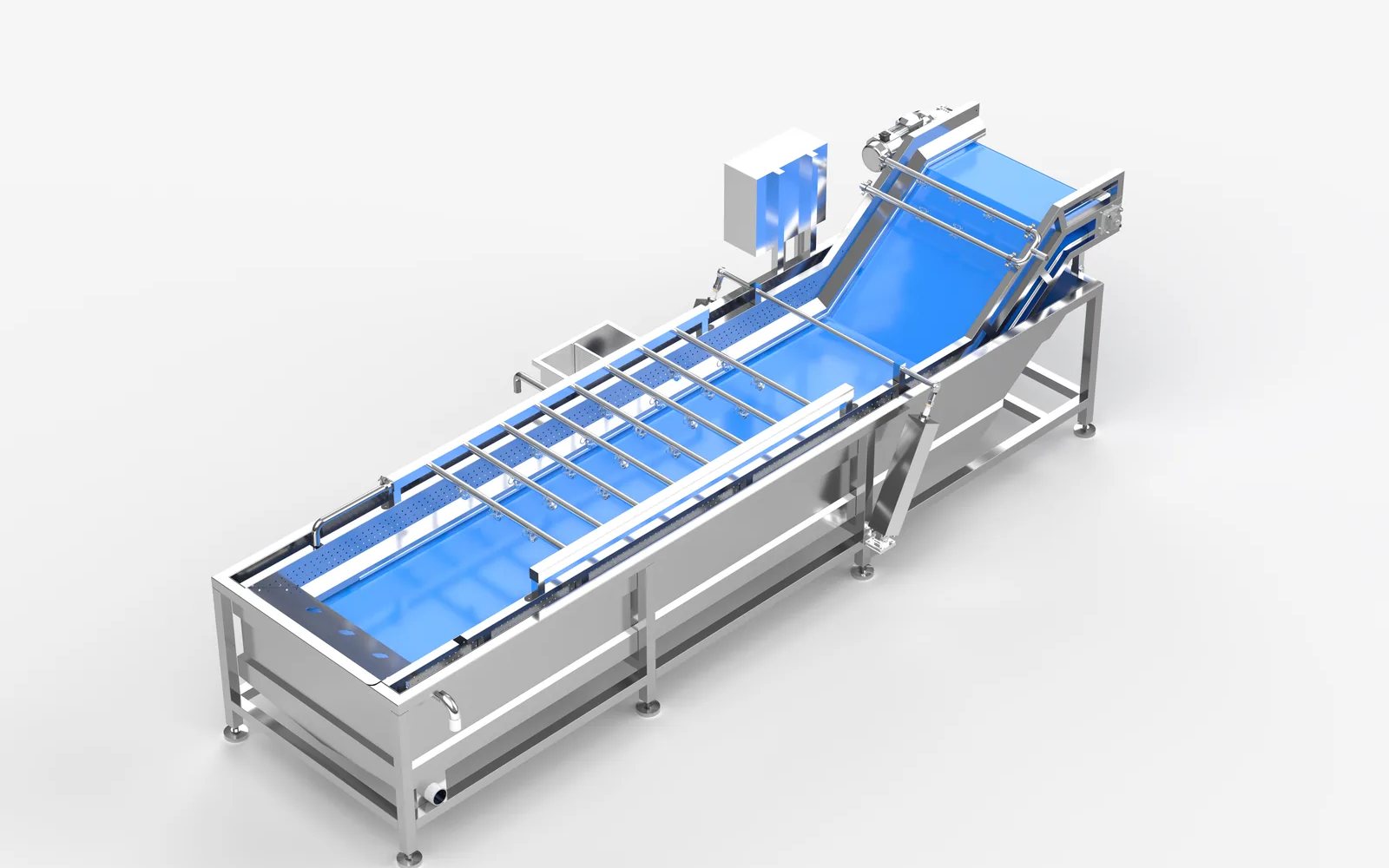
Compare the Published Starting Points as Modules
Values below are current model values, not product-independent guarantees. Final model, actual output and configuration are confirmed against the selected food and wash result.
W600-2.5M
Dimensions / weight2500 x 1200 x 1300 mm / 250 kg
Selection gateProduct, soil load and required result
Project consequenceConfirm water renewal, residence and discharge elevation
W600-3M
Dimensions / weight3000 x 1200 x 1300 mm / 300 kg
Selection gateResidence, water condition and transfer
Project consequenceReview footprint, inspection position and downstream drainage
B600-6M
Dimensions / weight6000 x 1200 x 1300 mm / 600 kg
Selection gateProduct loading, water and line balance
Project consequenceValidate feed distribution, utilities and connected-stage capacity
Read the published models as modules that can be combined, not as finished answers. Each reference row describes a starting configuration of washing action, belt or drum, and water system, and it must be reconciled with your product and soil load. The same model that washes firm potatoes may be wrong for soft berries, even if the capacity figure looks right.
Compare the modules on one product basis. State the product, the inlet condition, the required outlet condition and the hourly throughput, then ask what each configuration does to reach that result. Include the water consumption, the filtration and the discharge condition in the comparison, because two washers with the same capacity can use very different amounts of water and leave very different product.
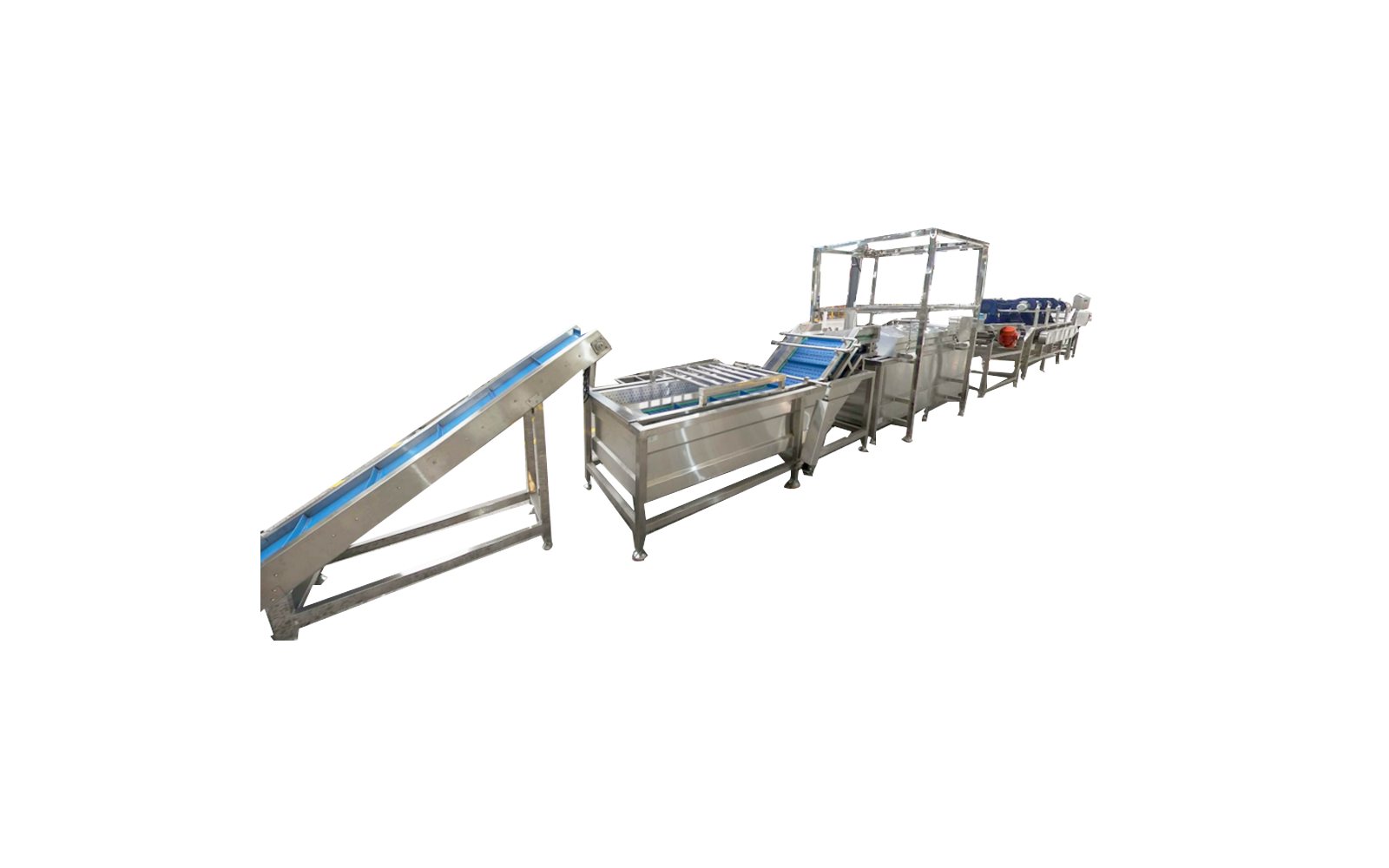
Assign One Clear Duty to Each Washing Stage
A line may use one mechanism or several stages. The selection changes with product density, surface, soil attachment, fragility and the discharge condition required by the next process.
Separate and suspend loose contamination
Review buoyancy, agitation intensity, product retention and water renewal with representative material.
Apply directed surface rinsing
Review pressure, coverage, nozzle access, overspray and the risk of driving contamination into recesses.
Increase controlled surface contact
Review roller material, contact intensity, product geometry, peel sensitivity and the reject or waste route.
Protect the result after washing
Define visual inspection, reject handling, surface-water removal, transfer height and the acceptable next-stage feed state.
Give each washing stage one clear duty instead of expecting one machine to do everything. A first stage may remove heavy soil and stones, a second may wash the surface, and a third may rinse with treated water. Splitting the duties this way lets each stage be sized and controlled for its own job, and it avoids the common failure of one overloaded washer that neither removes the soil nor protects the product.
Then connect the stages with the water flow in mind. Use counter-current water where clean rinse water flows back toward the dirtier first stage, reducing water use while improving the final rinse. Record what each stage removes and what it passes on, so the washer is designed as a sequence with a measurable handoff at every step rather than a black box labelled washing.
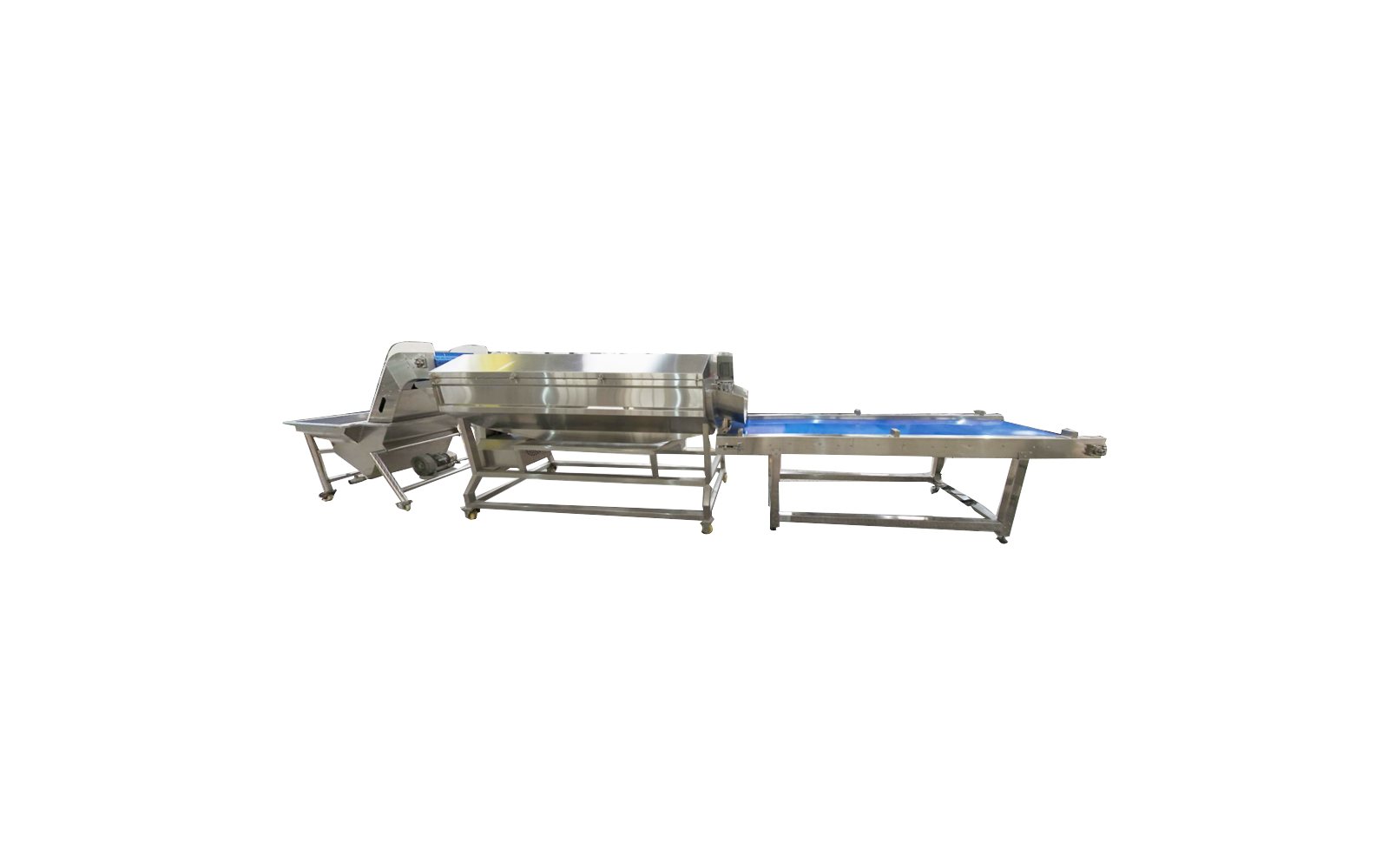
A Washer Must Hand Off a Defined Product Condition
The mechanical selection is incomplete until the upstream feed, water loop, inspection and downstream transfer responsibilities are visible.
- 01ReceiveProduct and soil condition
- 02InspectForeign matter and reject route
- 03WashDefined cleaning duty
- 04RinseWater and carryover basis
- 05DrainSurface-water condition
- 06TransferNext-stage feed requirement
A washer is only successful if it hands off a defined product condition. Specify the surface water, the residual soil or microbial load, and the product temperature at discharge, because the next stage, whether cutting, cooking or freezing, is designed for a particular input. A washer that leaves too much surface water will overload the dryer or freeze the product into a block.
Agree how the outlet condition will be measured. Surface water can be checked by weight gain or a squeeze test, soil removal by visual inspection or a rinse test, and temperature with a probe. Without an agreed measure, the washer has no target to meet and the argument about whether it washed well enough becomes a matter of opinion instead of evidence.
Agree how surface water and residual soil are measured, because the next stage is designed for a particular input and the washer must hand over that input, not an approximation of it.
Measure the surface water and the residual soil the same way on every run, so the handoff is a target the next stage can trust.
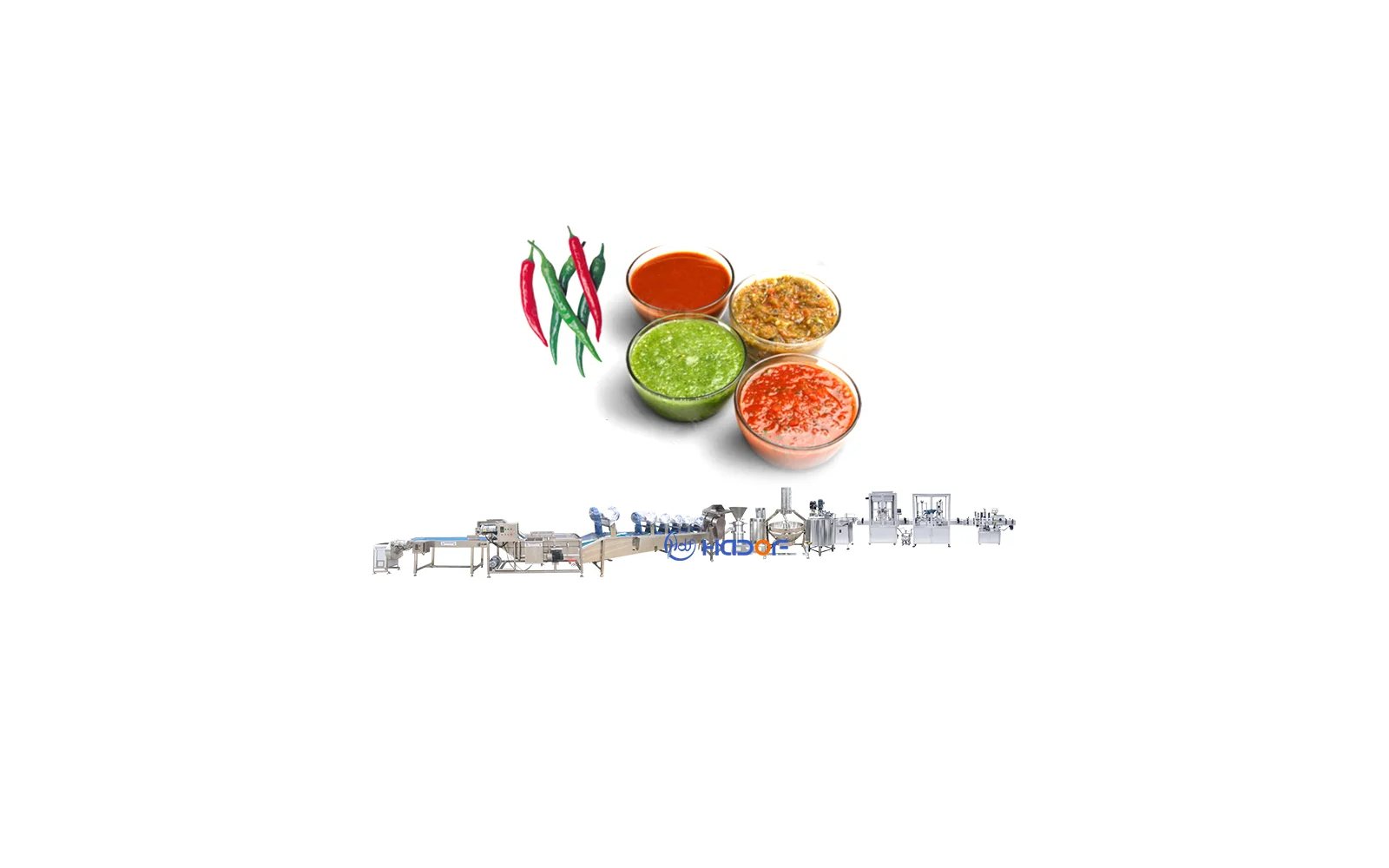
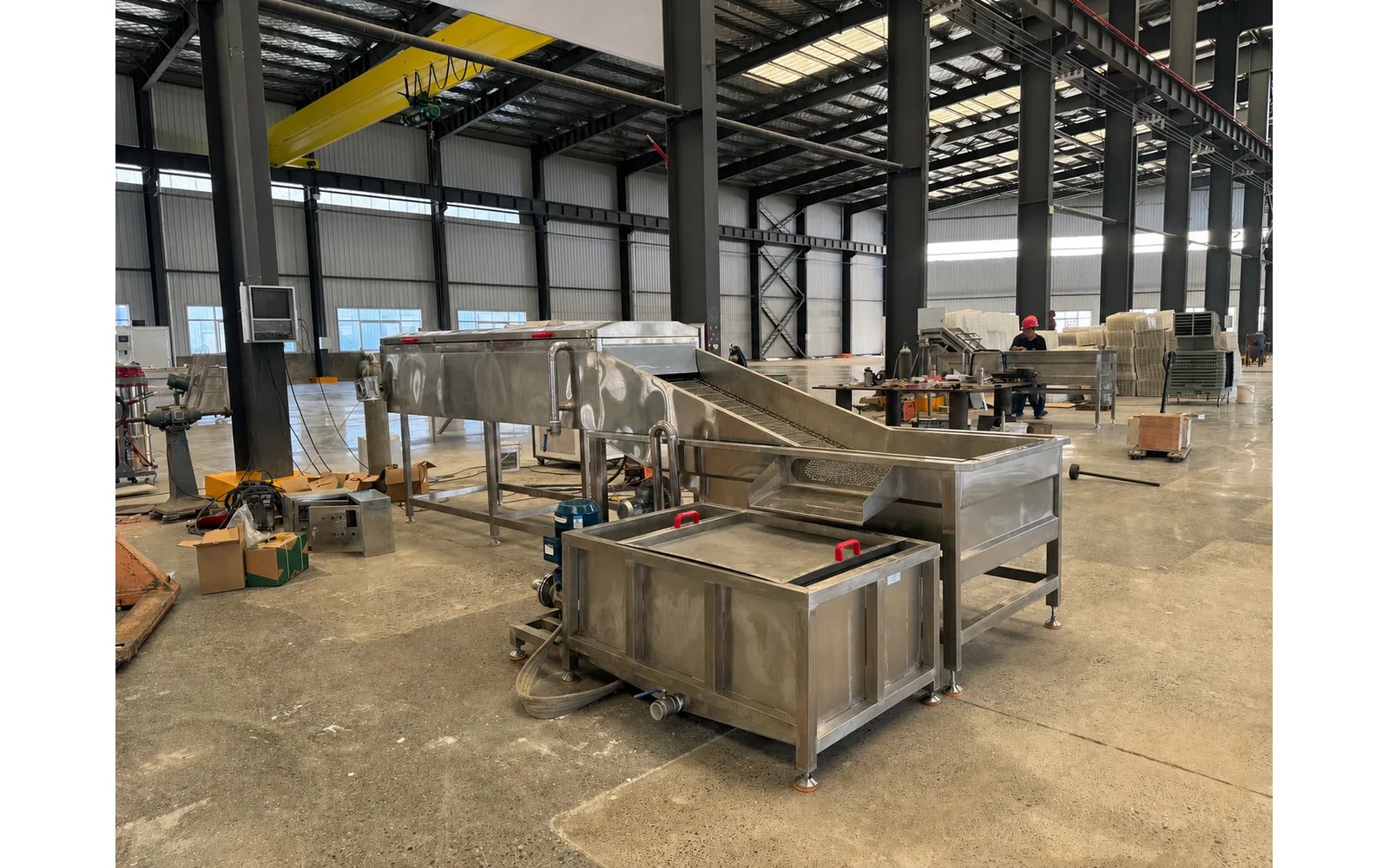
Use the Workshop View to Review Access and Interfaces
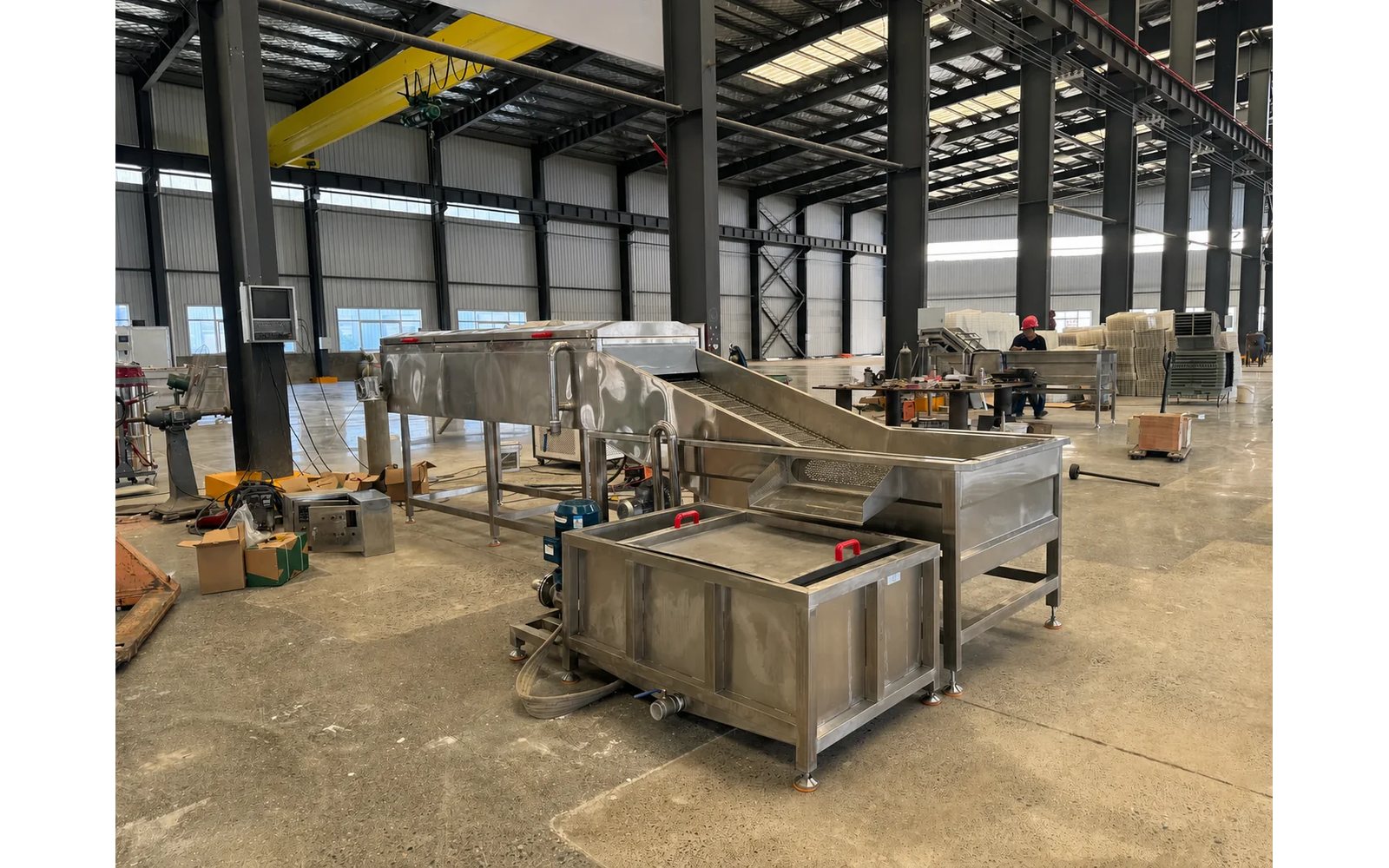
The local photograph makes the physical questions visible: loading height, roller access, side clearances, water collection, product discharge and the space needed for inspection and cleaning. These details belong in the layout review before the final configuration is released.
| Product trial | Representative crop, soil condition, loading, settings, observed result and damage record |
|---|---|
| Layout review | Feed and discharge elevation, operating side, cleaning access and removal route |
| Utility review | Water quality, supply, renewal, drainage, power and controls |
| Acceptance basis | Observable cleaning result, product integrity, output basis and agreed test duration |
Use the workshop view to review access and interfaces before the layout is approved. Check where the product enters and leaves, where water, air and power connect, and how the operator reaches the machine for inspection, cleaning and clearing blockages. A washer that looks compact in a brochure can be impossible to clean or service once it is installed against a wall.
Confirm the drainage and the water treatment route. A vegetable washer uses and discharges a large volume of water that carries soil and organic matter, so the floor drainage, the solids screen and any water reuse must be part of the installation plan. If the dirty water has nowhere to go, the cleanest washer in the catalog will be shut down by the first hygiene inspection.
Keep the Model Reference and Project Conditions Together
The quotation should identify the selected model, product basis, included pumps and transfers, utilities, controls, documentation, test method, packing, delivery and support boundary.
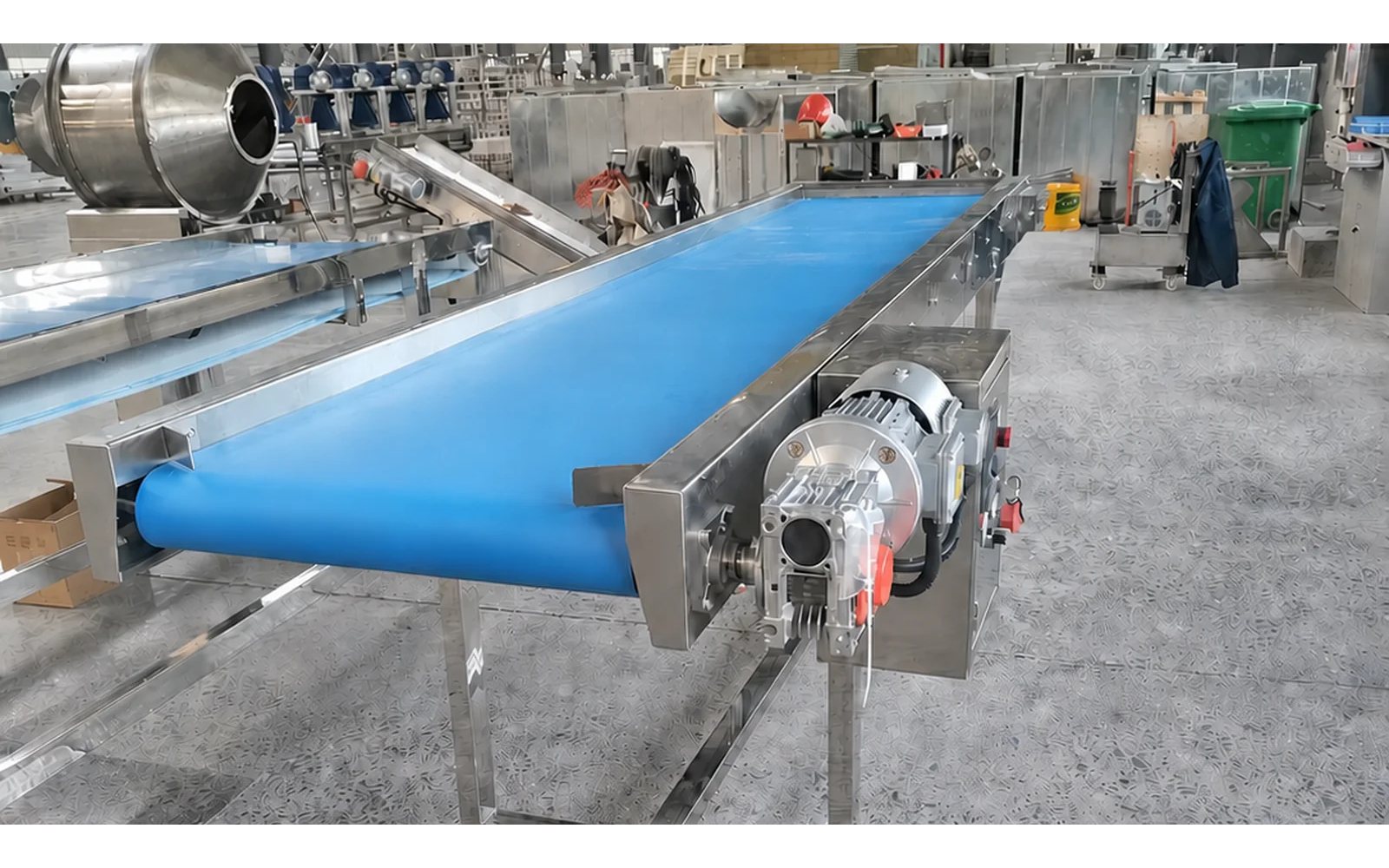
Keep the model reference and the project conditions together so the catalog row is not mistaken for a project commitment. The reference gives a starting configuration; the project conditions add the product, the soil load, the water quality and the outlet requirement that the machine must actually meet. When the two are separated, a buyer reads a capacity figure and assumes it applies to their crop.
Write the conditions next to the model reference in the quotation. Include the water supply and its temperature, the drain capacity, the product feed and the downstream interface, and state which conditions the performance figure assumes. A washer quoted for clean, pre-graded product is a different machine from one quoted for field-fresh crop with stones and soil, and the quotation must say so.
Write the water supply, its temperature and the drain capacity next to the reference row, because a washer quoted on clean water behaves differently on a site with a limited supply.
Write the water supply and the drain capacity beside the reference row, because a clean-water reference is not the same as a limited site supply.
Publish What the Selected Model Evidence Supports
Product performance, utilities, price and documentation are reviewed as model- and project-specific items.
Use representative material.
Record incoming condition, wash settings, observed result and damage.
Compare the same duty basis.
Output references are interpreted with product, water and site conditions.
Confirm the selected configuration.
Quotation scope and available documentation are reviewed for the selected model and destination.
Configure the washing duty
Publish only what the selected model's evidence supports. If a trial showed that a washer removed field soil from potatoes at a given throughput, say so; do not extend that claim to a different vegetable or a microbial reduction that was never measured. Publishing the evidence honestly builds trust with buyers and protects the project from the disappointment of an over-claimed specification.
Separate the reference evidence from the project commitment. The catalog can show what a model family has done; the quotation must show what your configuration will do for your product under your conditions. When the two are clearly labelled, the buyer knows what is proven, what is projected and what still requires a trial before the order is placed.
Label the reference evidence and the project commitment separately, so a buyer can see what has been proven and what still requires a trial before the order.
Send the Food, Soil Load and Required Result
Include photos or samples, hourly or batch output, available water, drainage, layout and the next process stage.
- Product evidenceType, dimensions, fragility and incoming condition
- Operating basisOutput, shifts, changeovers and labor
- Site basisWater, drainage, power and available footprint
- Open valuesName the missing input and responsible party where information is not yet available
| Bubble washer references | W600-2.5M / W600-3M / B600-6M |
|---|---|
| Published output references | 500 / 600 / 1500-2000 kg/h |
| Published power references | 2.25 / 2.25 / 5.2 kW |
| Selection basis | Product, dimensions, soil load, required wash result, water, drainage and next-stage condition |
Frequently asked questions
Which vegetable details are required before selecting a washer?
Do the published washer outputs guarantee finished-line capacity?
When should bubble, spray or roller washing be used?
What should be included in a vegetable washer quotation?
How should a washing result be accepted?
Before requesting a model, send the food, the soil load and the required result together. Name the product and variety, its size and fragility, the soil or contamination it carries, the hourly throughput and the outlet condition you must achieve. This is the minimum input set that lets the supplier choose the washing mechanism, the stage count and the water system instead of guessing from a single photograph.
Add the site facts that change the design. State the water supply and its temperature, the drain capacity, the available floor space and the downstream process the washed product feeds. A washer for a cold-water field pack is specified differently from one feeding a hot fry line, and the site facts are what turn a catalog choice into a machine that fits the factory.
Related pages
Vegetable Processing Line
Configure root, leafy or mixed vegetable preparation around product risks, washing and cutting duties, water, factory interfaces and acceptance.
Frozen French Fries Production Line
Review potato preparation, strip conditioning, pre-frying, cooling, IQF freezing, equipment references and factory interfaces as one line.
Vegetable Line Batch Optimization
Diagnose vegetable washing, cutting and transfer constraints through product inputs, parameter consequences, tests and line-balance evidence.
Vegetable Washing, Drying and Sorting Line
Review the verified four-unit scope of a Guatemala vegetable washing, air-drying and sorting project, including evidence limits and buyer inputs.
Central Kitchen Processing Solution
Plan central kitchen preparation zones, peak-hour capacity, batch cooking duties, utilities and dispatch interfaces from one menu and facility basis.
Fruit & Vegetable Processing Systems
Configure washing, peeling, cutting, thermal preparation, freezing or sauce processing around crop condition and finished-product requirements.