
Nut Frying Production Line
Review the process, equipment duties and project boundary from one defined basis.
Peanuts, Cashews and Beans Need Separate Review Bases
Geometry, density, moisture, skin condition, coating and fragility change feeding, frying and transfer behavior. Declare each intended product rather than treating “nuts” as one raw material.
The required finish also matters: a plain fried kernel, a salted snack and a coated bean can require different upstream preparation and downstream seasoning responsibilities.
Product declaration
| Identity | Product, variety, dimensions and size range |
|---|---|
| Feed state | Raw, blanched, soaked, coated or otherwise prepared |
| Finished result | Color, texture, oil condition and seasoning format |
| Production mix | Output by product, sequence, shifts and changeover frequency |
Root causes and process risks
Peanuts, cashews and beans need separate review bases, because each one fries, seasons and cools differently. Record the product, its size and moisture, whether it is blanched, roasted or coated, and the finished texture and oil content. A peanut with a thin skin behaves differently from a cashew or a broad bean, and a line configured for one cannot be assumed to suit the others.
Then record how many product families the line must run. A line that roasts or fries one nut type all day is simpler than one that changes between families, and the changeover frequency changes the fryer, the seasoning system and the cleaning regime. The review starts from the product families, not from a capacity.
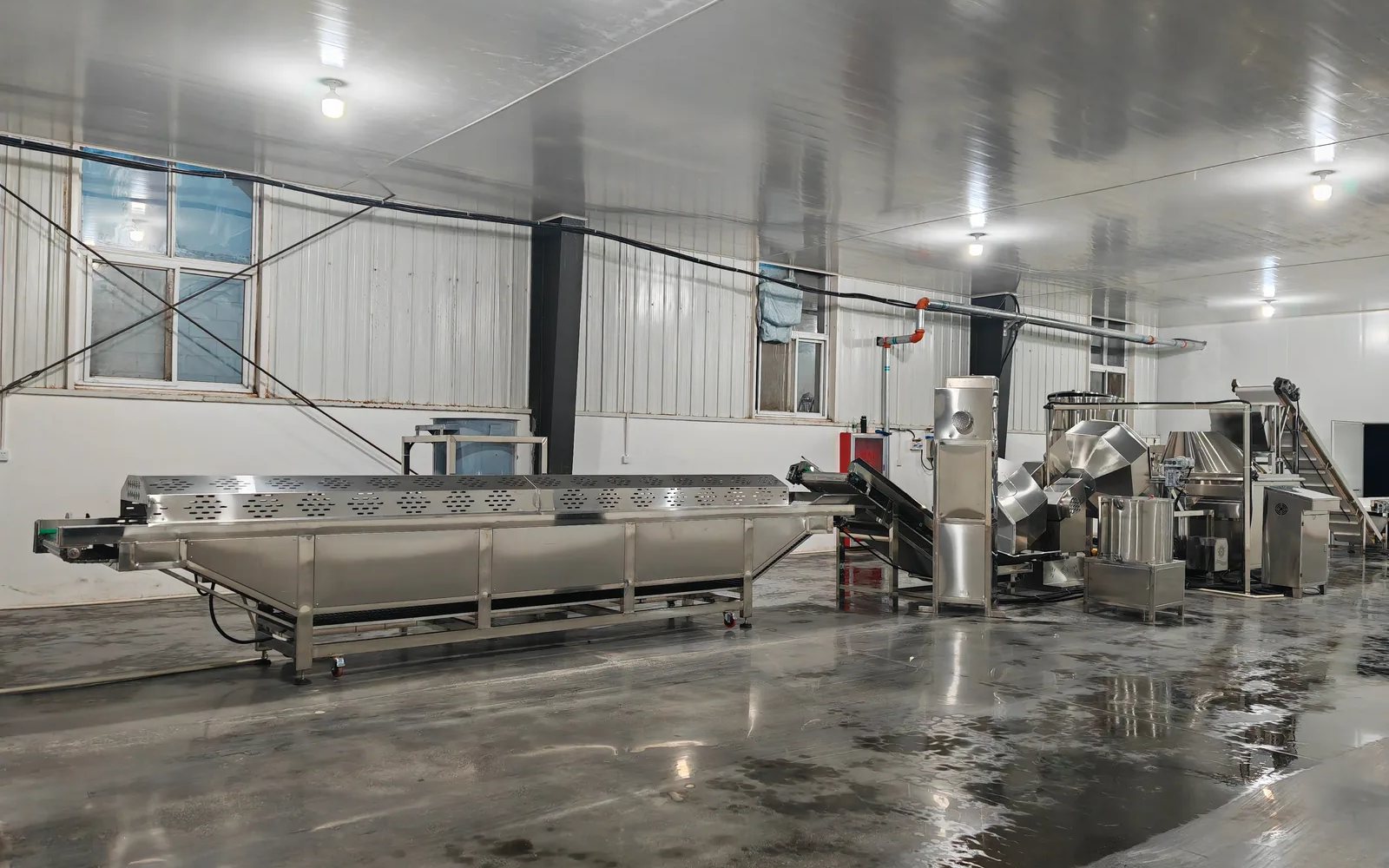
Control Product Load Before Tuning the Fryer
Most line instability is created by a constraint that appears before or after the thermal stage. The technical review traces those causes across the full route.
Mixed sizes can produce mixed residence behavior
Size range, moisture, skin and preparation state influence loading and heat response. Grading and feed specification should be part of the product basis.
Irregular metering can move the whole process
Sudden product loads can affect thermal recovery, oil circulation, discharge flow and the capacity required from de-oiling and cooling.
Heating and oil handling are one decision
Heating architecture, circulation, filtration, residue handling, extraction and cleaning access must be reviewed around the selected product and operating plan.
Hot product cannot wait for an undersized finish stage
De-oiling, seasoning, cooling, buffering and packing handoff should accept the fryer discharge without uncontrolled accumulation.
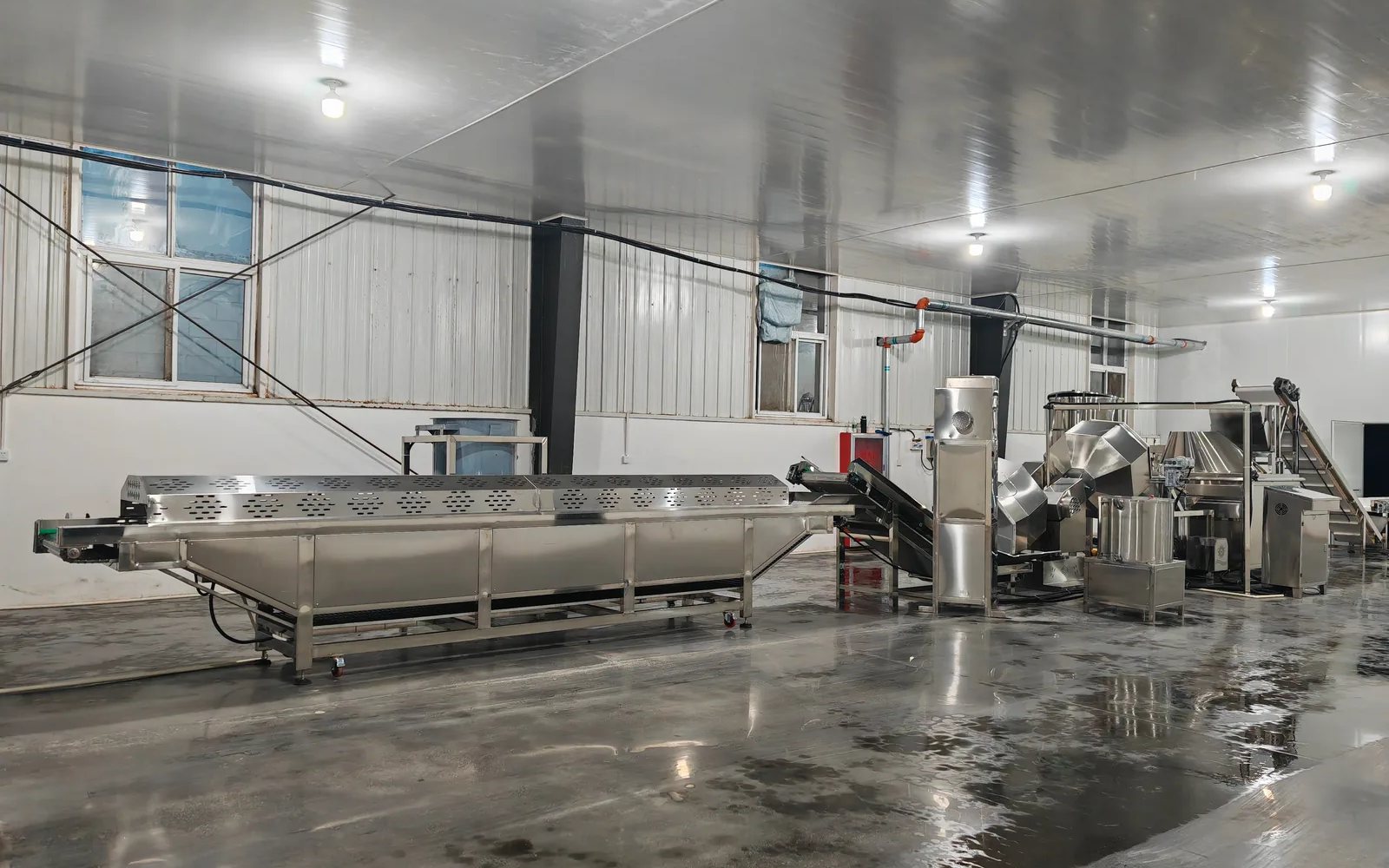
Product movement through the system
Control the product load before tuning the fryer. The bed loading, the feed uniformity and the product's moisture content set the thermal duty, and a fryer cannot be tuned until those are stable. If the feed surges or the moisture varies, the oil temperature and the residence time drift, and the nuts come out uneven.
Design the feed to deliver a steady, metered load. A buffer and a metering device before the fryer smooth out surges and give the fryer a constant duty to hold. Then tune the temperature and residence against that steady load, because tuning against a varying feed is chasing a moving target.
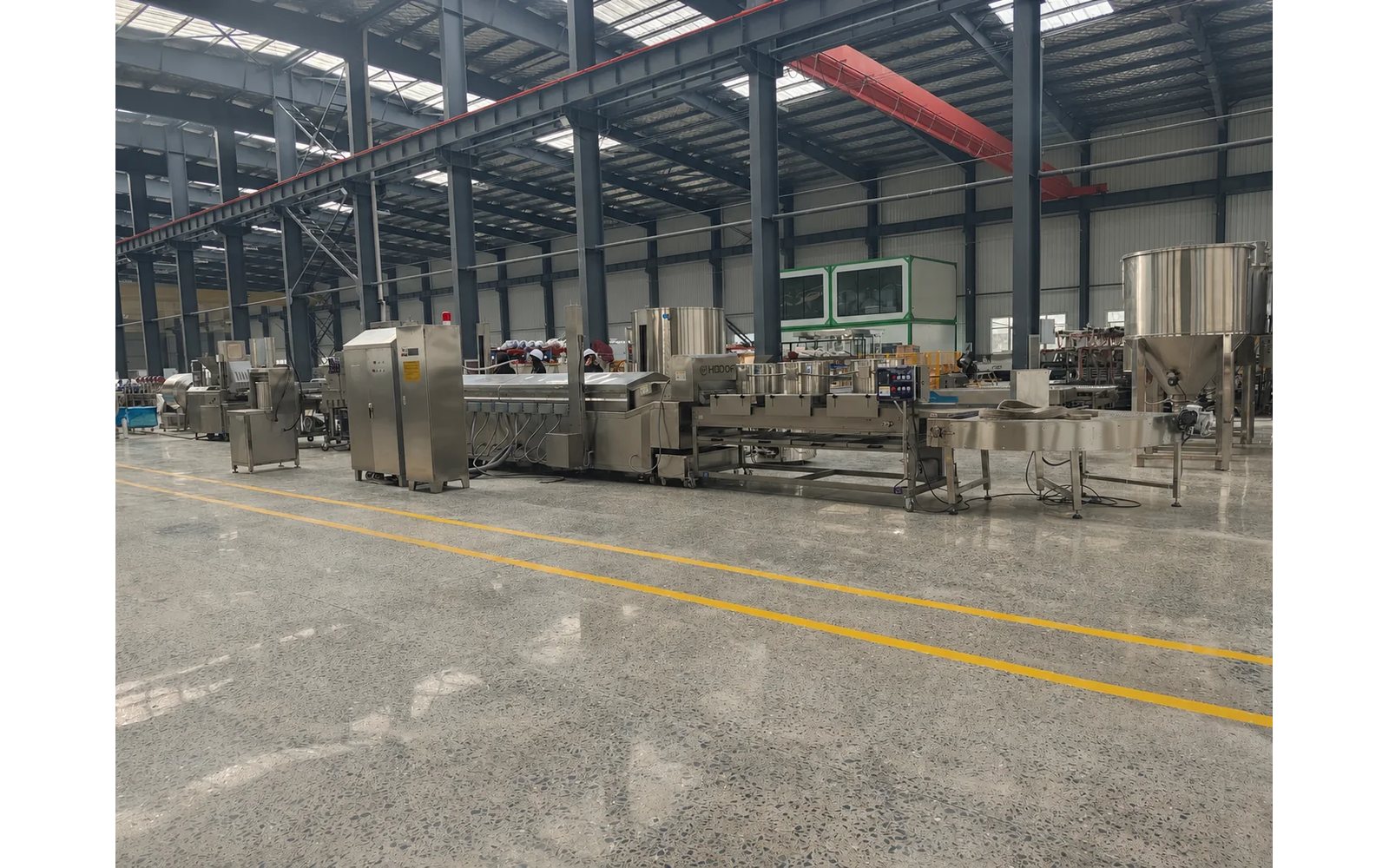
Balance Every Stage Around the Fryer
A fryer model cannot correct unstable feed or an undersized cooling and packing handoff. Review the route as one operating system.
- 01ReceivingInspect and prepare the feedDefine foreign-material removal, grading, soaking, blanching or coating responsibilities where they apply.Feed specificationPre-treatment boundaryReject handlingProduct-specific
- 02MeteringDeliver a controlled product loadBuffer and feed equipment should reduce surges and distribute the selected product appropriately to the thermal stage.Buffer capacity basisFeed uniformityTransfer damage reviewHandling equipment
- 03Thermal processSelect batch or continuous fryingThe route depends on product behavior, production pattern, residence control, heating utility and cleaning expectations.Trial product and loadingOil temperature and time basisHeating and filtration scopeContinuous models
- 04Oil removalTransfer and de-oil without losing controlDischarge handling and de-oiling method are selected around fragility, product geometry and the agreed finished condition.Transfer heightDe-oiling actionInspection accessConfiguration review
- 05FinishingDose and distribute seasoningDeclare powders, liquids and recipes. Dosing and mixing must be reviewed with product loading and breakage sensitivity.Seasoning formatRecipe and dosing rangeChangeover sequenceProduct trial
- 06Packaging feedCool, buffer and deliverCoordinate discharge temperature, stable flow, elevation and controls with the buyer's weighing and packing equipment.Cooling target basisBuffer strategySignal responsibilityDownstream interface
Inspect and prepare the feed
Define foreign-material removal, grading, soaking, blanching or coating responsibilities where they apply.
- Feed specification
- Pre-treatment boundary
- Reject handling
Deliver a controlled product load
Buffer and feed equipment should reduce surges and distribute the selected product appropriately to the thermal stage.
- Buffer capacity basis
- Feed uniformity
- Transfer damage review
Select batch or continuous frying
The route depends on product behavior, production pattern, residence control, heating utility and cleaning expectations.
- Trial product and loading
- Oil temperature and time basis
- Heating and filtration scope
Transfer and de-oil without losing control
Discharge handling and de-oiling method are selected around fragility, product geometry and the agreed finished condition.
- Transfer height
- De-oiling action
- Inspection access
Dose and distribute seasoning
Declare powders, liquids and recipes. Dosing and mixing must be reviewed with product loading and breakage sensitivity.
- Seasoning format
- Recipe and dosing range
- Changeover sequence
Cool, buffer and deliver
Coordinate discharge temperature, stable flow, elevation and controls with the buyer's weighing and packing equipment.
- Cooling target basis
- Buffer strategy
- Signal responsibility
Thermal system selection
Balance every stage around the fryer, because the fryer sets the rhythm of the line. The feed, the frying, the de-oiling, the seasoning, the cooling and the packing must all run at the fryer's rate, and any stage that lags becomes the bottleneck. A fryer that runs well but feeds a slow seasoning drum simply waits.
Check each handoff for damage and loss. Nuts break and shed skins in transfer, and broken pieces carry more oil and season unevenly. Design the transfers gently and route the fines out of the product flow, so the balance is achieved without paying for it in quality.

Compare More Than Catalog Capacity
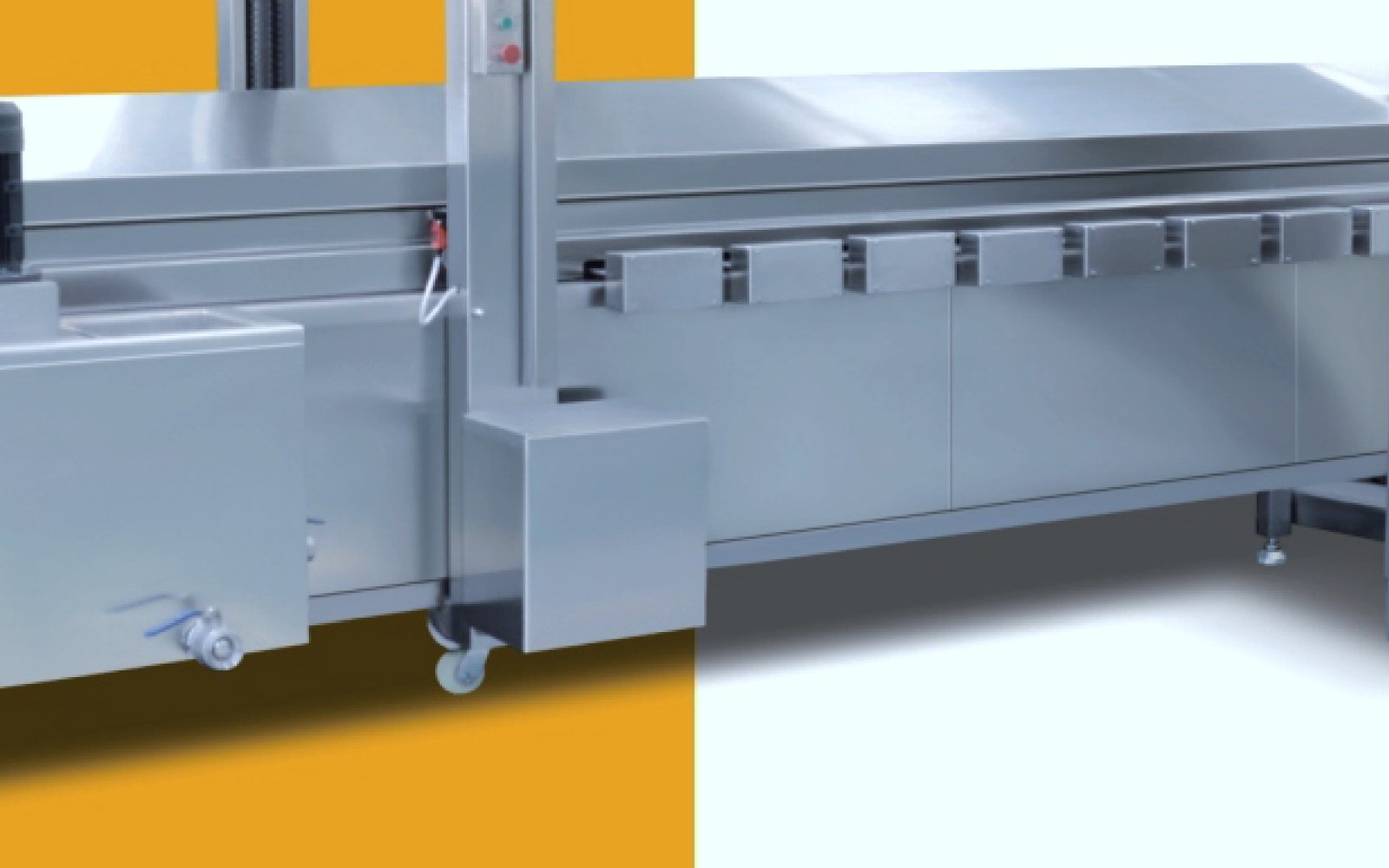
Hadof's catalog includes electric and gas continuous-fryer references. The relevant model and heating route depend on the declared product, trial basis, utilities, oil-system scope and operating plan.
Configuration logic and equipment combination
Compare more than the catalog capacity. Two nut fryers with the same headline output can differ in oil volume, heat input, filtration and the quality of the finished product, and those differences decide the running cost and the oil life. The comparison must include what the capacity figure assumes and what it excludes.
Normalise the numbers against your product and your shift pattern. Ask for the output at your bed loading and moisture, the oil turnover and filtration duty, and the energy consumption over a full shift. The fryer that looks cheapest on purchase price is often the most expensive to run when oil and energy are counted.
The comparison must include oil life, energy and the quality of the finished product, not just the headline output.
Ask for the output at your bed loading and moisture, the oil turnover and filtration duty, and the energy over a full shift, because those decide the running cost.
The fryer that looks cheapest on purchase price is often the most expensive to run when oil and energy are counted.
Build the Operating System Around the Product Route
Equipment is selected inside the system, with explicit responsibilities for every handoff and factory interface.
Metering, frying, de-oiling and cooling
This core combination is balanced to the approved feed, thermal basis and finished-product condition. Transfer geometry and control signals are reviewed between stages.
Preparation, grading, seasoning and buffering
Soaking, blanching, coating, grading, seasoning format and packing rhythm determine which optional stages belong in the route.
Heat, extraction, oil service and cleaning access
The final scope assigns heat source, electrical load, extraction, oil storage and filtration, fire-protection coordination, cleaning method and maintenance access.
model values and the internal engineering comparison support equipment-family and heating-architecture review. Product result, net output, operating cost and oil-life outcomes require an agreed product and test basis.
Build the operating system around the product route. The operators, the cleaning schedule, the oil management and the changeover procedure are part of the line, and they should be designed with the machines rather than added later. A nut line that is difficult to clean or change over will lose more time than any machine speed can recover.
Write the operating procedures into the project. Confirm how the fryer is emptied and cleaned, how the oil is changed and filtered, how the seasoning system is flushed between recipes, and who is responsible for each task. The operating system is what keeps a well-chosen line running well after handover.
Four Interfaces Require Joint Review
Loading consistency
Size distribution and feed surges affect the thermal process.
Product range and metering arrangement.
Oil-system boundary
Heating, circulation, filtration, replenishment and cleaning must appear in the scope.
Process diagram and buyer responsibilities.
Seasoning distribution
Product load, seasoning format and mixing action are reviewed together.
Recipes and acceptable inspection method.
Stable packaging feed
Cooling and buffering should match the downstream equipment.
Temperature basis, elevation and signals.
Four interfaces require joint review on a nut line: the feed into the fryer, the transfer to de-oiling, the seasoning handoff and the packing feed. Each is a place where product is damaged, lost or held too long, and each crosses the boundary between two machines. Review them together so no interface is left to chance.
Define each handoff's rate, temperature and product condition, and test the interfaces with the actual product. A nut that breaks at the fryer discharge or clumps in the seasoning drum changes the finished product, and the only way to find that is to run product through the real transfers before the layout is approved.
Each interface is where product is damaged or lost, so none of them is left to chance.
Define each handoff's rate, temperature and product condition before the layout is approved.
Make Changeovers Part of the Equipment Decision
Where several nuts, beans, coatings or seasonings share equipment, the buyer should define the production sequence and site allergen-control plan. Machinery access and cleaning scope can then be reviewed against that plan.
End the previous run
Identify remaining product, seasoning and oil-system condition.
Clean and inspect
Define access, tools, cleaning method, time window and inspection responsibility.
Release the next run
Record setup, recipe, initial product handling and buyer-side release checks.
The site owner defines the control plan and applicable requirements.
Evidence for technical approval
Make changeovers part of the equipment decision, because a nut line that runs several products is defined by how quickly it can switch between them. Count the changeover steps, the parts that must be changed and the cleaning required, and ask for the time each change takes. The line's real output is the output after changeovers, not the output between them.
Choose equipment that supports the changeover pattern. Quick-release covers, accessible seasoning drums and recipe storage all shorten the switch between products, and they are worth more than a faster fryer if changeovers happen every day. The equipment decision should reflect how the line will actually be run.
The line's real output is the output after changeovers, not the output between them.
Agree a Separate Test Basis for Each Product Family
Identify the product
Document size range, feed state, moisture and relevant preparation.
Define the finish
Agree color, texture, seasoning and other review criteria without unsupported guarantees.
Fix test conditions
Record loading, operating duration, heating route and operator actions.
Confirm the scope
List included stages, utilities, documents and buyer-side interfaces.
Scenario evidence and verification
Agree a separate test basis for each product family, because a trial on peanuts does not validate a line for cashews. Write the product, the moisture, the frying conditions and the finished texture and oil content for each family, and run a trial for each one. The line is then accepted against the families it must run, not against the easiest one.
Keep the test records by family so the evidence is clear. A buyer who must run three nut types needs three trials and three acceptance records, and the records are what support the line's claimed flexibility. A single trial proves a single product, and nothing more.
A single trial proves a single product, and a buyer running three families needs three records.
Keep the trial records by family so the evidence supports the line's claimed flexibility.
The records are what support the line's claimed flexibility when the buyer comes to accept it.
Separate Reference Evidence From Project Commitments
Use model data, engineering comparisons, workshop context and product tests for the decisions they can support.
Published Hadof model information supports named continuous-fryer references, printed heating routes and stated application context. Catalog output is not a guaranteed nut-line result.
The engineering comparison supports qualitative comparison of direct electric, internal-combustion and external heat-transfer-loop architectures, without unverified cost or quality claims.
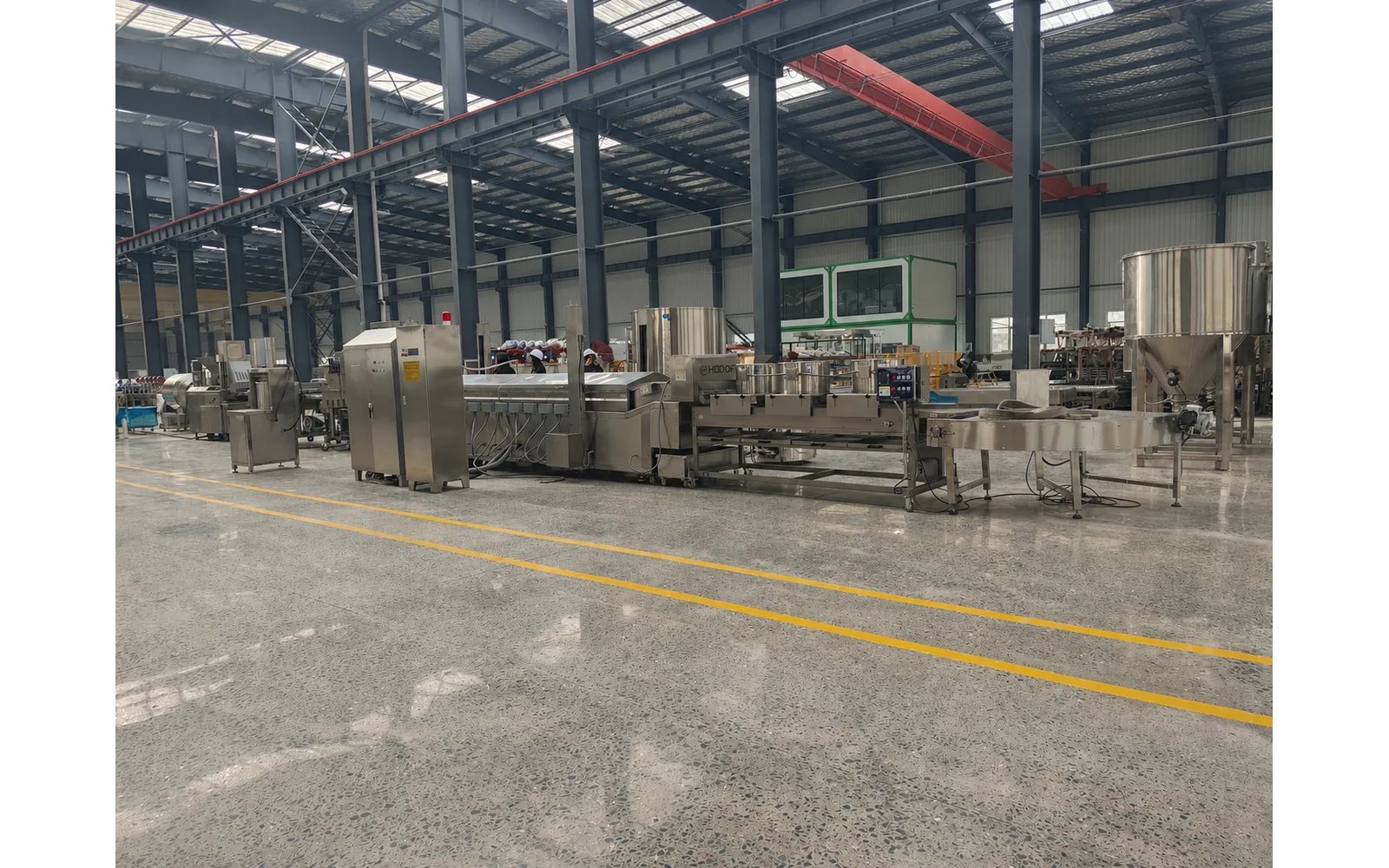
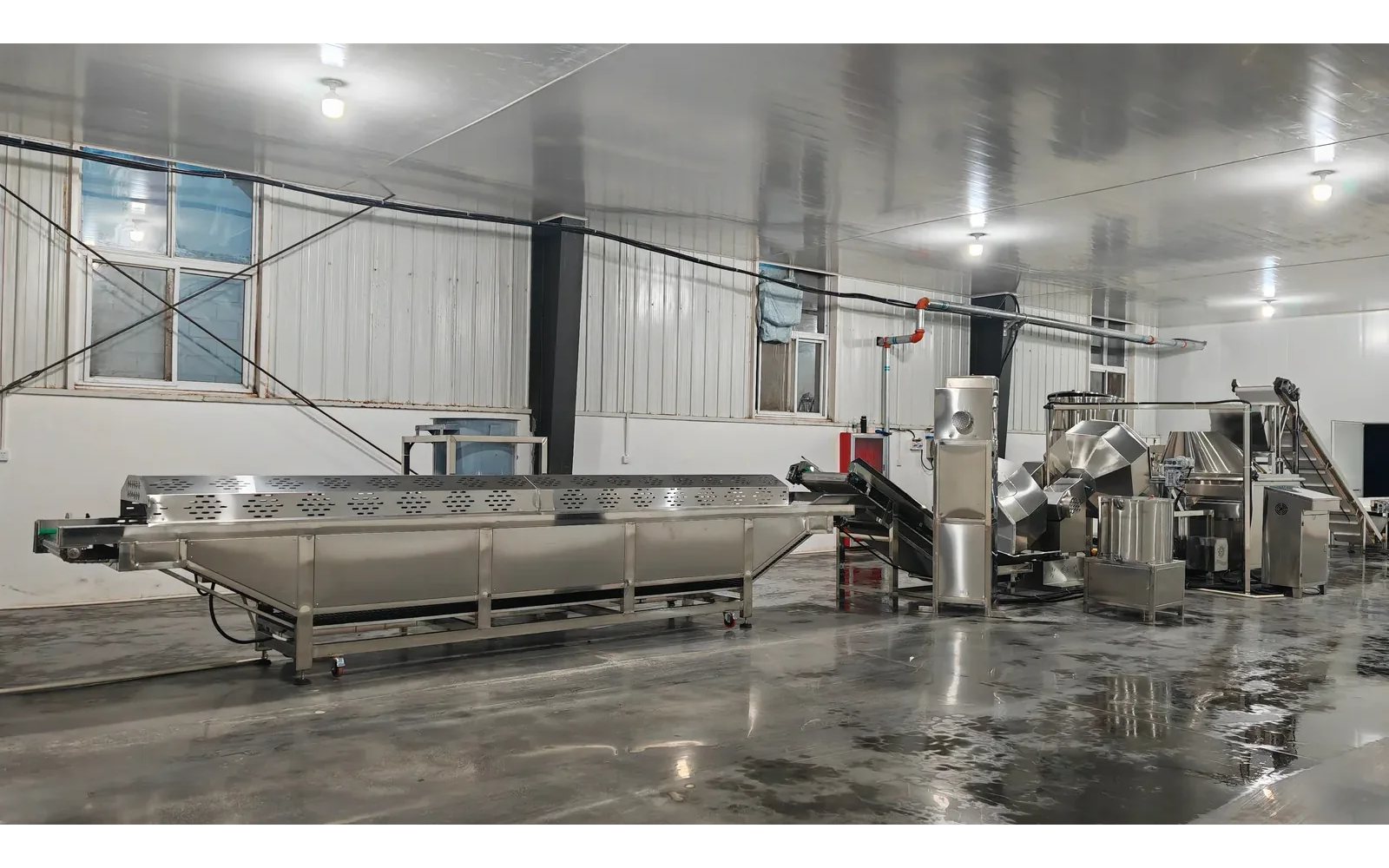
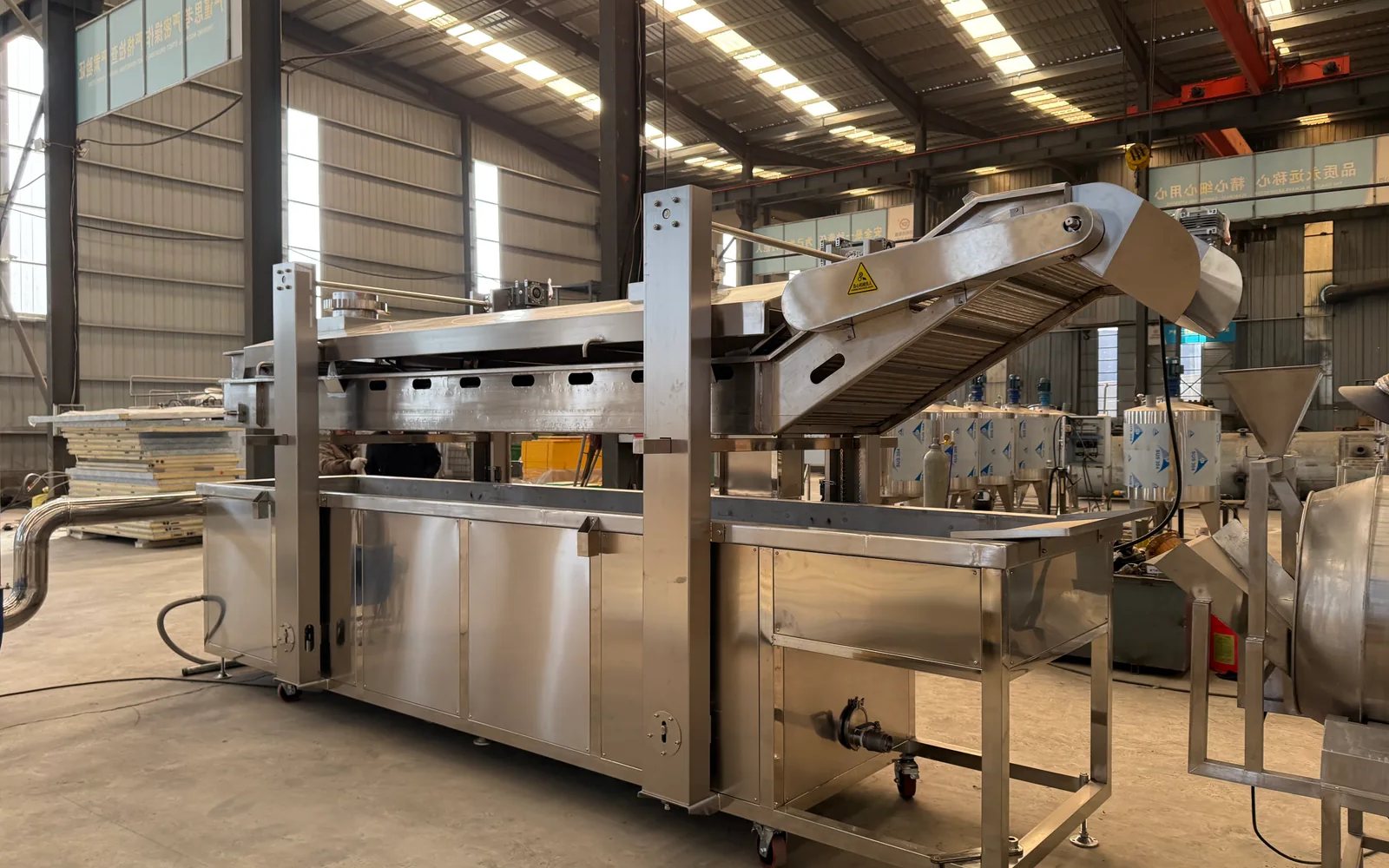
The approved Hadof photograph shows connected processing equipment in a workshop.
Representative food, loading, finished criteria, utilities and acceptance method turn the reference architecture into a reviewable project scope.
Separate the reference evidence from the project commitments. A catalog can show what a model family has done for other buyers; the quotation must show what your configuration will do for your products under your conditions. The two are different kinds of claims, and mixing them leads to disappointment and disputes.
Label each claim honestly in the review. Where the evidence is a reference, say so; where a figure is projected from a trial, record the conditions. That separation is what keeps the project defensible and what lets the buyer see exactly what has been proven before the order is placed.
That separation is what lets the buyer see exactly what has been proven before the order.
Send Product Data Before Requesting a Model
One clear product brief is more useful than a nominal capacity alone.
Before requesting a model, send the product data. Name the nut types, their size and moisture, the required output and the finished texture and oil content, and add the shift pattern and the changeover frequency. This data lets the supplier size the fryer, the oil system and the seasoning equipment for the real duty instead of guessing.
Include the site facts that change the design: the heating utility, the floor space, the drainage and the packing format. A nut line on gas heating is specified differently from one on electric, and the packing format changes the downstream equipment. Product data plus site facts is the minimum input set for a defensible quotation.
Product data plus site facts is the minimum input set for a defensible quotation.
Add the heating utility, the floor space, the drainage and the packing format, because those site facts change the design as much as the nut itself.
A gas-heated line is specified differently from an electric one, so the site facts belong in the same input set.
Send it all at once, and the quotation can be built from the real duty.
A quotation built from a guess is only a starting point for a later argument.
Nut Frying Line FAQ
| Reviewed continuous-fryer references | HDF-4000 / HDF-5000 / HDF-6000 / HDF-8000 |
|---|---|
| Reviewed heating architectures | Direct electric / internal combustion / external heat-transfer loop |
| Required product basis | Nut or bean identity, size range, feed state, moisture, coating, finished criteria and representative sample |
| Required operating basis | Output by product, schedule, changeovers, seasoning route, utilities and packaging handoff |
| Project result boundary | Net output, product result, oil behavior and operating cost require an agreed product and test basis |
Frequently asked questions
What information is required to configure a nut frying production line?
Why should feed metering and cooling be reviewed with the fryer?
Which heating architectures are available for review?
Does the catalog output guarantee output for peanuts, cashews or beans?
What changes when several products or seasonings share the line?
The FAQ section answers the questions that repeat on every nut project. What output can the line hold, how is the oil filtered, how long does a changeover take, and what is included in the quotation are all questions that should be answered in writing before the order. A buyer who gets these answers early makes a better decision than one who discovers them during commissioning.
Treat the FAQ as a living record. If a question comes up during the review, add it and its answer to the record, because the next buyer will ask the same thing. An honest, complete FAQ is part of the technical evidence and part of the trust a supplier builds with a buyer.
Related pages
Continuous Fryer
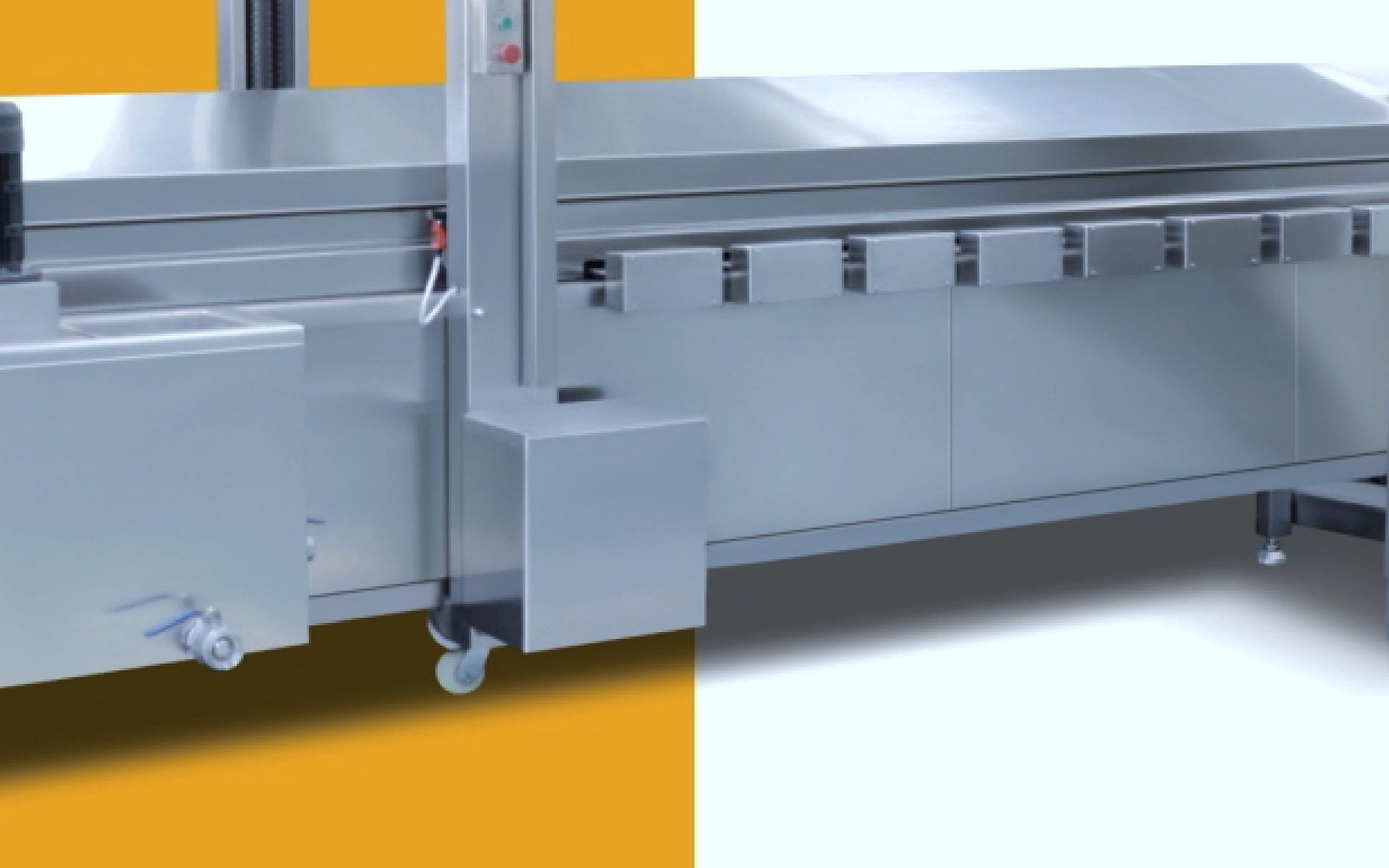
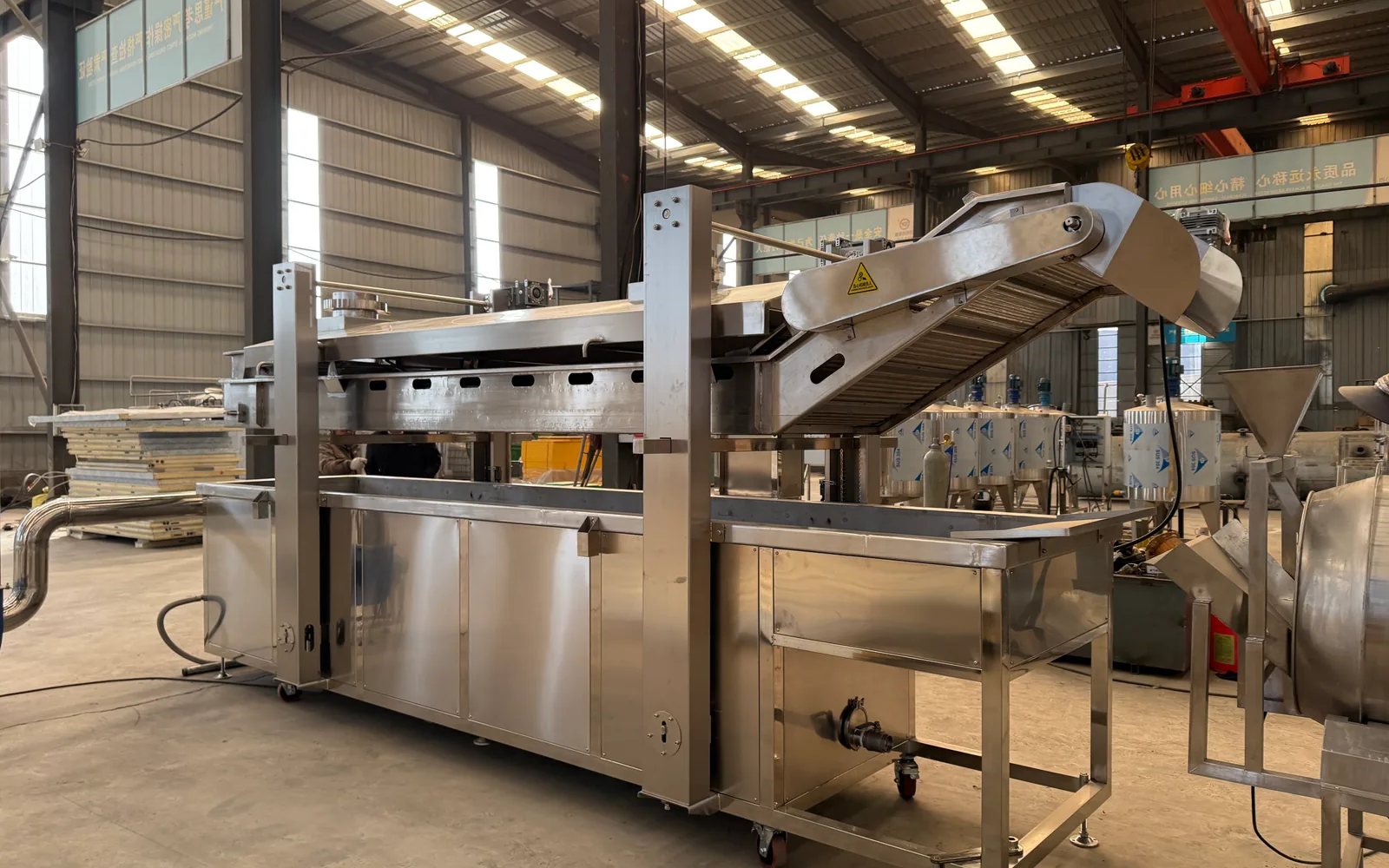
Compare verified Hadof continuous fryer references, then review product loading, heating route, oil handling, factory interfaces and acceptance scope.
Premade Pouch Packaging Machines
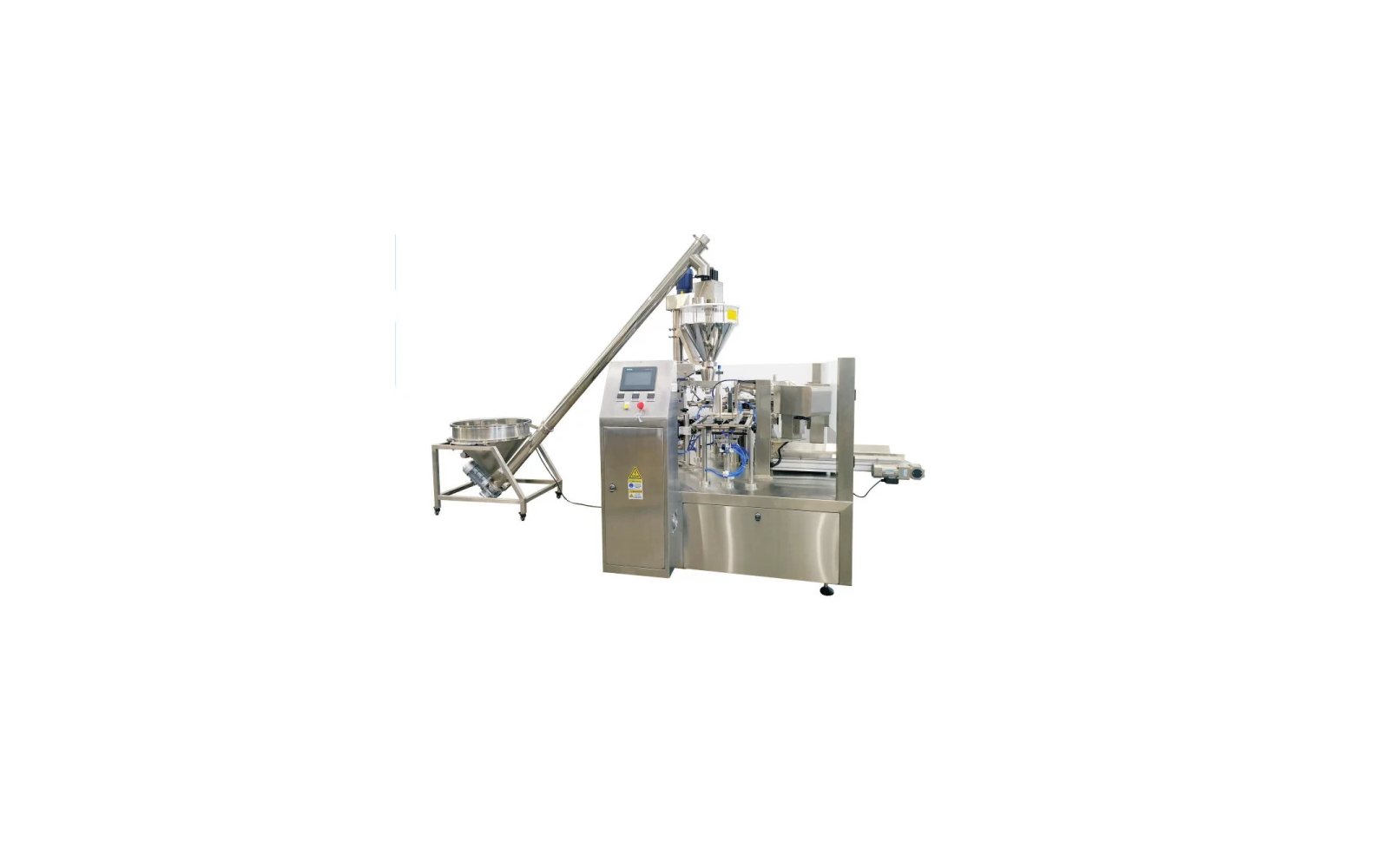
Compare HDF premade pouch machines for powder and granules by bag size, dose, speed, accuracy reference, power, air and metering configuration.
Continuous Fryer Selection Engineering
Understand how product condition, loading, heating route, oil management, factory interfaces and acceptance criteria drive continuous fryer selection.
Snack Food Processing Systems
Review snack food forming, coating, frying, cooling, seasoning and packing duties from product criteria through factory and acceptance boundaries.