
Food Processing Conveyor
Review the process, equipment duties and project boundary from one defined basis.
Start With the Food Condition at the Transfer Point
Application workbench
Specify a conveyor from the condition of the food at the point it is handed over, not from a generic width and length. Record the product, its temperature, surface moisture, oil content, piece size and fragility, and whether it arrives in a metered stream or in surges. A conveyor that moves whole potatoes is not the same machine as one that must carry hot, oiled potato chips into a seasoning drum.
Then describe the transfer itself: the drop height, the direction change, the required speed and whether product must be separated, aligned or inspected while it moves. Product that sticks, releases fines or carries salt and oil will attack the belt and the frame differently, and those facts determine the belt material, the drive sizing and the cleaning access before any length is fixed.
Record the product temperature, surface moisture and fragility at the handover, because a belt that is right for cold, firm product will behave differently under hot, oiled or sticky product.
Hot, oily or sticky product changes the belt, the drive and the cleaning duty, so the condition is recorded before the geometry.
That condition, recorded once, is what every later dimension follows.
Record it once, and every later dimension follows from that same condition.
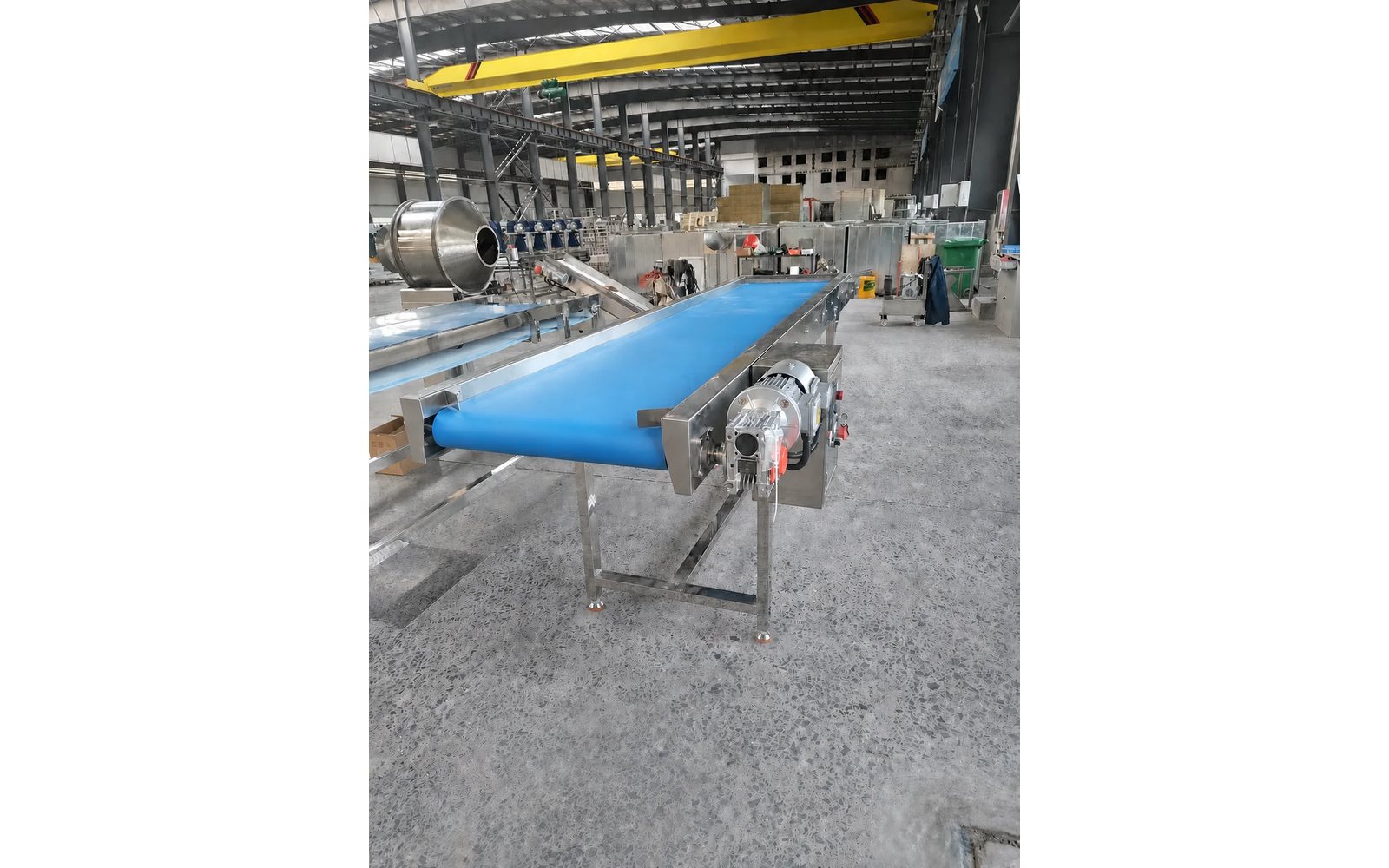
Design the Handoff Before Fixing Conveyor Dimensions
A conveyor controls loading, product condition and the transition between machines. Each stage closes one interface needed for mechanical release.
The handoff is where most conveyor problems are created. Design the transfer between the conveyor and the machine on each side before fixing the conveyor's width, length and elevation. Confirm the discharge height, the drop distance, the angle of the transition, and whether a chute, a waterfall or a flume carries the product, because a poorly designed handoff damages product and scatters fines.
Think about what the product does at the transfer. A wet product needs drainage or a scraper; a fragile product needs a gentle decline and a soft landing; a hot product may need a mesh belt that cools it as it travels. Once the handoff is defined, the conveyor dimensions follow from the machines it connects rather than being chosen first and forcing the line to adapt.
Minimise the drop and control the transition angle, since most product damage and most scattered fines come from a poorly designed handoff rather than from the conveyor run itself.
Controlling the drop and the transition angle removes most of the damage and the scattered fines at the source.
A well-designed handoff removes most of the damage and the fines before they happen.
Choose the Transfer Function Before the Final Geometry
The reviewed local equipment library supports these conveyor families as configuration references.
Decide what the conveyor must do, then choose its geometry. Is it simply transporting product, or must it incline, decline, accumulate, cool, drain, inspect or meter the flow? Each function changes the belt type, the side guides, the drive and the controls, and a conveyor bought for transport is a poor substitute for one that must buffer product ahead of a fryer.
Select the belt for the duty and the food-contact environment. Food-grade modular plastic, wire mesh, fabric or cleated belts each suit different products and cleaning regimes, and the wrong choice turns a simple transfer into a cleaning and contamination problem. Confirm the frame finish, the bearings and the guarding for washdown or dry environments before approving the geometry.
Select the belt and frame finish for the cleaning regime the line will actually use, and confirm the bearings and guarding for washdown or dry duty before the geometry is frozen.
The belt and the frame finish are chosen for the washdown regime the line will actually run, not a generic one.
The duty chooses the belt, and the belt then chooses the geometry.
State the function in one line before any dimension is fixed, and the geometry follows from it.
Test Product Handoff, Access and Control Logic Together
Verification and acceptance
Dry running confirms mechanical operation, but representative product is required to evaluate loading, transfer behavior, damage, drainage and discharge condition.
| Drawing review | Overall route, connection heights, direction, access, guarding and maintenance clearances |
|---|---|
| Mechanical review | Visible workmanship, tracking, tensioning, drive access and agreed contact areas |
| Product trial | Approved material, loading profile, speed range, transfer behavior and discharge result |
| Control trial | Start, stop, speed reference, interlock, fault and emergency-stop responsibilities |
Test the conveyor as part of the line, not as a stand-alone belt. Run product through the handoff at the real speed and observe what happens at the transfer points, the turns and the discharge. Product that looks fine on a slow trial can jam or fly off at production speed, and the only way to find that is to test the actual handoff with the actual product.
Check access and controls at the same time. Confirm that operators can reach the belt for cleaning and that guards can be removed safely, and agree the control logic with the upstream and downstream machines: start and stop sequence, speed matching, jam detection and emergency stop behaviour. A conveyor that cannot be cleaned or cannot talk to the line will stop the whole factory, not just the belt.
Keep the Conveyor Inside the Complete Line Scope
Quotation and support record
| Reviewed format families | Straight belt / incline or elevating / water-assisted bucket / turning or project-shaped transfer |
|---|---|
| Required product basis | Food, dimensions, weight, temperature, moisture or oil, fragility, adhesion and incoming distribution |
| Required geometry basis | Route length, effective width, elevation, direction, connection heights, access and discharge position |
| Required operating basis | Normal and peak flow, loading depth, speed range, accumulation rule, cleaning and changeovers |
| Project result boundary | Final dimensions, belt, drive, controls, materials and performance require the approved project interface record |
Frequently asked questions
Which product data is required before selecting a food conveyor?
Can conveyor throughput be selected from belt width alone?
Which conveyor format suits a wet processing line?
How should a food conveyor be accepted?
What affects the conveyor quotation and delivery scope?
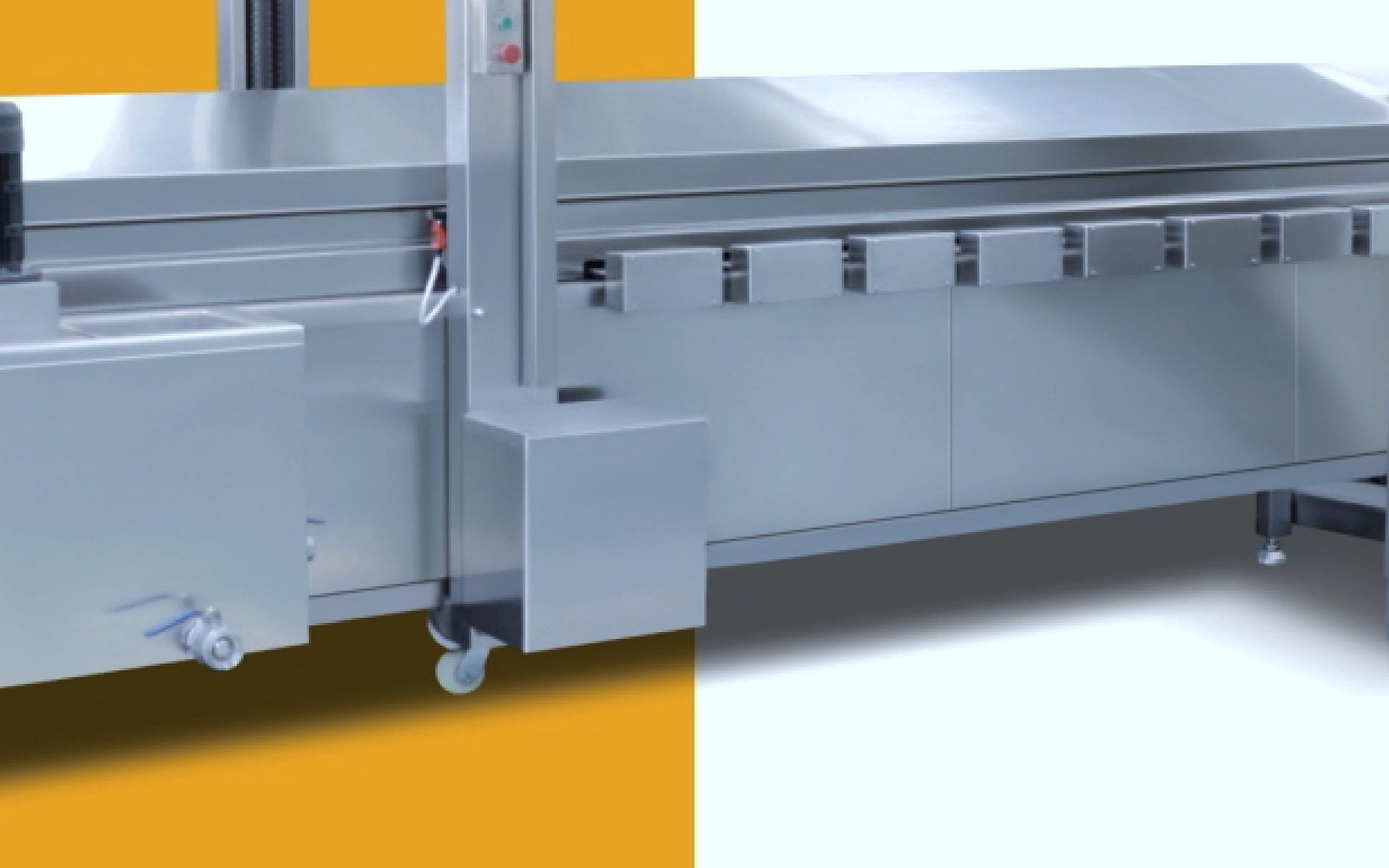
A conveyor is a line component, not a separate purchase. Keep it inside the complete line scope so its speed, elevation and controls are specified against the machines it connects. A conveyor bought from a different supplier than the fryer or the washer it feeds creates an interface that nobody owns, and the gap shows up as product spills and start-stop conflicts during commissioning.
Write the conveyor interfaces into the layout and the quotation: the discharge and infeed heights, the product flow rate, the speed range, the control handshake and the cleaning responsibility. When every conveyor is part of the same line scope, the equipment list becomes a connected route instead of a row of machines that happen to sit next to each other.
Specify Sanitation and Maintenance Around the Duty
Cleanability is part of the duty
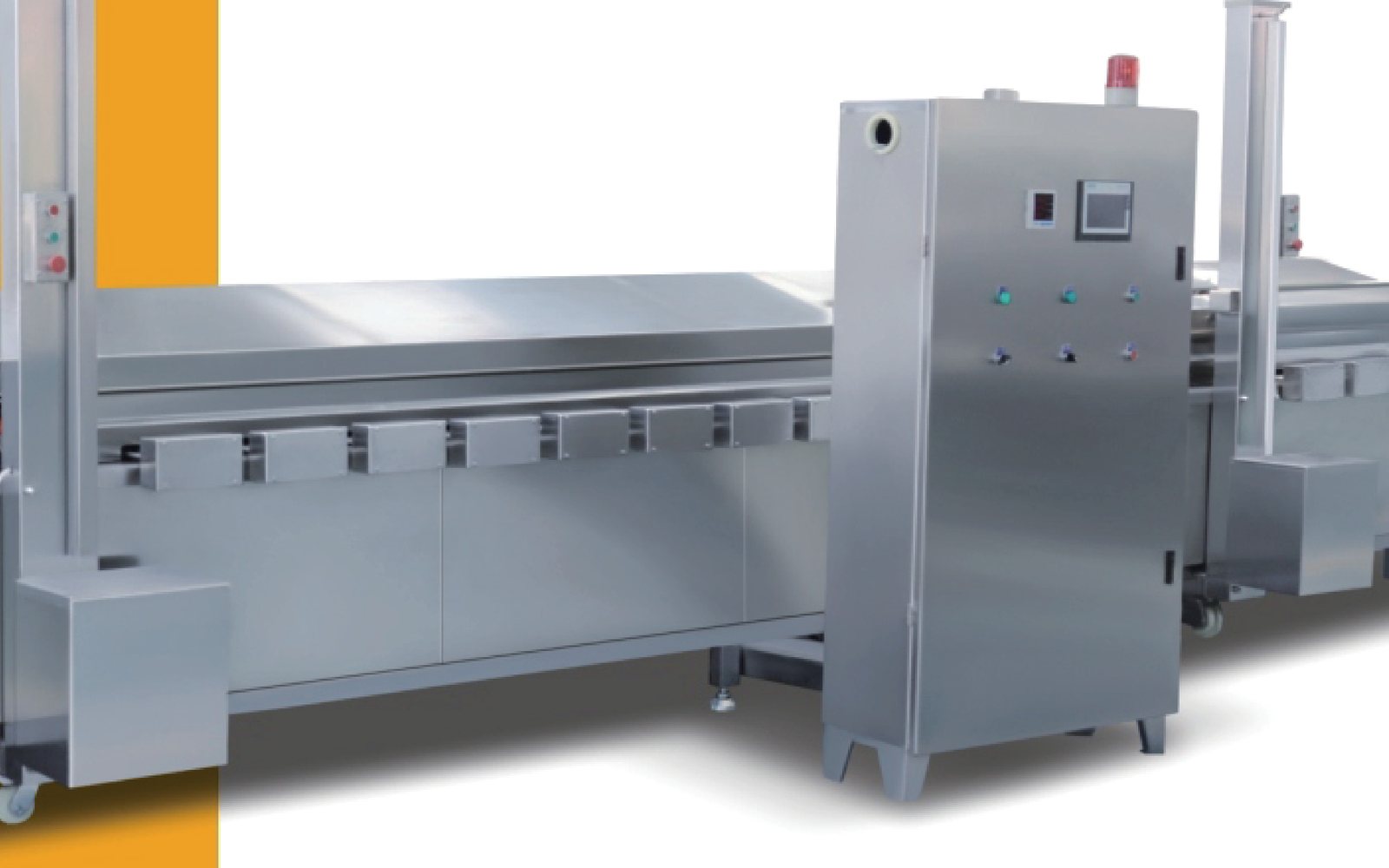
Sanitation is not an afterthought for a food conveyor; it is part of the duty. Choose the belt, frame and drive so the conveyor can be cleaned to the standard your hygiene plan requires, whether that is dry brushing, wipe-down or full washdown. Open-frame designs that trap product fines, hollow rollers that collect water, and drives buried under the belt are all places where contamination hides and audits fail.
Define the maintenance access before the layout is approved. The belt must be tensioned, the bearings greased or replaced, and worn strips and guides changed, so leave the working clearances those jobs need. A conveyor squeezed against a wall to save floor space will cost far more in maintenance hours than the space it saved, and it will be the first machine blamed when a sanitation check goes wrong.
Leave the working clearances that tensioning, bearing service and strip replacement need, because a conveyor crammed against a wall saves a little floor space and gives back far more in lost maintenance time.
Leave the clearances that tensioning and bearing service need, because a conveyor squeezed against a wall repays the saved floor space in lost maintenance hours.
Leave the working clearances, because the maintenance hours they save are worth more than the floor space they cost.
Related pages
Fried Food Processing Line
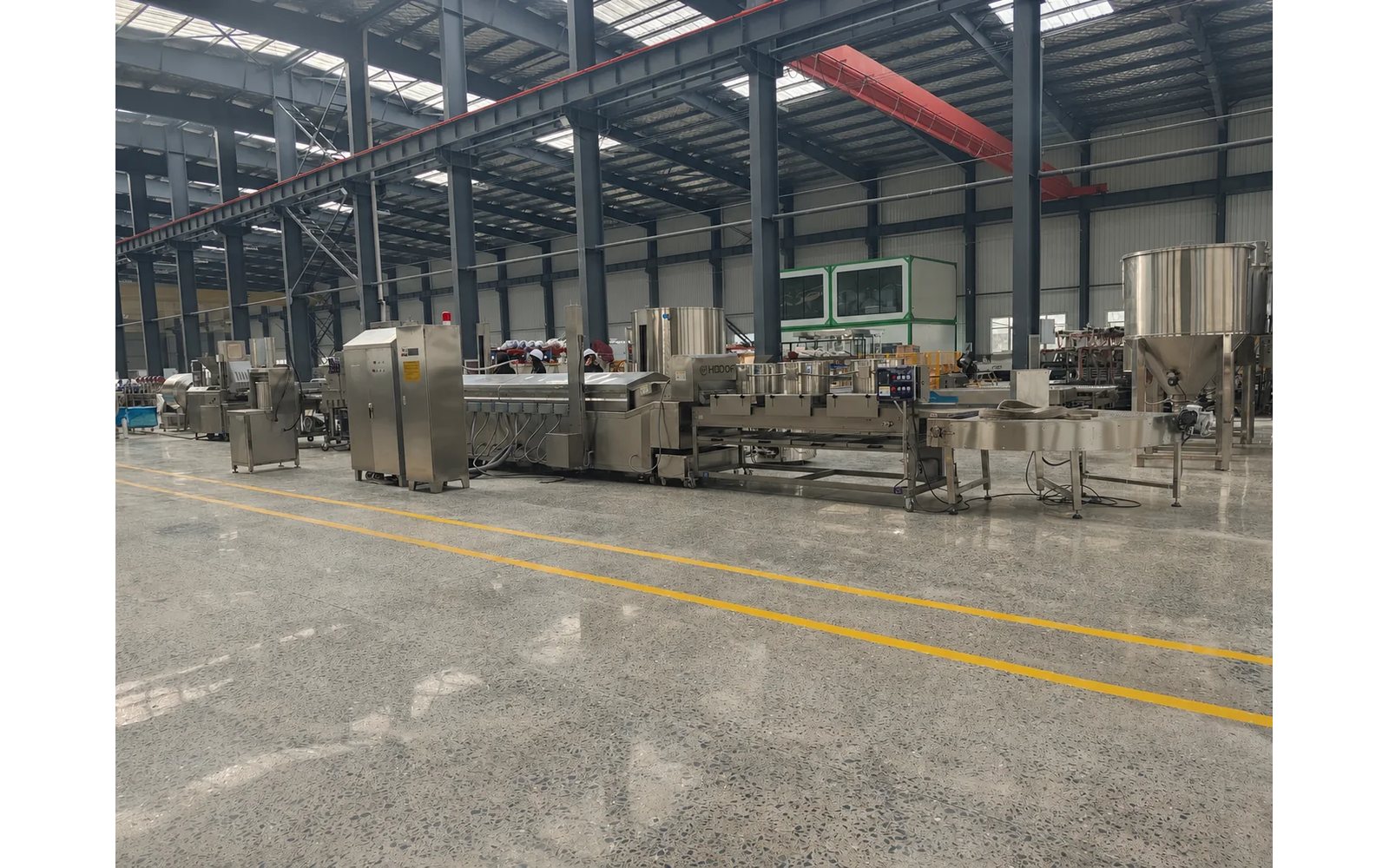
Configure preparation, frying, oil handling, cooling, seasoning and freezing around the finished product, factory and acceptance basis.
Potato Chips Production Line
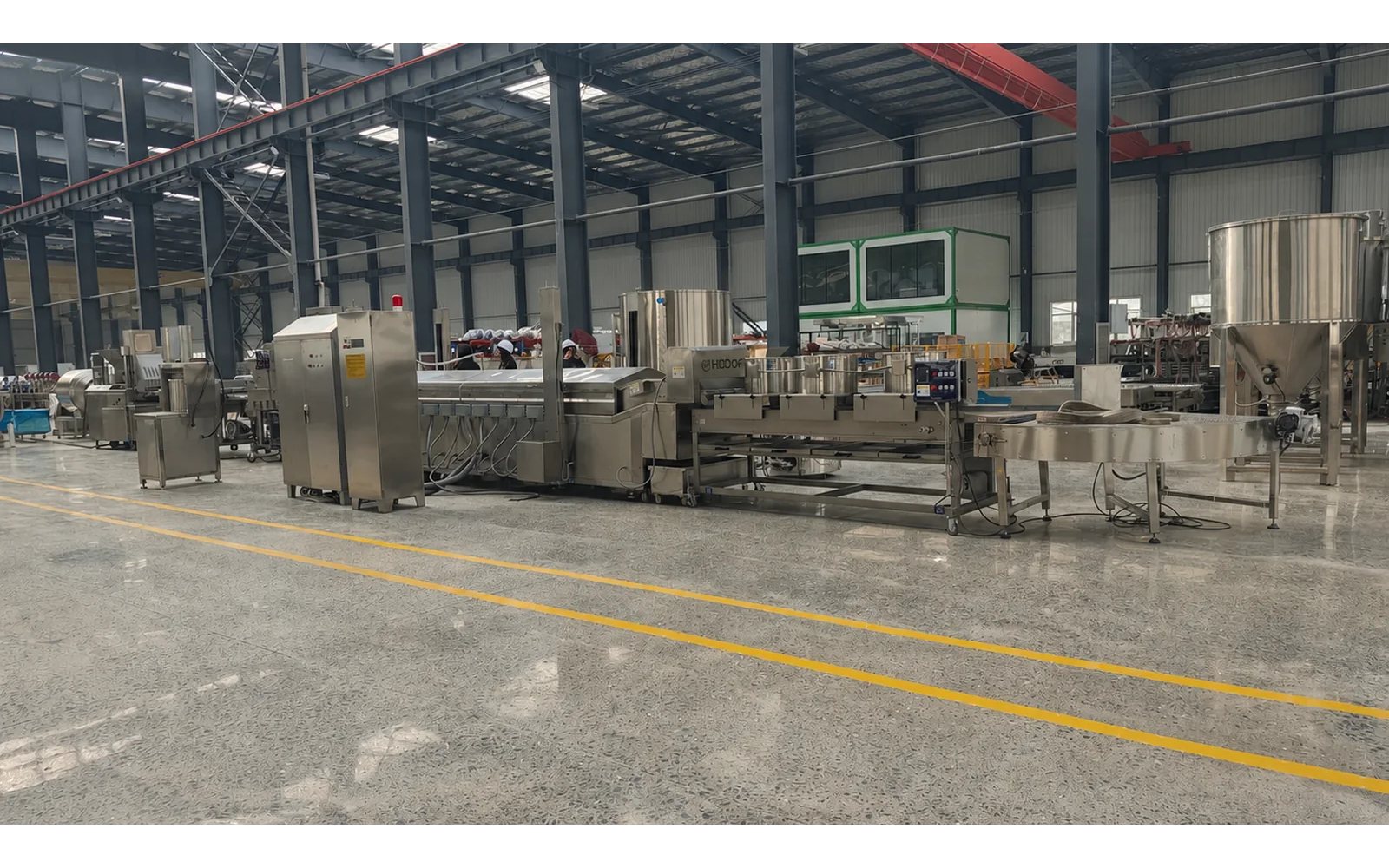
Define the potato, finished chip and factory boundary before connecting preparation, frying, seasoning and packaging feed.
Vegetable Processing Line
Configure root, leafy or mixed vegetable preparation around product risks, washing and cutting duties, water, factory interfaces and acceptance.
Coated Food Frying Line
Connect forming, battering, breading, continuous frying and post-fry handling to product tests, equipment families and acceptance criteria.
Central Kitchen Processing Solution
Plan central kitchen preparation zones, peak-hour capacity, batch cooking duties, utilities and dispatch interfaces from one menu and facility basis.
Concentrated Tomato Paste Line
Configure tomato washing, crushing, pulping, vacuum concentration, filling and sterilization into a paste line.