
Application routes
Continuous Fryer
Review the process, equipment duties and project boundary from one defined basis.
- HDF-4000Gas model reference
- 500-1500Published output reference range
The food defines the frying duty.
A fryer reference is reviewed differently for thin slices, formed foods, nuts or a pre-fry stage.
Potato Chips
Preparation, surface condition and fragile finishing.
French Fries
Thermal stage connected to cooling and freezing.
Coated Products
Coating retention and post-fry handling.
Start the specification with the food, because every useful fryer decision follows from what is being fried. Record the product shape and thickness, the moisture content, the target finished moisture, the starch or sugar content that drives browning, and whether the product floats or sinks. A battered chicken nugget, a potato chip, a coated peanut and a dough stick each demand different oil temperature, residence time, belt loading and oil circulation.
Then record the production pattern: the output in kilograms per hour, the batch or continuous rhythm, and the range of products that must share the fryer. A machine that must fry one product flat-out all day is specified differently from one that changes product every few hours. These facts set the fryer length, the belt design, the oil volume and the heat input, and they must be agreed before any model number is discussed.
Include the oil temperature window and the residence time the product needs, because a fryer that can hold the right temperature for the right time at the required loading is the whole duty, and everything else is support for that result.
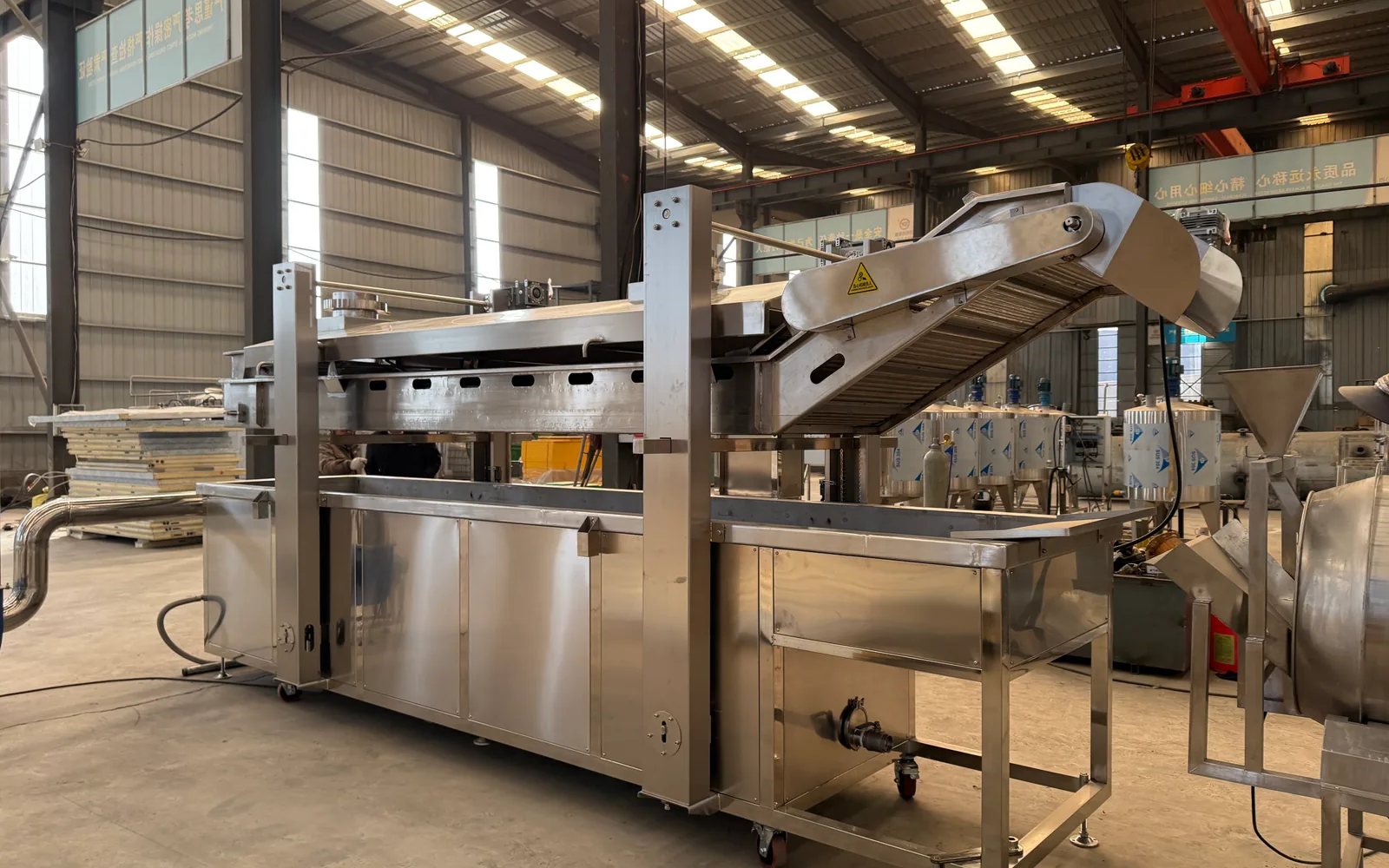
Review more than the fryer body.
Four connected responsibilities determine whether the machine can be integrated into the process.
Declare what reaches the belt.
Product geometry, surface condition, feed distribution and transfer height become part of the review basis.
Match heating route to the operating basis.
Thermal boundary
Record circulation and filtration responsibility.
Replenishment, cleaning, filtration and oil-return scope must be visible before quotation.
Coordinate the next stage before layout.
Discharge boundary
A fryer is only the centre of an oil and product system. Review the infeed that meters product into the oil, the belt or paddle that carries it through, the heat exchanger that supplies the oil with heat, the filtration loop that removes fines, and the outfeed that lifts product out and removes surface oil. Each of these is a separate engineering decision, and the weakest one limits the whole line.
Pay particular attention to the oil circuit. Fines that burn in the oil accelerate breakdown, darken the product and shorten oil life, so filtration and oil turnover must be sized for the fines your product releases. The heat exchanger, whether thermal oil, gas-fired or electric, must match the oil volume and the temperature recovery after a cold product surge, not just the steady-state frying temperature.
Size the oil turnover and filtration for the fines the product actually sheds, since burnt fines are what darken the product, shorten oil life and drive the cleaning schedule more than any other single factor.
The heat exchanger and the oil pump are where energy and oil life are won or lost, so they are reviewed to the same standard as the fryer itself.
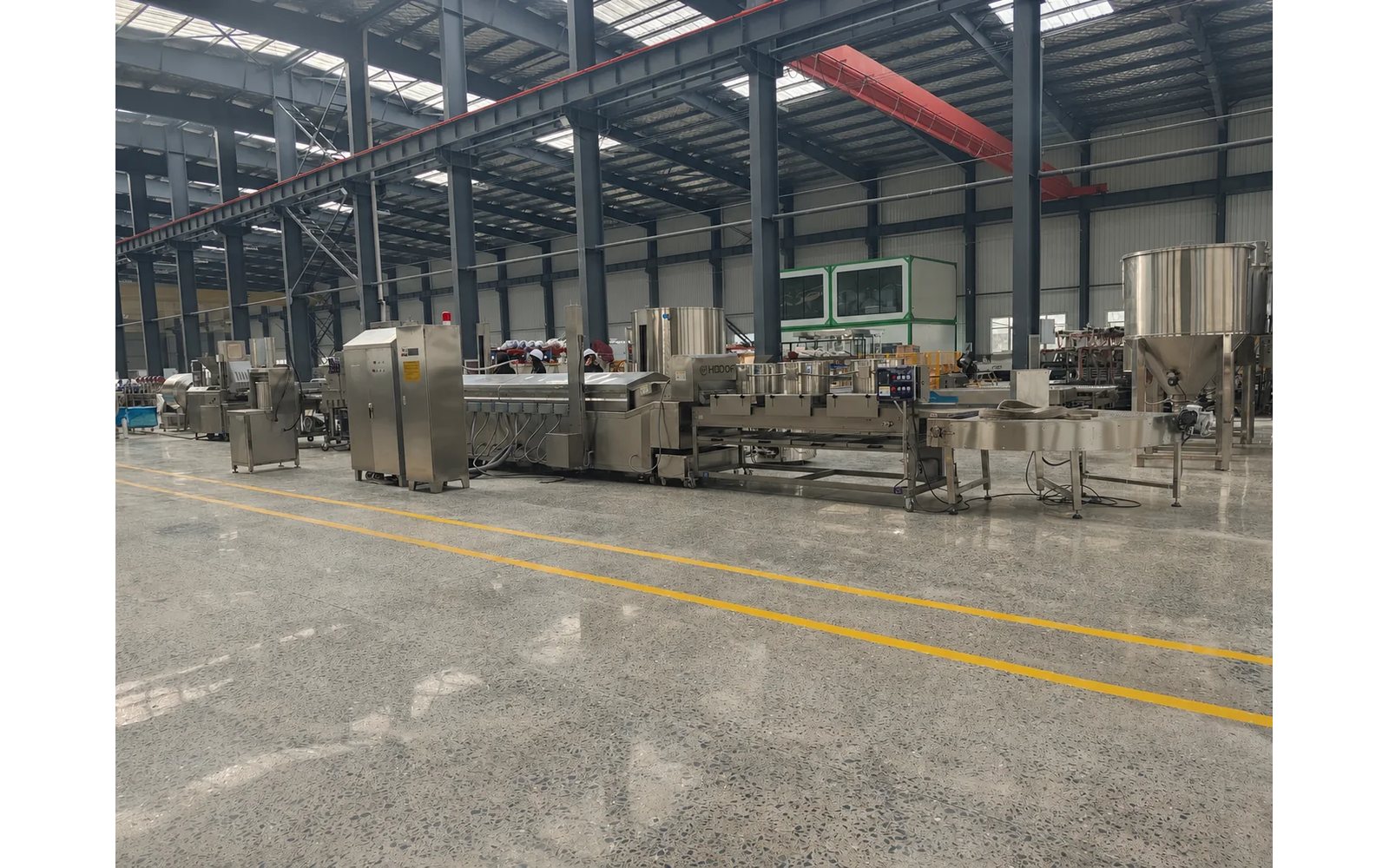
Explore the model family.
Catalog page 23 / reference data
| Model | Output | Power | Dimensions | Weight | Oil tank note |
|---|---|---|---|---|---|
| HDF-4000 | Catalog output600kg/hElectric reference | 100 kW | 4000 × 1200 × 2400 mm | 1,200 kg | 720 L |
| HDF-5000 | Catalog output600kg/hElectric reference | 120 kW | 5000 × 1200 × 2400 mm | 1,500 kg | — |
| HDF-6000 | Catalog output600kg/hElectric reference | 180 kW | 6000 × 1200 × 2400 mm | 1,800 kg | — |
| HDF-8000 | Catalog output600kg/hElectric reference | 200 kW | 8000 × 1200 × 2400 mm | 2,000 kg | — |
| HDF-4000 | Catalog output600kg/hElectric reference | — | 4000 × 1200 × 2400 mm | 500 kg | — |
Use the model family as a set of reference points rather than a menu to pick from. The catalog rows describe a range of belt widths, lengths and heat inputs, and they are starting configurations that must be reconciled with your product's residence time and loading. A larger model does not automatically fry better; it must still hold the product at the right temperature for the right time at the right belt loading.
Compare the models against one product basis. Convert each reference output into belt loading per square metre and oil residence per kilogram of product, then check whether the heat input can recover temperature when cold product enters. The goal is to find the configuration whose belt, oil volume and heating can hold your thermal duty, not the row with the highest headline capacity.
Convert each reference output into belt loading and oil residence so the rows can be compared on the thermal duty they perform, rather than on a capacity number that assumes a different product.
Reconciling each row to your loading and residence time is how a catalog becomes a shortlist.
That shortlist is what carries the review forward to a real quotation.
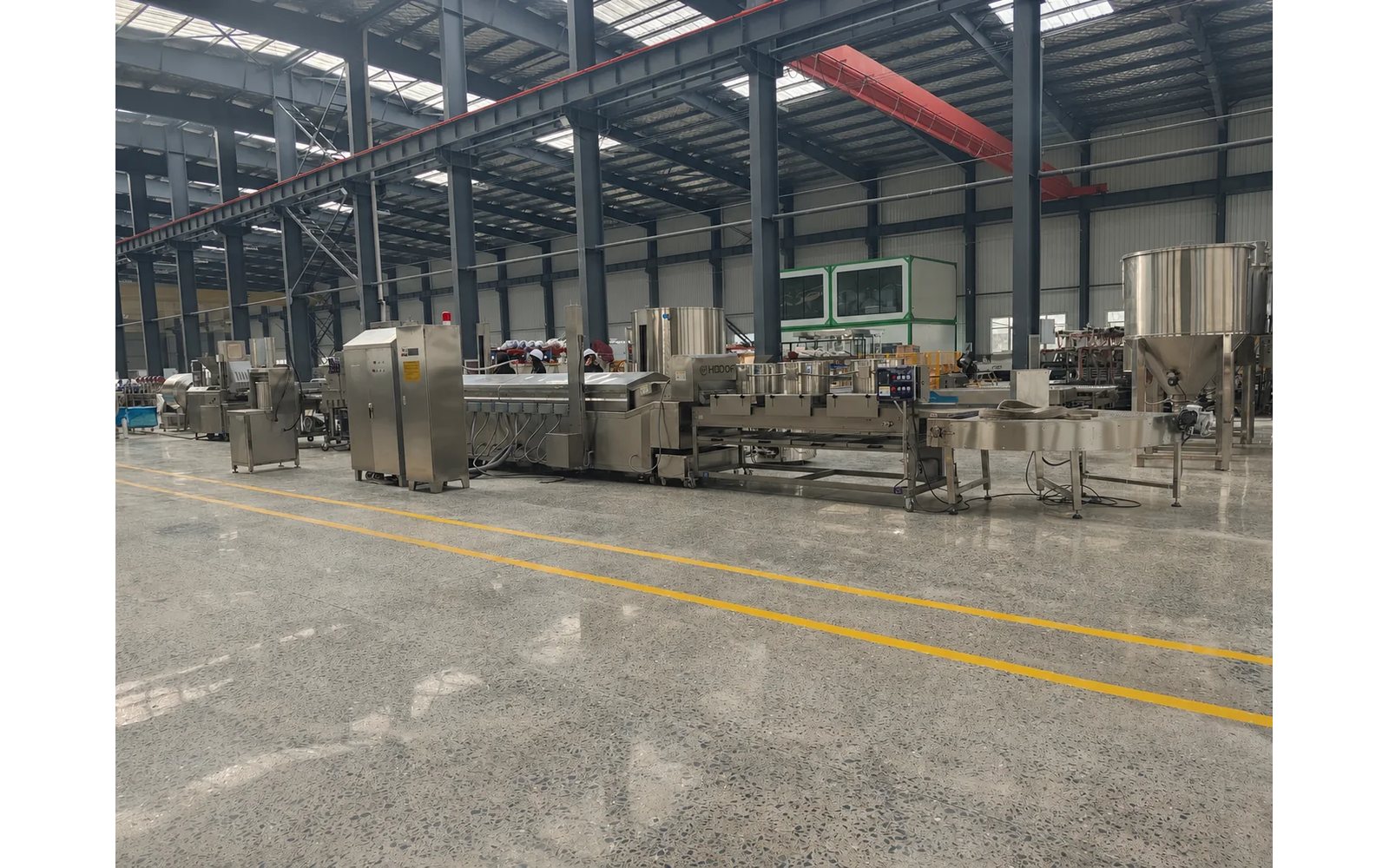
Close the interfaces before layout approval.
Machine dimensions alone do not define a workable installation.
Upstream
Feed height, loading pattern and product surface condition.
Utilities
Electricity or fuel, extraction, drainage and project-party limits.
Service
Cleaning movement, oil handling and maintenance access.
Downstream
De-oiling, cooling, seasoning or freezing connection.
Controls
Interlocks, signals, emergency-stop boundary and ownership.
The fryer's interfaces decide whether the layout works. Confirm the infeed height and how product is metered in without clumping, the outfeed height and how product is de-oiled, and where the oil filtration unit, heat exchanger and exhaust extraction sit relative to the fryer. These dimensions and utility routes must be fixed before the floor plan is approved.
Do not forget the services around the machine. Frying releases moisture and oil vapour, so extraction, fire suppression and cleaning access must be planned as part of the installation. Confirm where water and cleaning chemicals drain, how the oil is emptied and refilled, and how operators reach the belt for inspection and cleaning, because a fryer that cannot be cleaned or serviced safely becomes a bottleneck.
Agree the infeed and outfeed heights, the extraction route and the drainage before the floor plan is signed, because a fryer cannot be repositioned later without reworking every conveyor and utility around it.
Fixing the infeed, outfeed, extraction and drainage before sign-off prevents the expensive rework that follows a late change.
Approving the layout with the interfaces open is how avoidable rework begins.
A late interface change is the most expensive kind of rework on a frying line.
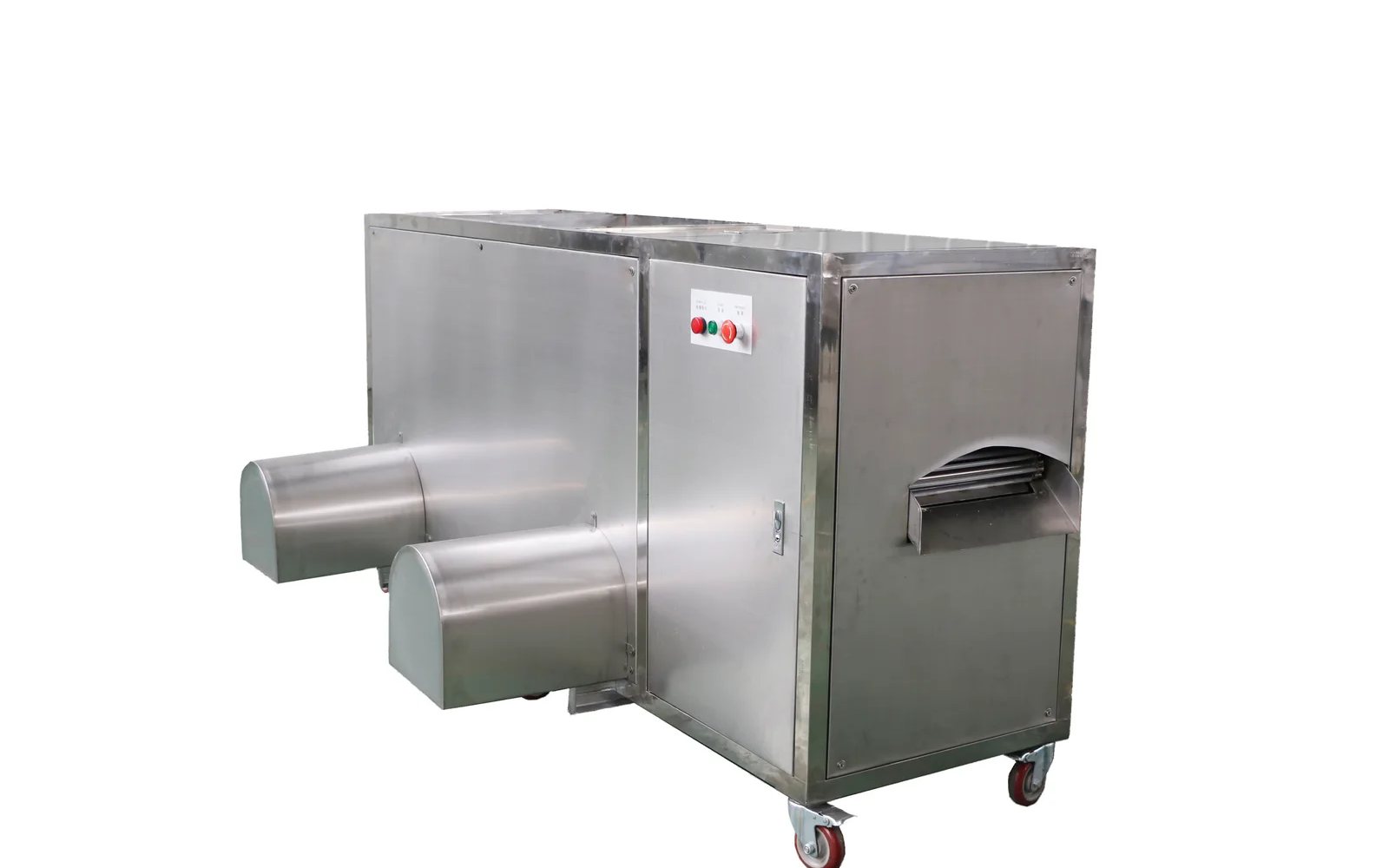
Compare the complete responsibility, not a machine-only price.
Quotation, delivery and support boundary
| Configuration and options | Freeze the model reference, heating route, oil circulation and filtration, transfers, controls and project-specific changes. |
|---|---|
| Quality and factory acceptance | Agree inspections, available product or substitute, loading basis, run duration, records, responsibilities and FAT limits. |
| Packing and delivery | Record export packing, spare parts, documentation, shipping term, destination handling and evidence required before dispatch. |
| Installation and after-sales support | Define foundations, utilities, lifting, labor, remote or on-site guidance, commissioning inputs, training and the support response path. |
A machine-only price hides the real cost of a frying line. Compare the complete responsibility: the fryer, the heat exchanger, the oil filtration and pumping system, the exhaust extraction, the controls, the infeed and outfeed conveyors, and the commissioning. A low fryer price that excludes a properly sized filter and extraction will cost more in oil, cleaning and rejected product within months.
Ask each supplier to itemise the same boundaries so the quotations are comparable. Include oil life, energy consumption, cleaning time and spare parts in the comparison, because the fryer with the lowest purchase price is often the most expensive to run when oil changes and downtime are counted over two years of production.
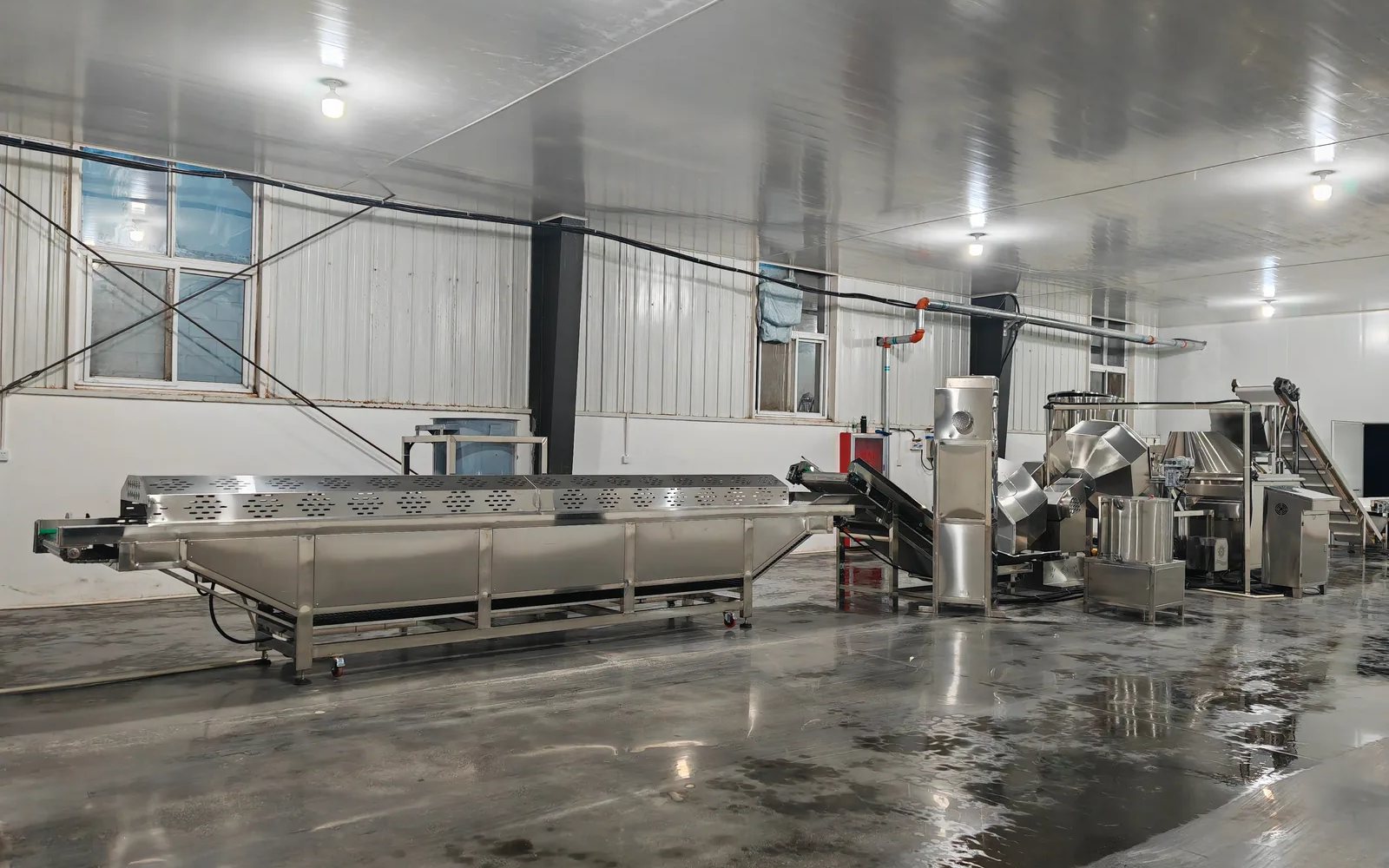
Fryer and oil filtration supplied as connected duties.
Verified project scope
Treat frying and oil filtration as one connected duty rather than two separate purchases. The filter must remove the fines your product generates at a rate that keeps the oil clean enough for the finished colour and flavour you accept, and the oil pump must keep the oil moving through the filter and back to the fryer without starving the product bed.
Specify the filtration duty with the product, not in the abstract. A breaded product sheds more fines than a clean-cut potato slice, so the filter area, the mesh or paper grade, and the cleaning cycle must be sized from a trial with the actual product. When the fryer and the filter are supplied by different parties, write the oil flow, pressure and temperature interface into both scopes so the two machines can be commissioned together.
Write the oil flow, temperature and pressure interface into both scopes when the fryer and the filter come from different parties, so the two machines are commissioned as one circuit instead of two guesses.
One oil flow, temperature and pressure interface between the two scopes is the difference between a circuit and two guesses.
Written interfaces are what let two scopes be commissioned as one circuit.
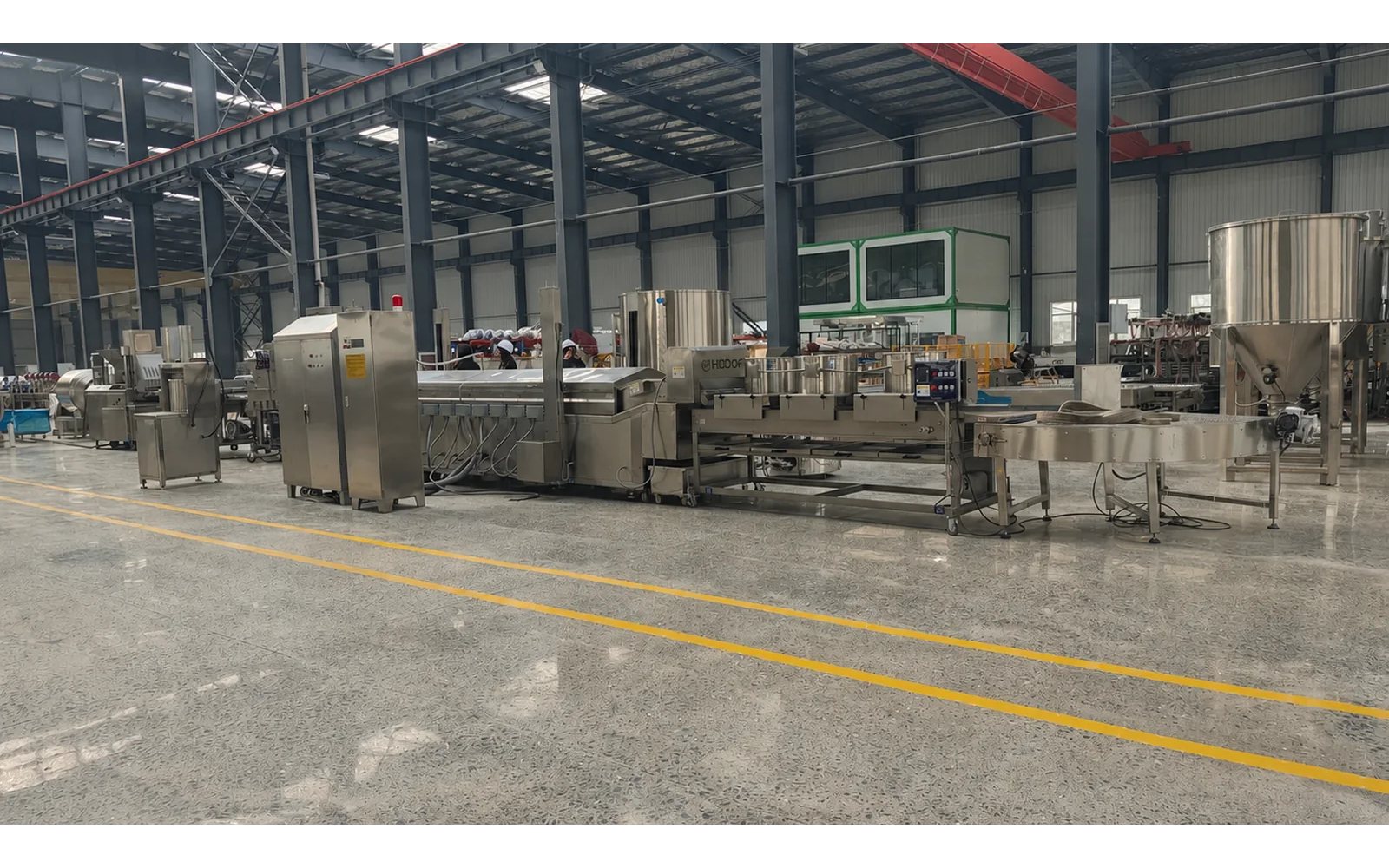
Five inputs before recommending a model.
Product, geometry and coating.
- 01FoodProduct, geometry and coating.
- 02FeedMoisture, temperature and loading.
- 03ResultThermal and finished condition.
- 04OperationOutput, schedule and changeovers.
Declare what reaches the belt.
Product geometry, surface condition, feed distribution and transfer height become part of the review basis.
Match heating route to the operating basis.
Electric or gas configuration, loading condition, residence review and controls must be considered together.
Record circulation and filtration responsibility.
Replenishment, cleaning, filtration and oil-return scope must be visible before quotation.
Coordinate the next stage before layout.
De-oiling, cooling, seasoning or freezing changes the transfer geometry and control handoff.
HDF-4000
| Power | 100 kW |
|---|---|
| Dimensions | 4000 × 1200 × 2400 mm |
| Weight | 1,200 kg |
| Oil tank note | 720 L |
Project output basis: Approved food, loading, operating condition and acceptance method.
HDF-5000
| Power | 120 kW |
|---|---|
| Dimensions | 5000 × 1200 × 2400 mm |
| Weight | 1,500 kg |
HDF-6000
| Power | 180 kW |
|---|---|
| Dimensions | 6000 × 1200 × 2400 mm |
| Weight | 1,800 kg |
HDF-8000
| Power | 200 kW |
|---|---|
| Dimensions | 8000 × 1200 × 2400 mm |
| Weight | 2,000 kg |
| Catalog heat input | 200,000 kcal |
|---|---|
| Dimensions | 4000 × 1200 × 2400 mm |
| Weight | 500 kg |
| Electric model references | HDF-4000 / HDF-5000 / HDF-6000 / HDF-8000 |
|---|---|
| Gas model reference | HDF-4000 |
| Published output reference range | 500-1500 kg/h |
| Project output basis | Size from the approved food, loading and operating trial basis |
Before a model can be recommended, five inputs should be on the table: the product and its moisture, size and density; the required output and production pattern; the finished moisture or colour target; the available utilities and fuel; and the site constraints for length, extraction and drainage. With these five, the fryer can be sized as a thermal and mechanical system rather than guessed from a catalog.
When any of the five is missing, say so in the review and record the assumption. A fryer sized for one product at one output is a different machine from one that must handle a product family across two shifts, and the difference shows up in belt length, oil volume and heat input. Clear inputs are what turn a fryer recommendation into something you can hold a supplier to.
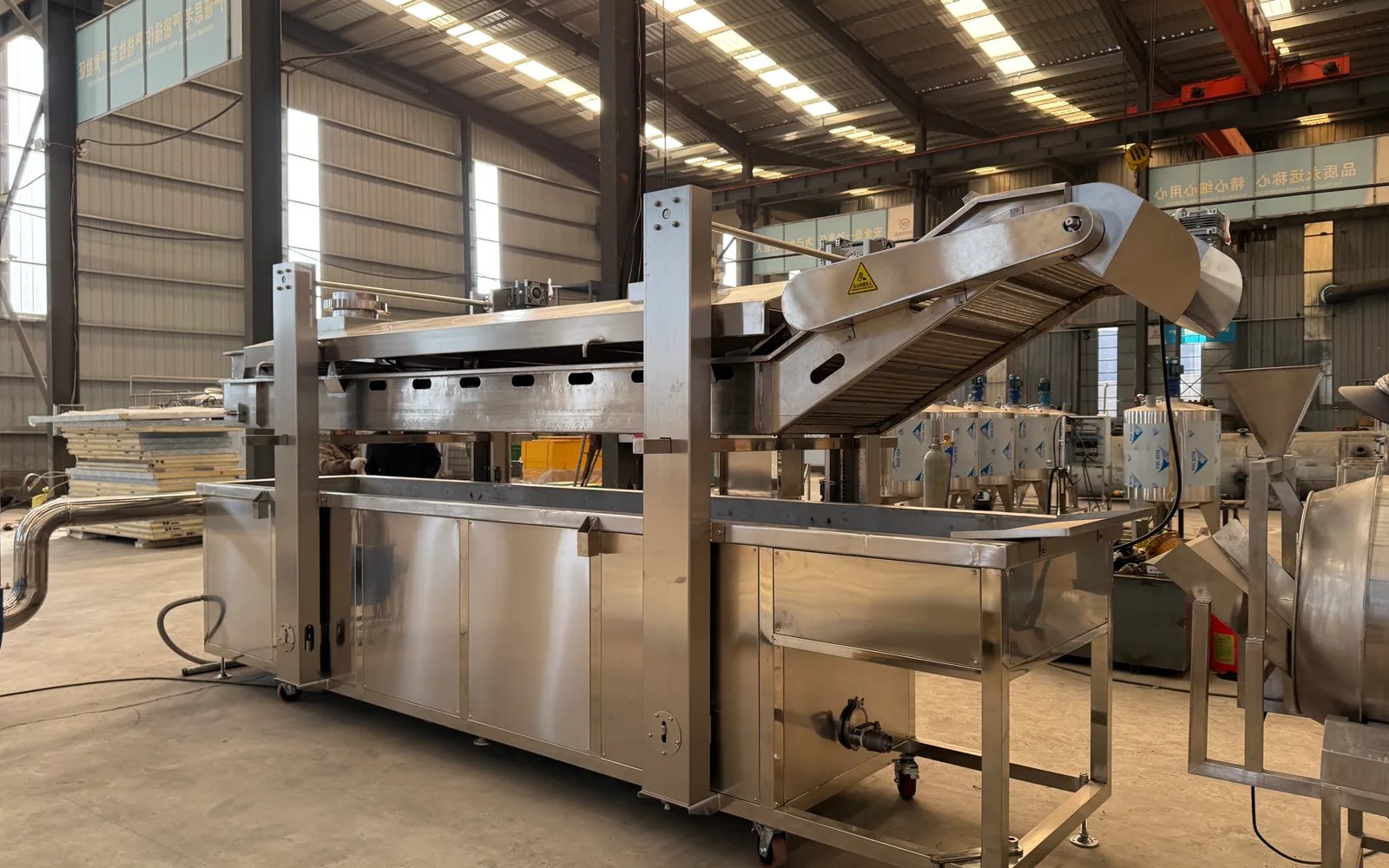
Confirm the Test-Run and Acceptance Boundary
Fix product, oil handling and the next process stage so the factory test and the site acceptance review the same duty.
| Product and oil | Geometry, coating, batter, oil type and replenishment |
|---|---|
| Thermal duty | Temperature, residence time and throughput basis |
| Filtration | Oil-return, filtration grade and cleaning scope |
| Next stage | De-oiling, cooling, seasoning or freezing handoff |
| Acceptance | Test-run product, utilities, spares and sign-off |
Frequently asked questions
Which product details are required before selecting a continuous fryer model?
Does a catalog output figure equal the guaranteed project output?
How should electric and gas heating routes be compared?
What affects the continuous fryer quotation?
Can oil filtration and post-fry equipment be included?
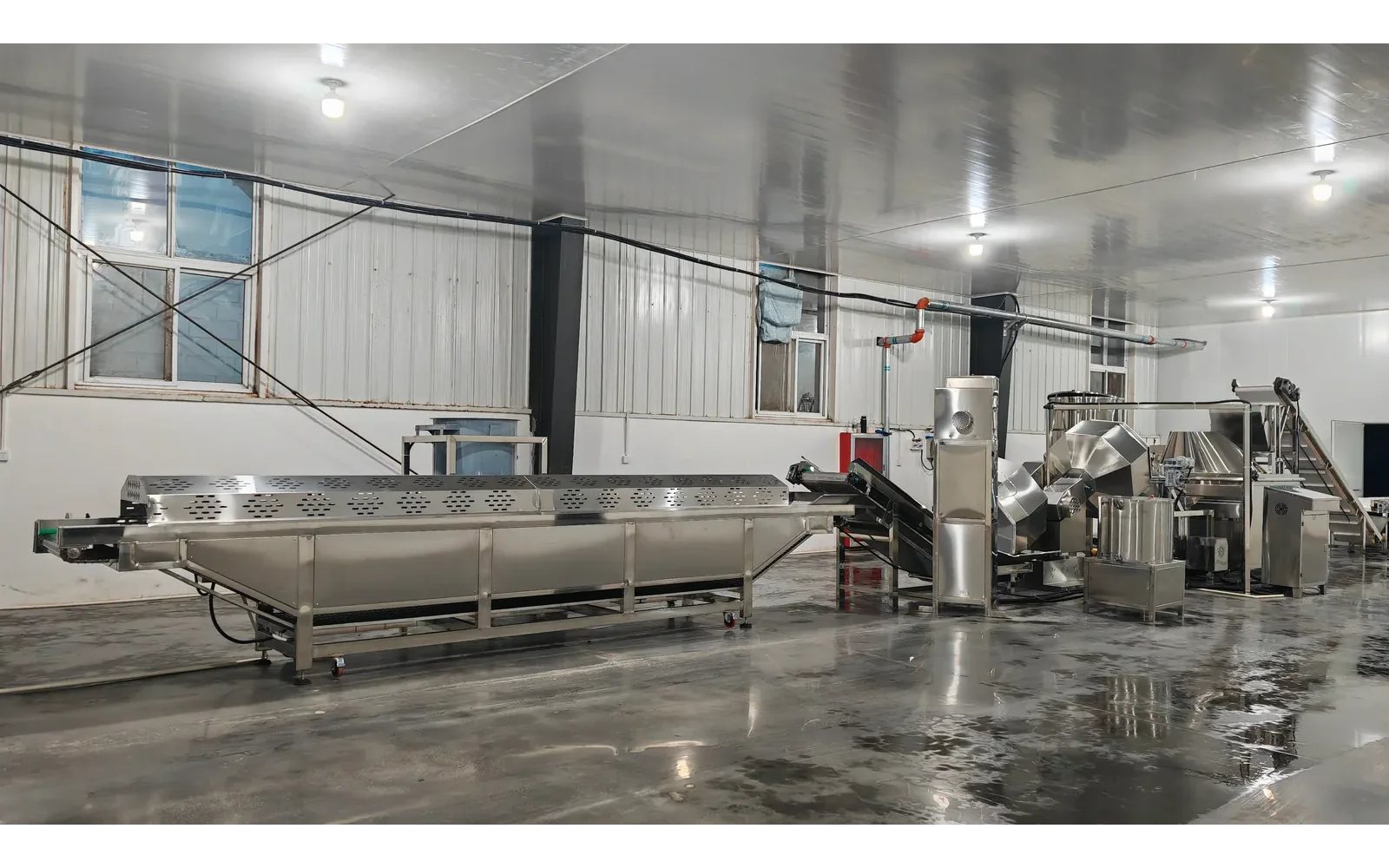
Related pages
Potato Chips Production Line
Define the potato, finished chip and factory boundary before connecting preparation, frying, seasoning and packaging feed.
Frozen French Fries Production Line
Review potato preparation, strip conditioning, pre-frying, cooling, IQF freezing, equipment references and factory interfaces as one line.
Fried Food Processing Line
Configure preparation, frying, oil handling, cooling, seasoning and freezing around the finished product, factory and acceptance basis.
Coated Food Frying Line
Connect forming, battering, breading, continuous frying and post-fry handling to product tests, equipment families and acceptance criteria.
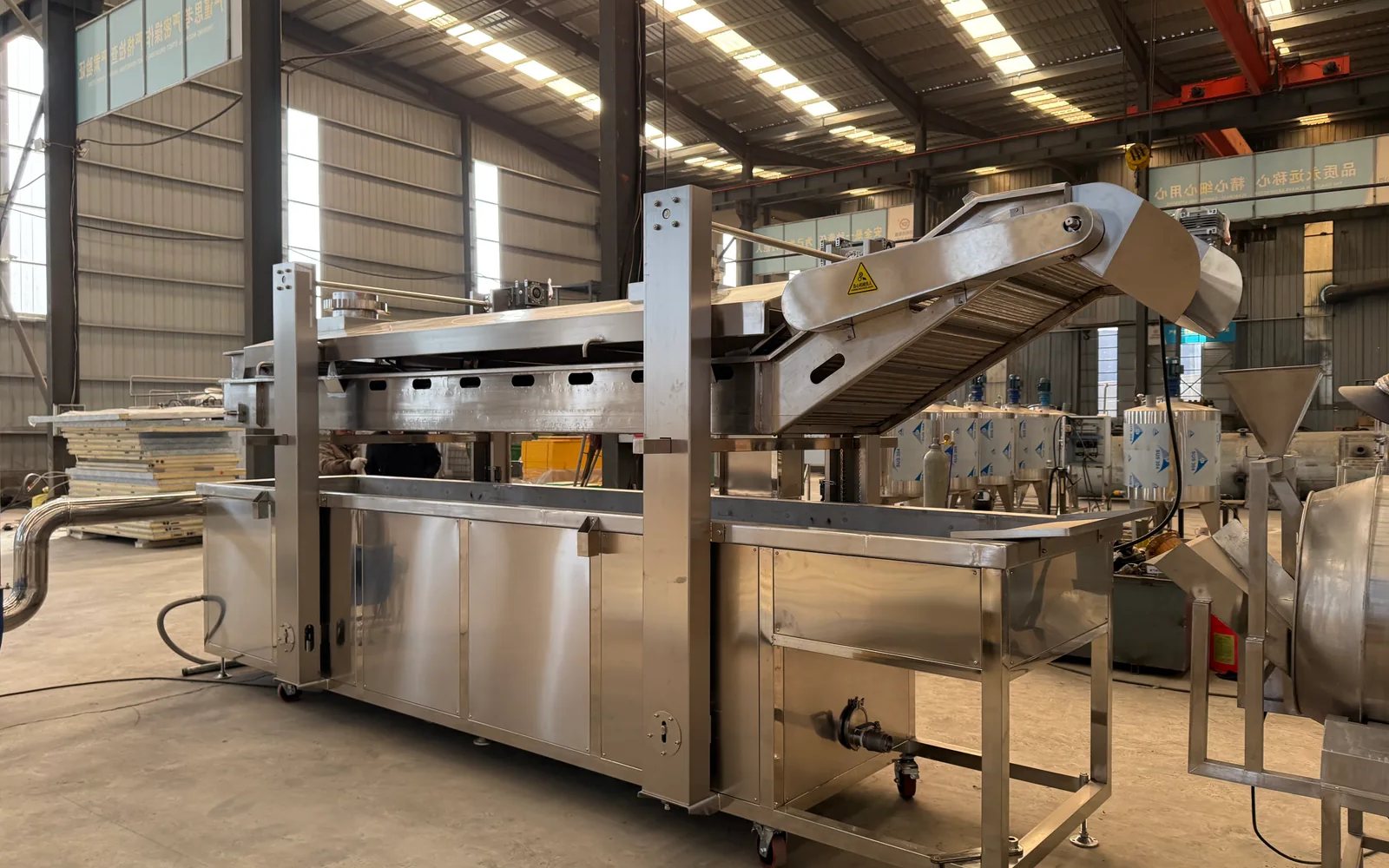
Continuous Fryer Selection Engineering
Understand how product condition, loading, heating route, oil management, factory interfaces and acceptance criteria drive continuous fryer selection.
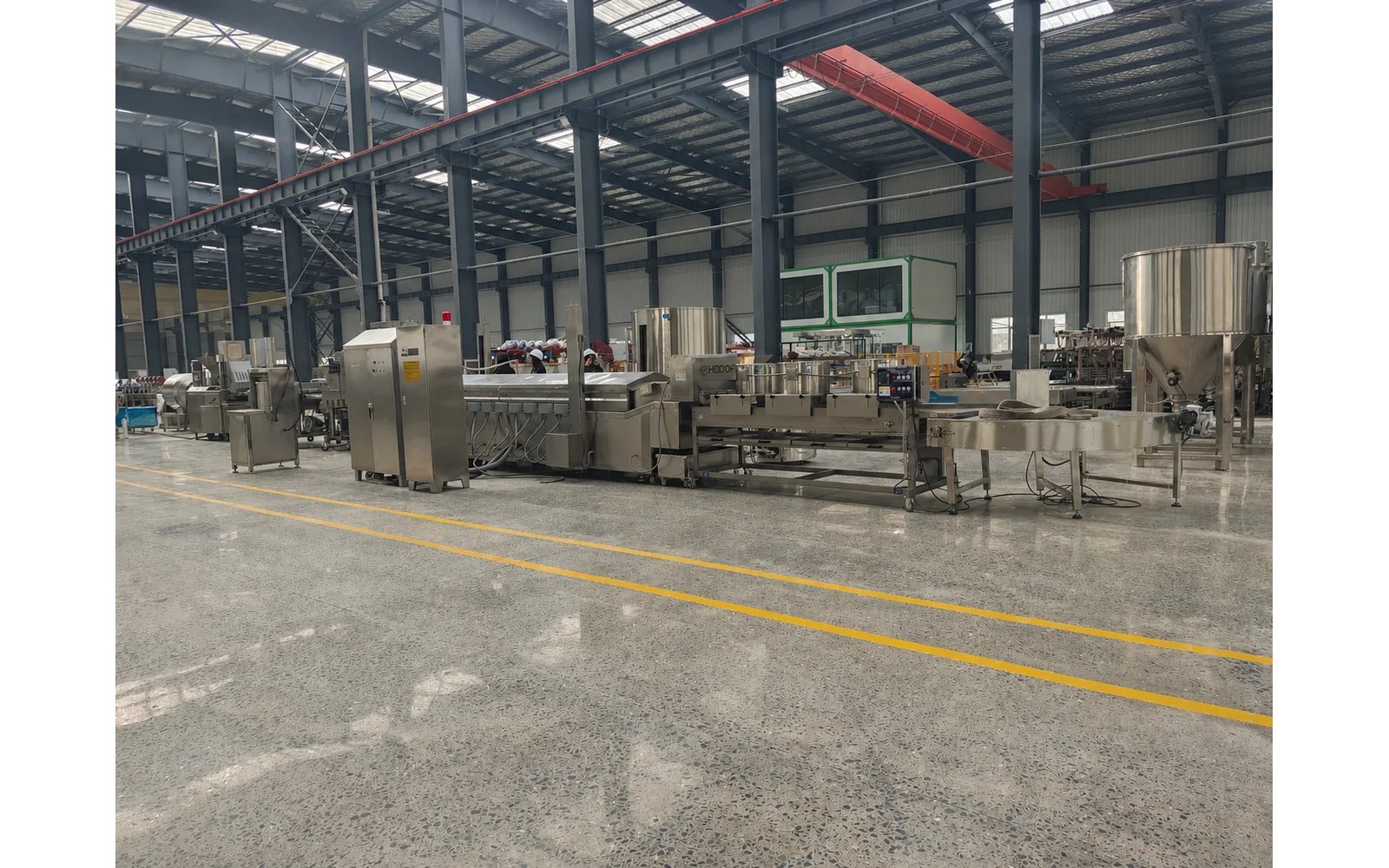
Compact Fried Snack Processing and Packing Line
A recorded end-user purchase connecting preparation, batch frying, de-oiling, seasoning and packing, documented without inventing output or operating resul