
Frozen potato processing / Complete route
Frozen French Fries Production Line
Review the process, equipment duties and project boundary from one defined basis.
Follow the Strip From Receiving to Frozen Pack Feed
Each stage exposes a product condition, equipment duty and evidence point needed before the complete line can be balanced.
Remove soil and defects without losing the product basis.
Define receiving condition, storage, washing result, peeling method, trim responsibility and waste route.
- Evidence: incoming sample and inspection method
- Interface: water, drainage and peel waste
- Open point: final peeling and sorting scope
Create a stable strip load for every downstream stage.
Strip dimensions, length distribution, broken pieces and off-spec separation must be agreed.
- Evidence: tooling reference and cut sample
- Interface: feed orientation and rinse route
- Open point: current strip tolerance
Set the strip condition entering oil.
Buyer-defined treatment, thermal basis, cooling and surface-water removal affect fry loading and product result.
- Evidence: time-temperature and product record
- Interface: steam or heat, cooling and drainage
- Open point: recipe and treatment basis
Review thermal duty, residence basis and oil loop together.
Catalog output is not product-independent line capacity. Product trials or approved evidence are required.
- Evidence: approved product and thermal result
- Interface: heating, filtration, extraction and controls
- Open point: selected model and oil scope
Deliver a defined load to the freezer.
De-oiling, cooling, belt loading and hold time set the temperature and product distribution at freezer entry.
- Evidence: interface temperature and loading record
- Interface: extraction and cooling medium
- Open point: buffer and hold allowance
Quick-freeze and pack handoff
Confirm the frozen endpoint and refrigeration responsibility.
Freezer, refrigeration package, defrost, condensate, frozen transfer and packaging scope remain project-specific.
- Evidence: buyer-defined frozen acceptance method
- Interface: refrigeration, room and pack feed
- Open point: cold-side responsibility matrix
Follow the strip from receiving all the way to the frozen pack feed, because the french fry line is one connected route. Washing, peeling, cutting, blanching, drying, frying, freezing and packing each change the strip, and the line works when each stage hands the next a defined condition. A cut that varies in thickness will blanch, fry and freeze unevenly, and that variation is created at the cutter and paid for at the freezer.
Record the potato variety, the cut dimensions and the finished product target. The variety's dry matter and sugar content control the colour and the texture, and they change with the season, so the line must be configured for the raw material you will actually receive. The strip, not the equipment, is the thread that runs through the review.
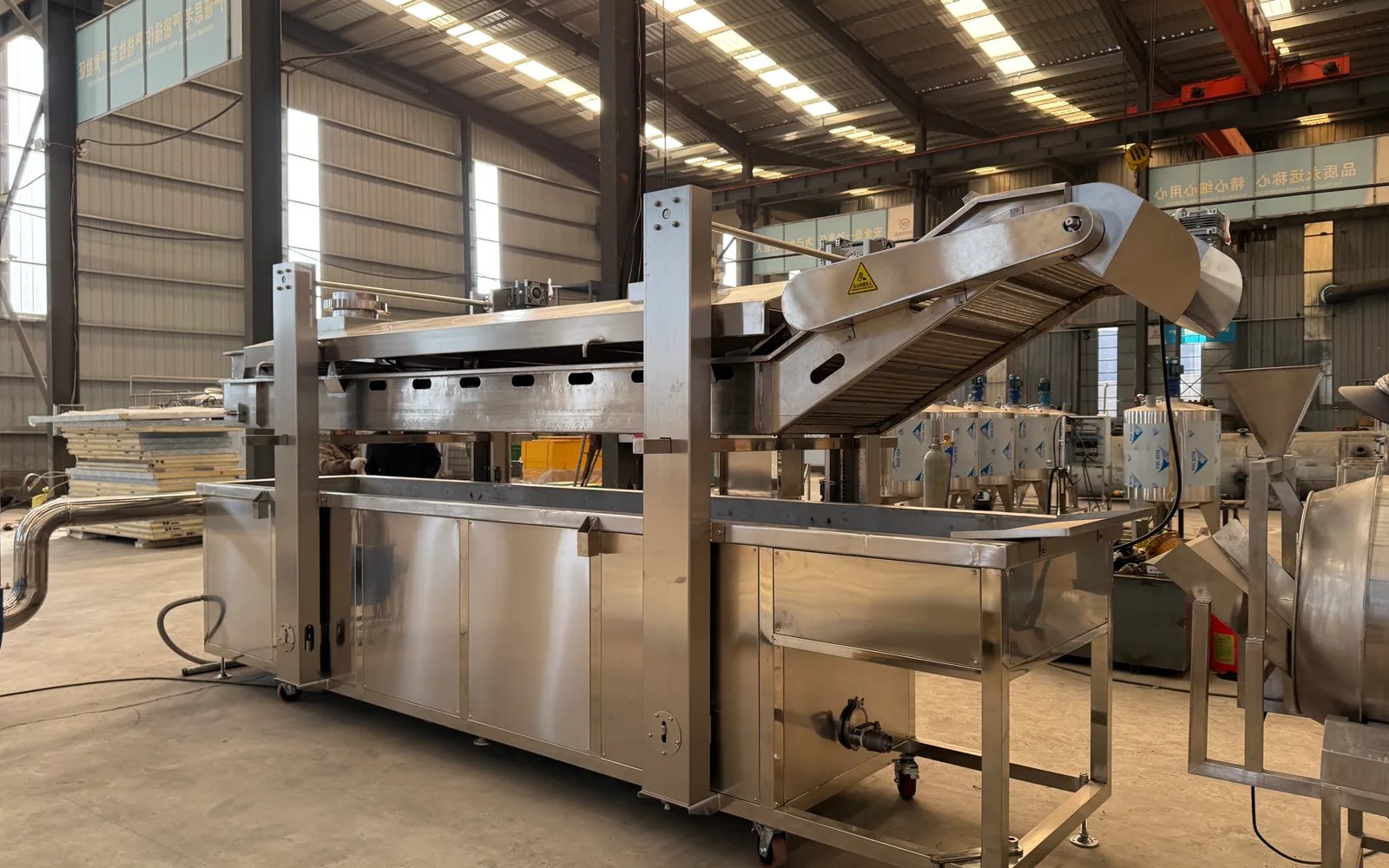
Four Conditions Control Net Line Performance
These values must be measured at the interfaces, not assumed from individual machine names.
- 01Strip distributionSize, defects and loading entering conditioning.Cut inspection
- 02Surface conditionWater, temperature and uniformity entering the fryer.Pre-fry record
- 03Warm-side dischargeTemperature, oil carry-over and belt loading leaving cooling.Freezer feed record
- 04Frozen handoffBuyer-defined endpoint, integrity and pack-feed condition.Acceptance record
Strip distribution
Size, defects and loading entering conditioning.
Surface condition
Water, temperature and uniformity entering the fryer.
Warm-side discharge
Temperature, oil carry-over and belt loading leaving cooling.
Frozen handoff
Buyer-defined endpoint, integrity and pack-feed condition.
Catalog-backed equipment combination
Four conditions control the net performance of the line: the cut uniformity, the surface moisture before frying, the fryer conditions and the freezer load. Each one limits the output and the quality, and improving one while ignoring the others simply moves the problem. A fryer cannot fix a poor cut, and a freezer cannot fix a wet strip.
Measure each condition rather than assuming it. Record the cut length distribution, the surface water after drying, the oil temperature and residence, and the freezer's bed loading and air temperature. Those measurements are what turn a line that should work into a line that is proven to work.
Improving one condition while ignoring the others simply moves the problem to another stage.
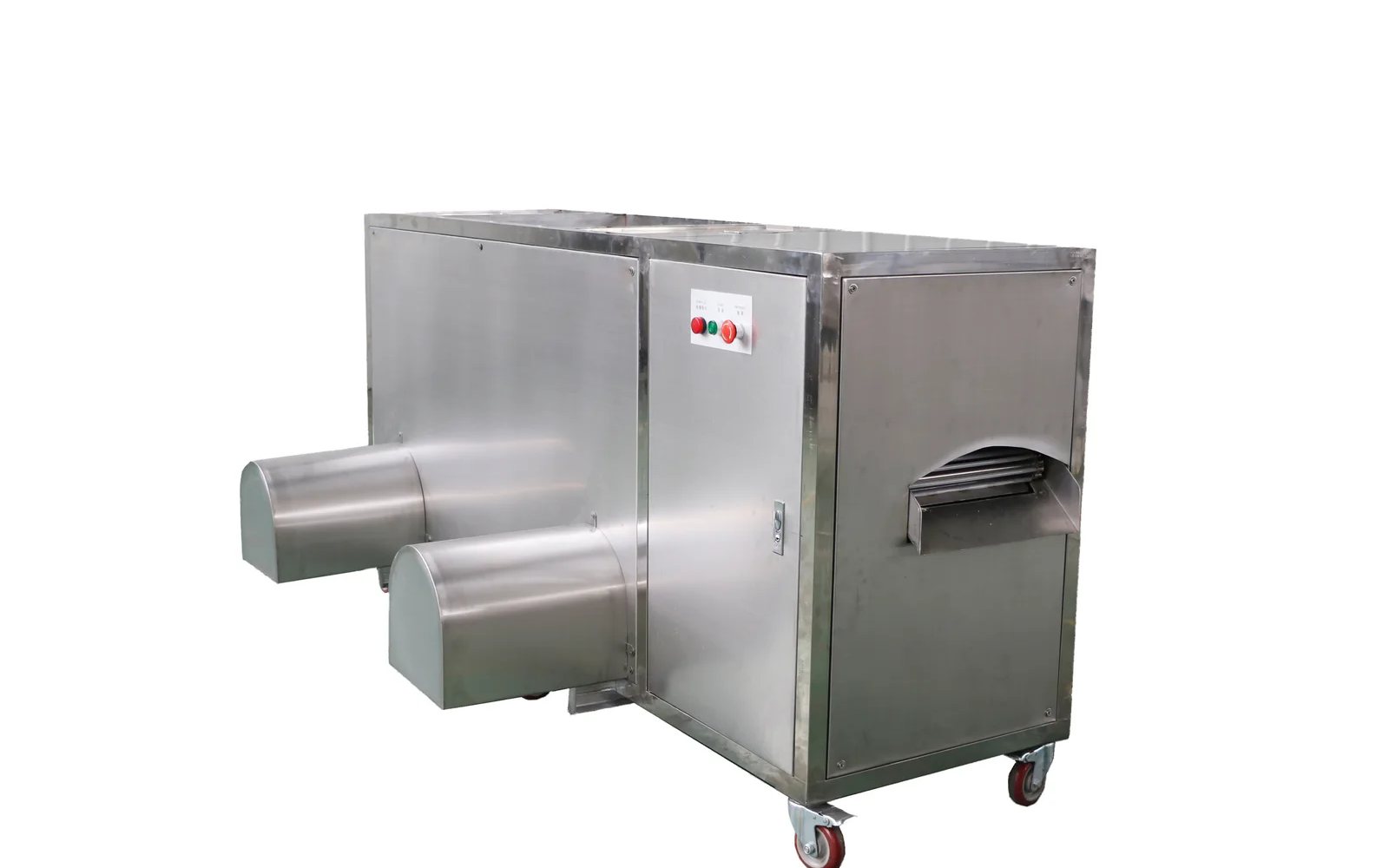
Compare Machine Duties Against One Line Basis
The equipment combination uses published Hadof model information. Reconfirm current data, product suitability and utilities before quotation.
Bubble washing
W600-2.5M / W600-3M / B600-6M
Root cutting
301 high-speed slicer / 680 bulb slicer
Electric continuous pre-frying
HDF-4000 / 5000 / 6000 / 8000
Fluidized-bed route
Single-, two-stage or four-bar configuration
Compare every machine against one line basis, not against its own best case. Fix the strip dimensions, the hourly output and the finished moisture, oil and temperature, then ask each machine to quote against that basis. A fryer quoted for a different cut or a freezer quoted for a different load tells you nothing about how the line will perform together.
Normalise the numbers across the line. Convert each machine's output to the same kilograms per hour and the same strip, and check that the stages can actually run at the same rate. The line's output is the slowest stage, and the comparison should expose which stage that is before the equipment is bought.
The comparison should expose which stage is the bottleneck before the equipment is bought.
Fix the strip dimensions, the hourly output and the finished moisture, oil and temperature before asking any machine to quote.
The line's output is the slowest stage, and the comparison exposes which one that is.
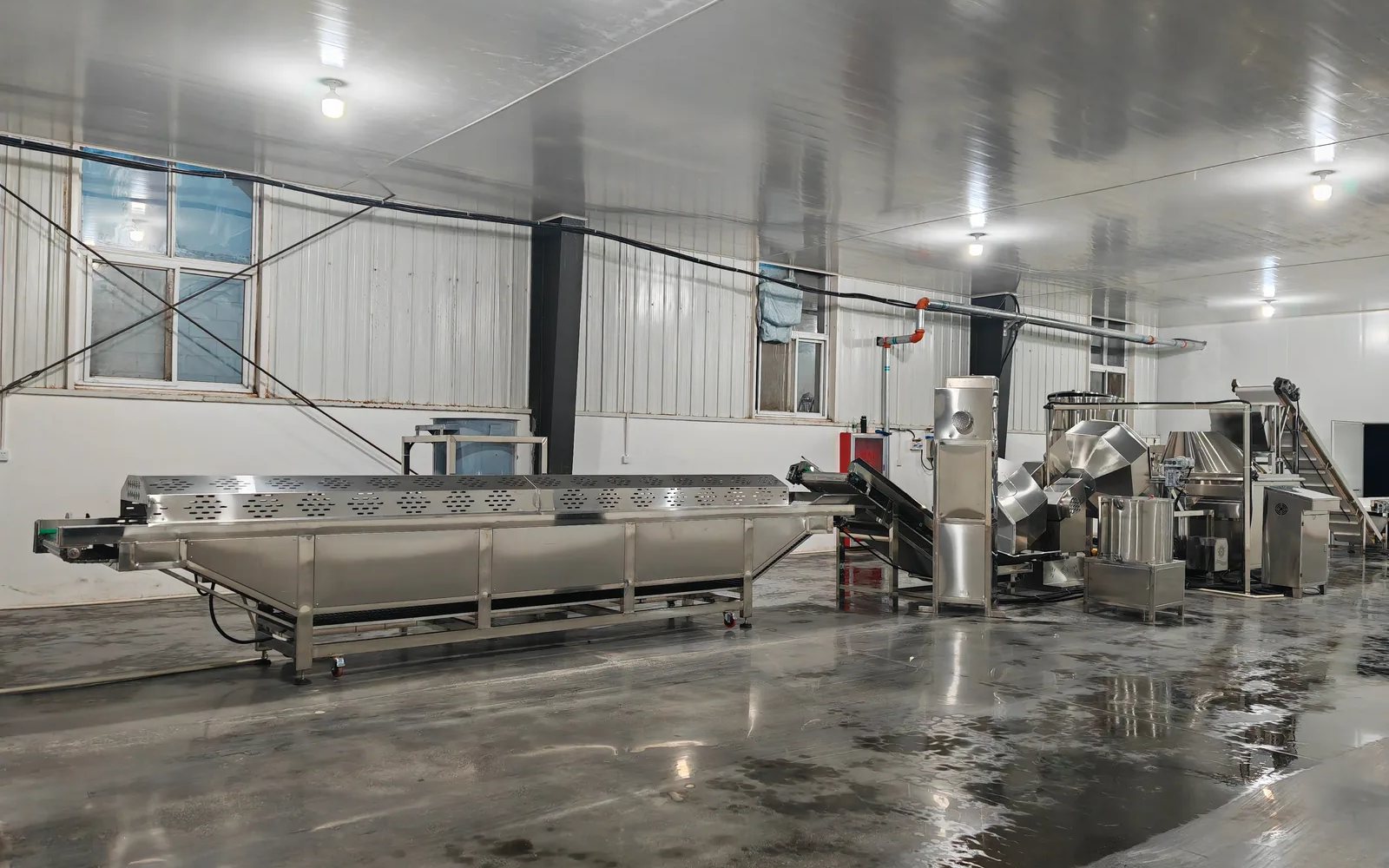
Lock the Warm-Side and Cold-Side Boundary
Use a dimensioned layout and responsibility matrix to coordinate utilities, rooms, extraction, drainage, refrigeration and packaging.
Utilities
Power, water, drainage, heating source, cooling medium and compressed air.
Oil and extraction
Oil storage and filtration, exhaust, make-up air and fire-safety responsibilities.
Refrigeration
Refrigerant, compressors, evaporator duty, defrost, condensate and controls.
Layout and access
Rooms, floor levels, doors, maintenance clearances, frozen transfer and pack feed.
Lock the boundary between the warm side and the cold side of the line. The warm side cooks and dries the strip; the cold side freezes and packs it. Between them the strip must cool and de-oil, and the handoff must not let the product warm up or clump. The boundary is where a french fry line succeeds or fails.
Define the transfer explicitly. Confirm the temperature and the oil content of the strip as it leaves the fryer, how it is cooled and de-oiled, and how it enters the freezer as a separated, single-layer bed. When the boundary is locked, the warm and cold sides can be specified and commissioned as one line rather than two.
When that boundary is locked, the warm and cold sides can be commissioned as one line rather than two.
Confirm the temperature and oil content of the strip as it leaves the fryer, and how it enters the freezer as a separated, single-layer bed.
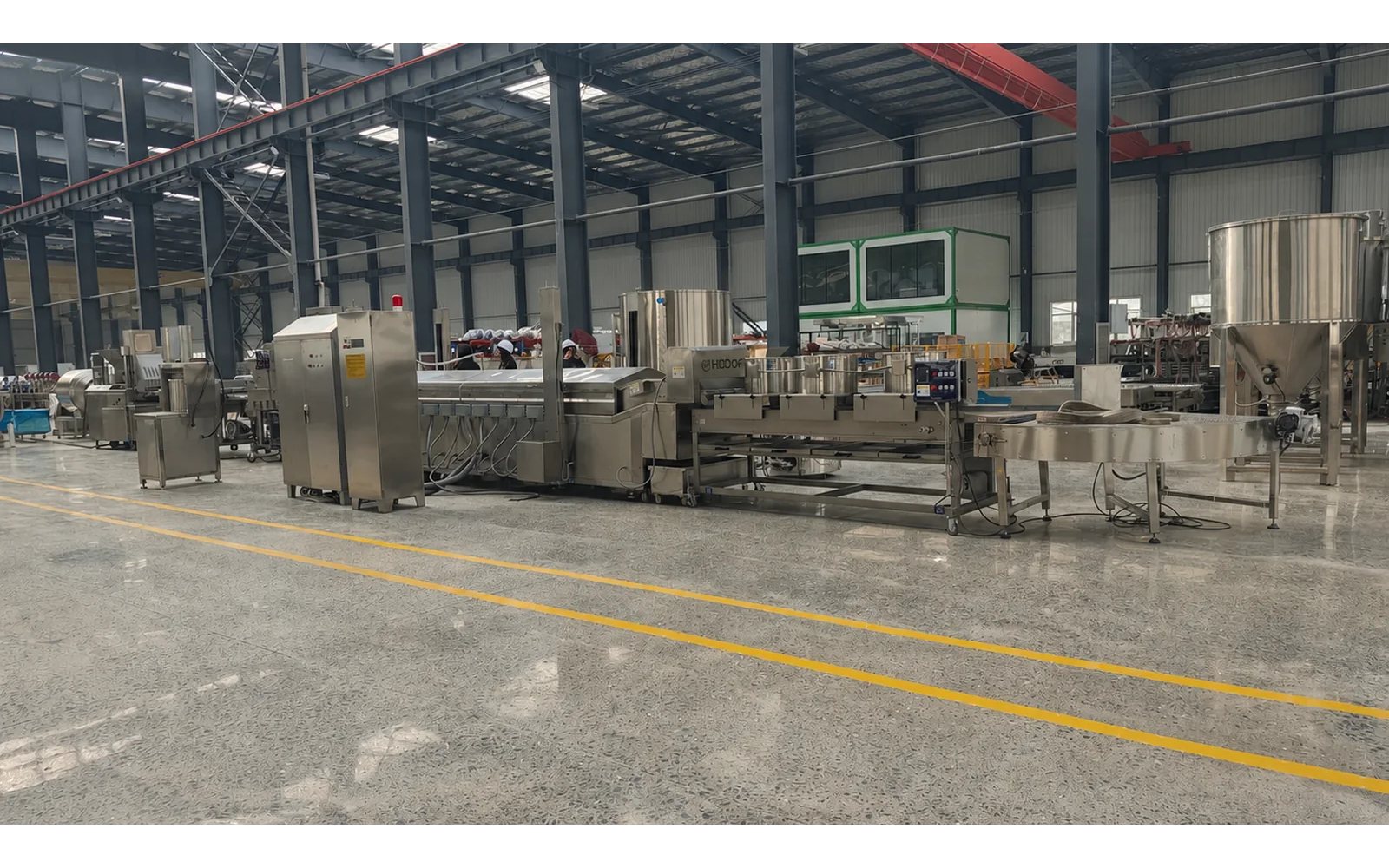
Approve the Test Basis Before the Test Result
Capacity and product result require an agreed raw material, operating period, settings, sampling method and responsibility boundary.
| Feed basis | Potato specification, strip size, incoming temperature and operating pattern. |
|---|---|
| Product basis | Buyer-defined pre-fry and frozen endpoints with inspection methods. |
| Capacity basis | Stage-by-stage mass balance, allowable buffers and planned interruptions. |
| Scope basis | Utilities, refrigeration, extraction, installation, commissioning and documentation. |
Frozen Food Processing Systems
Review product-load and refrigeration procurement boundaries.
IQF Throughput Balancing
Connect warm-side conditions to cold-side loading.
Quotation Risk Checklist
Check assumptions, exclusions and acceptance responsibilities.
| Bubble washer references | W600-2.5M / W600-3M / B600-6M |
|---|---|
| Continuous fryer references | HDF-4000 / HDF-5000 / HDF-6000 / HDF-8000 |
| Catalog fryer output range | 600-1500 kg/h |
Frequently asked questions
What product information is required to configure a frozen French fries line?
Do individual machine outputs equal the net frozen-fries line output?
Is the refrigeration package included with the IQF freezer?
Approve the test basis before the test result. State the potato variety, the cut, the output, the frying and freezing conditions, and the finished moisture, oil and colour you accept, and agree how each will be measured. A trial without a written basis produces a tray of fries but no evidence about how the line will run in production.
Run the trial with representative potatoes at the production rate and record the results against the targets. Then carry the same basis into commissioning and acceptance, so the line is judged on the same terms it was selected. The written basis is what makes the test result meaningful.
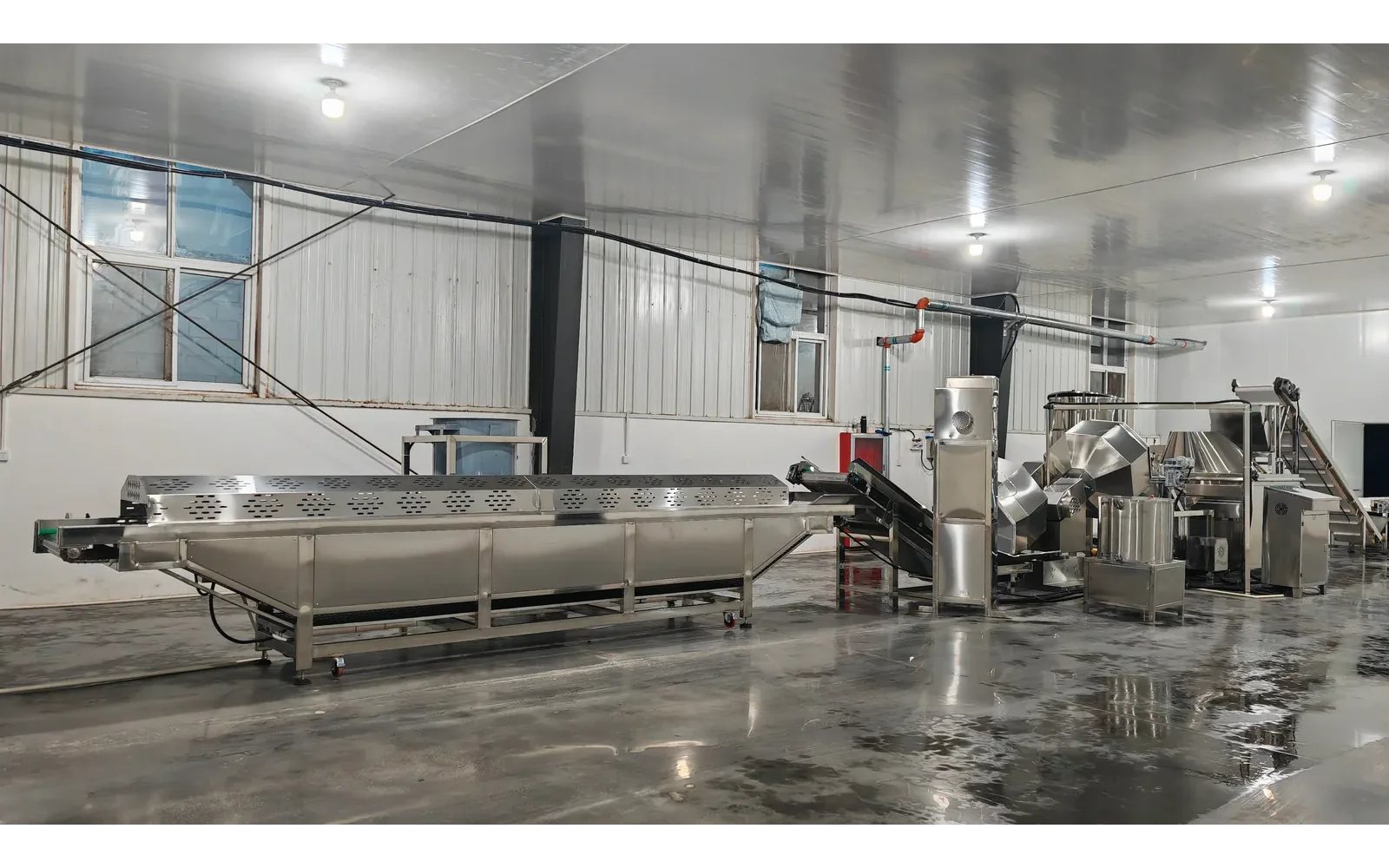
Carry the Strip Basis Into the Cold Chain
One strip basis from trial to frozen pack
Carry the strip basis into the cold chain, because the line does not end at the freezer. The frozen strips must be weighed, packed and moved into cold storage without thawing or clumping, and the packing line must keep pace with the freezer. A freezer that discharges faster than the packer accepts will hold product too long and lose quality.
Confirm the temperature and the pack format at the handoff. The packed carton must enter cold storage at the agreed temperature, and the packing room must be cool enough to prevent condensation. When the strip basis travels into the cold chain, the line is delivered as a complete route to the warehouse, not as machines that stop at the freezer.
The line is delivered as a complete route to the warehouse, not as machines that stop at the freezer.
Confirm the temperature and the pack format at the handoff, and keep the packing room cool enough to prevent condensation on the frozen product.
The packed carton must enter cold storage at the agreed temperature, and the line is only complete when the product is safely in the warehouse.
The cold chain is where the quality earned in the fryer and the freezer is finally protected.
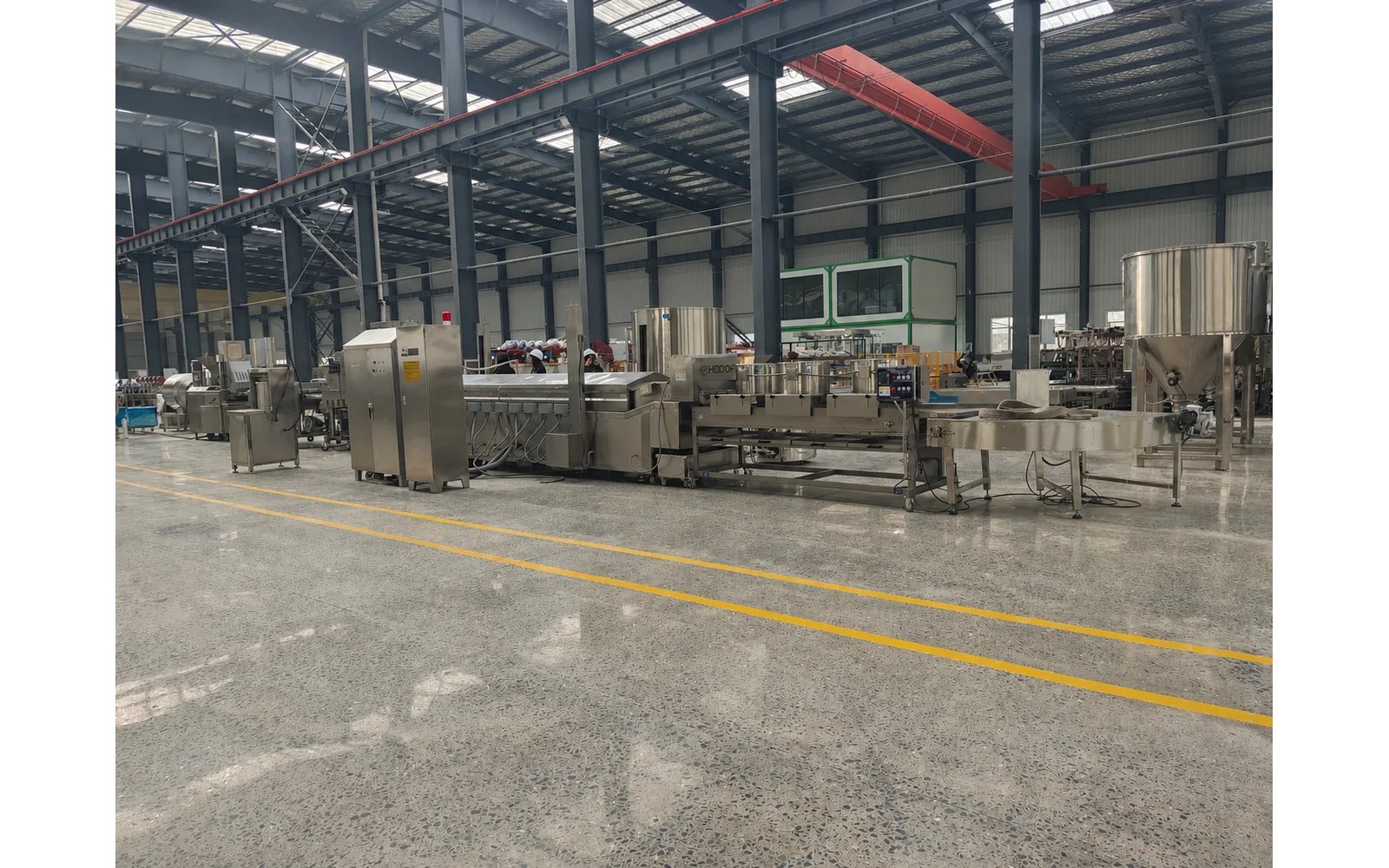
Related pages
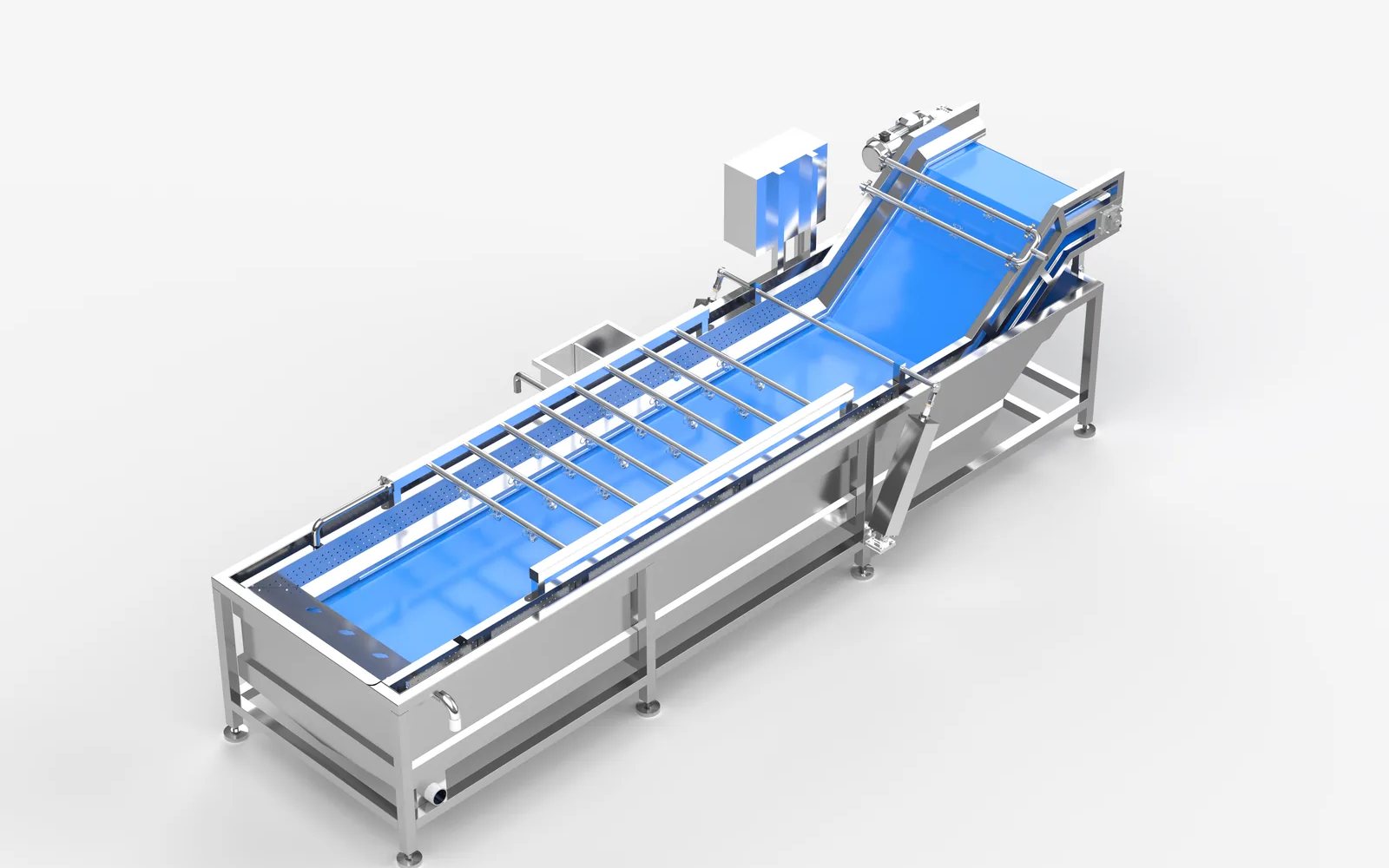
Vegetable Washing Equipment
Compare verified Hadof washer references, washing mechanisms, product risks, line interfaces, test evidence and project configuration inputs.
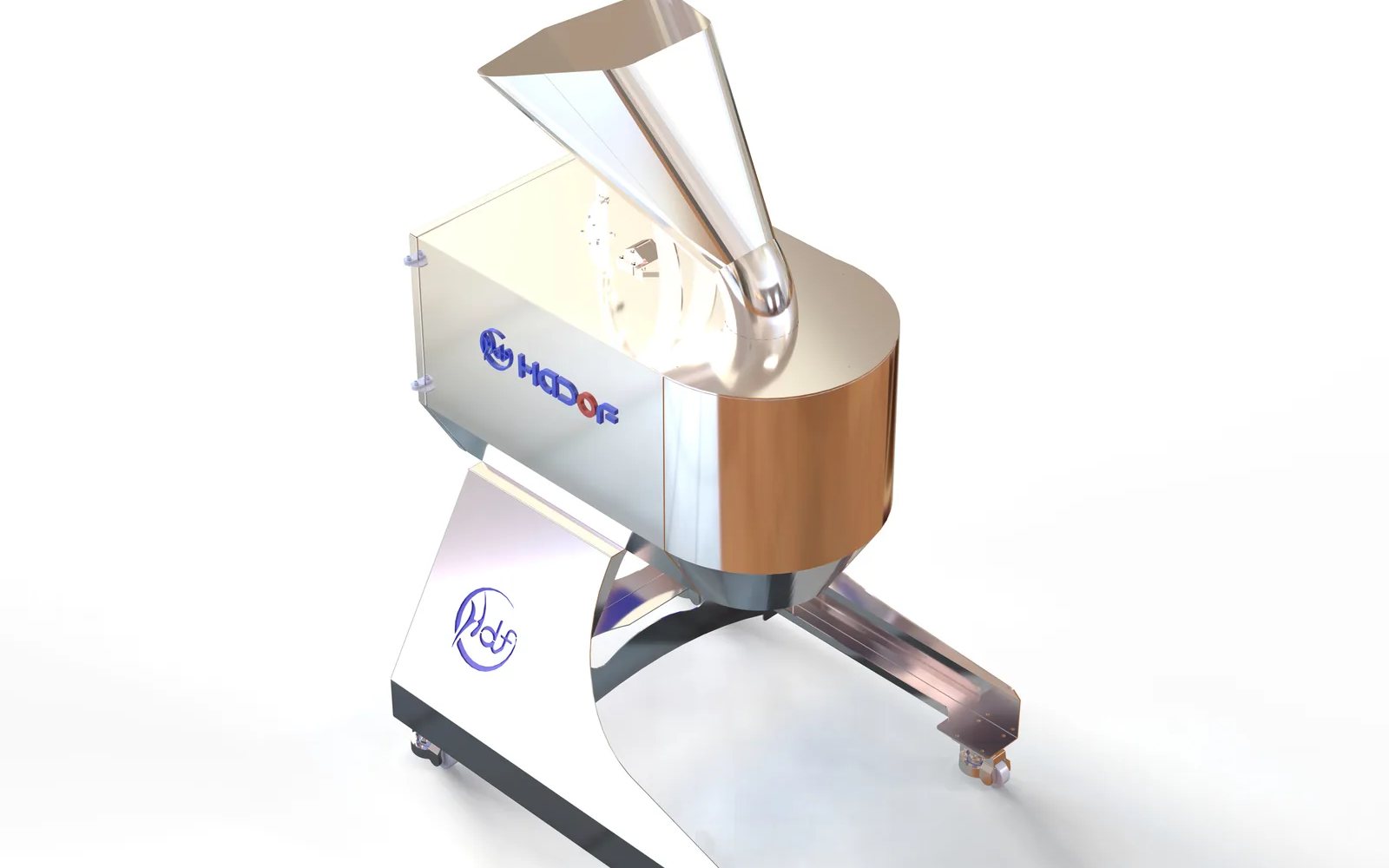
Vegetable Cutting Machine
Compare verified Hadof vegetable cutter references by crop, finished geometry, tooling, output, line handoff and acceptance requirements.
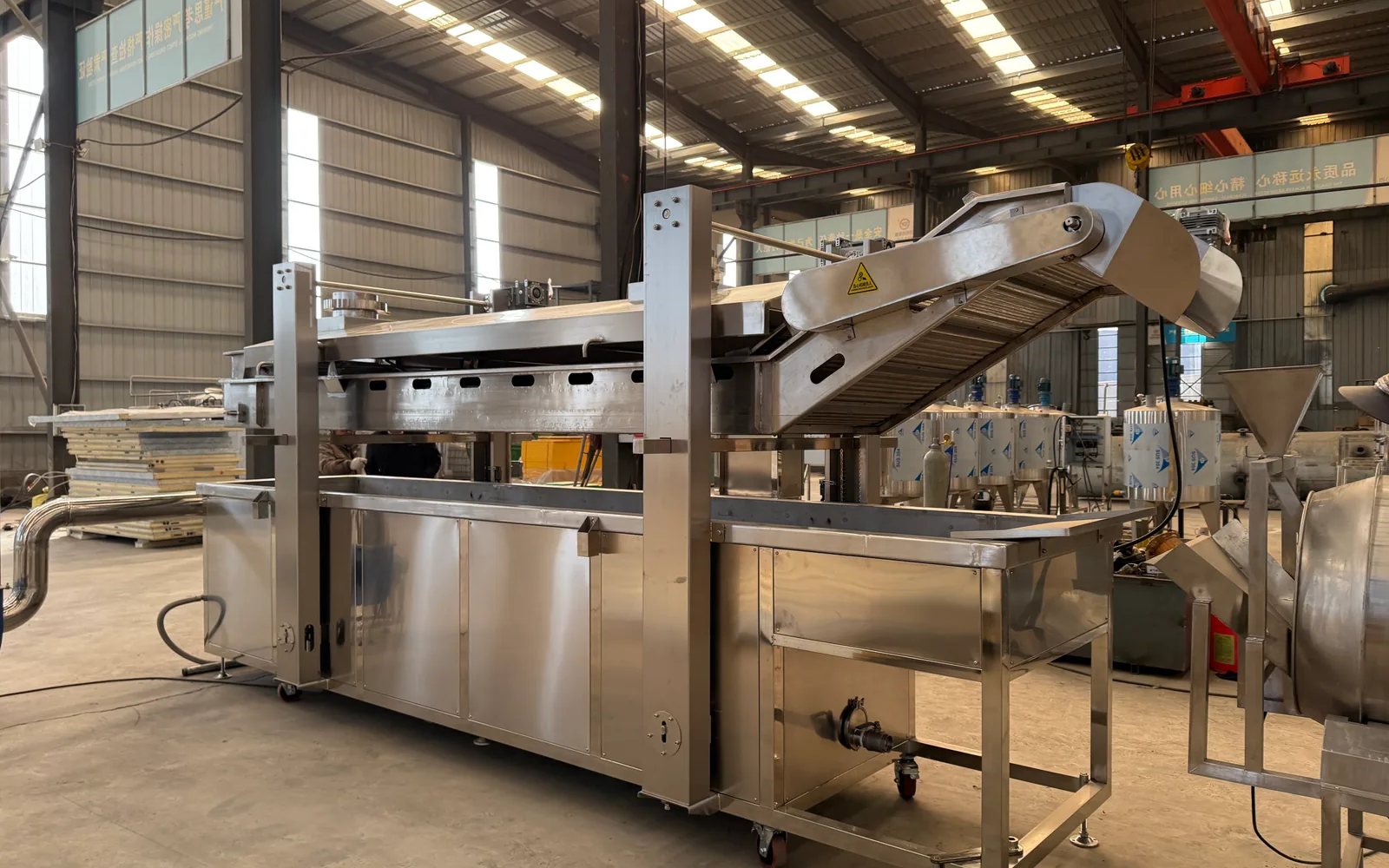
Continuous Fryer
Compare verified Hadof continuous fryer references, then review product loading, heating route, oil handling, factory interfaces and acceptance scope.
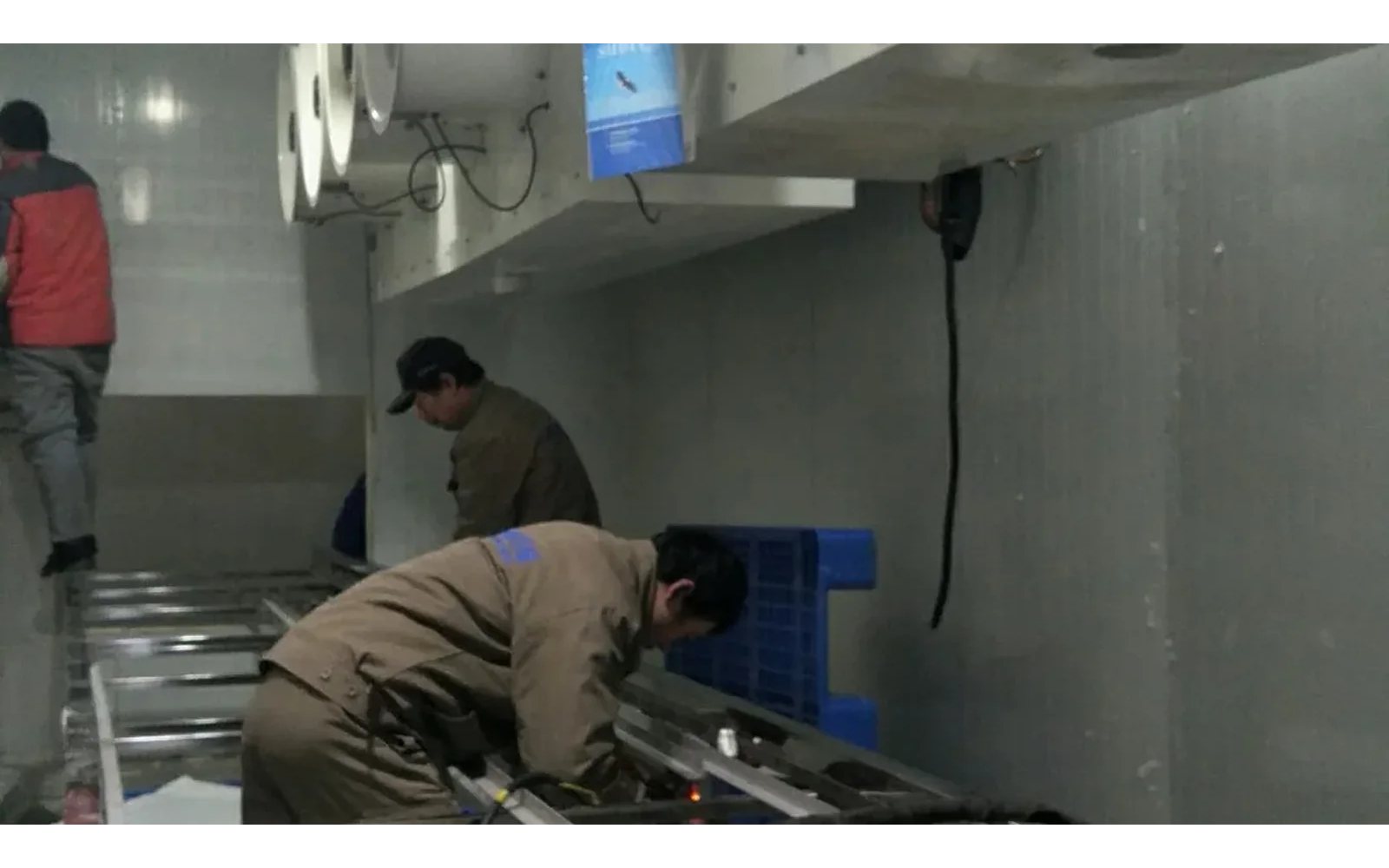
IQF Freezing Tunnel
Review IQF product loading, fluidized-bed arrangements, frozen endpoint, refrigeration boundary, installation evidence and acceptance scope.
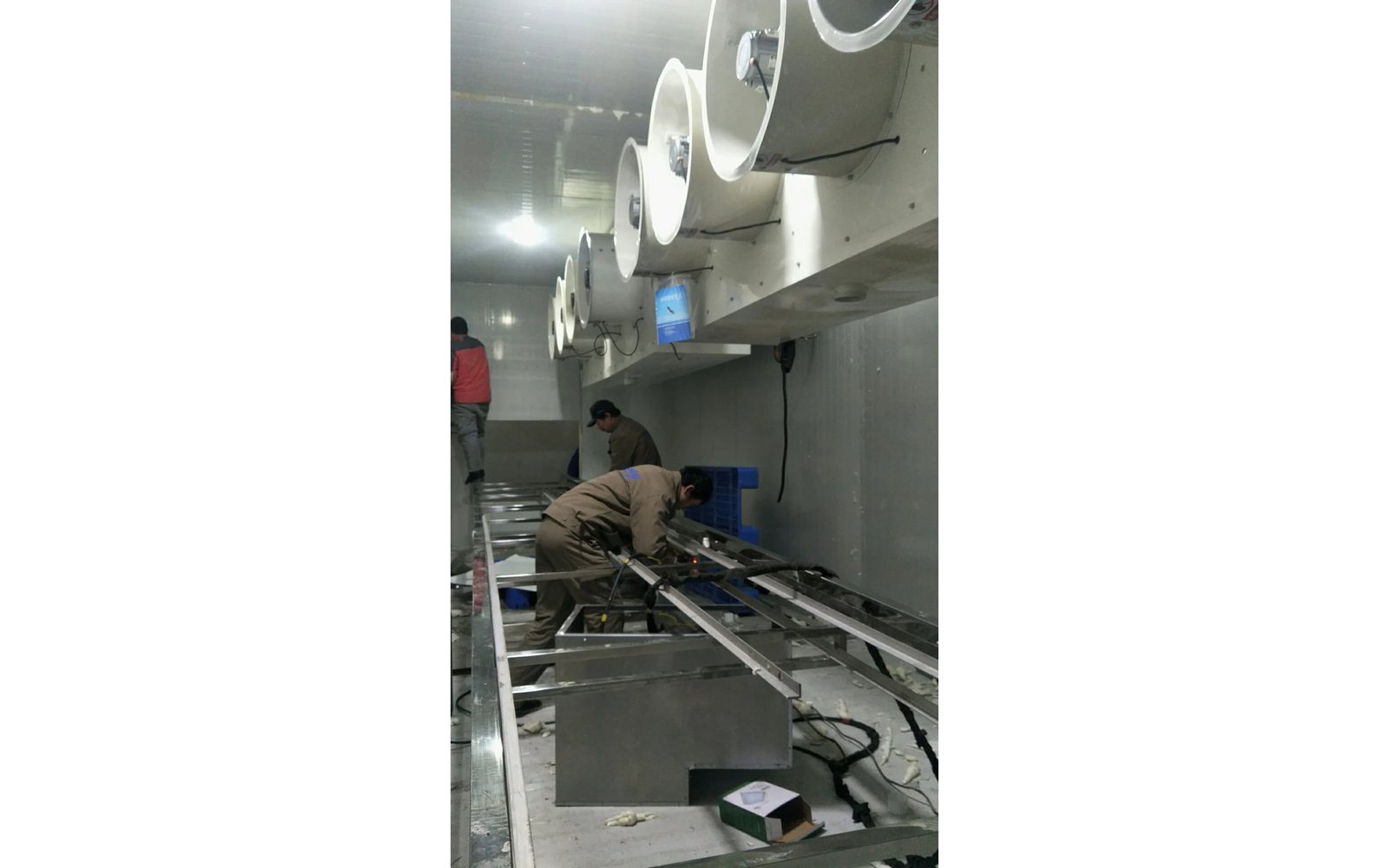
IQF Freezing Throughput Balancing
Balance IQF loading, inlet temperature, surface water, airflow, residence, refrigeration duty, defrost and downstream cold-chain handling.
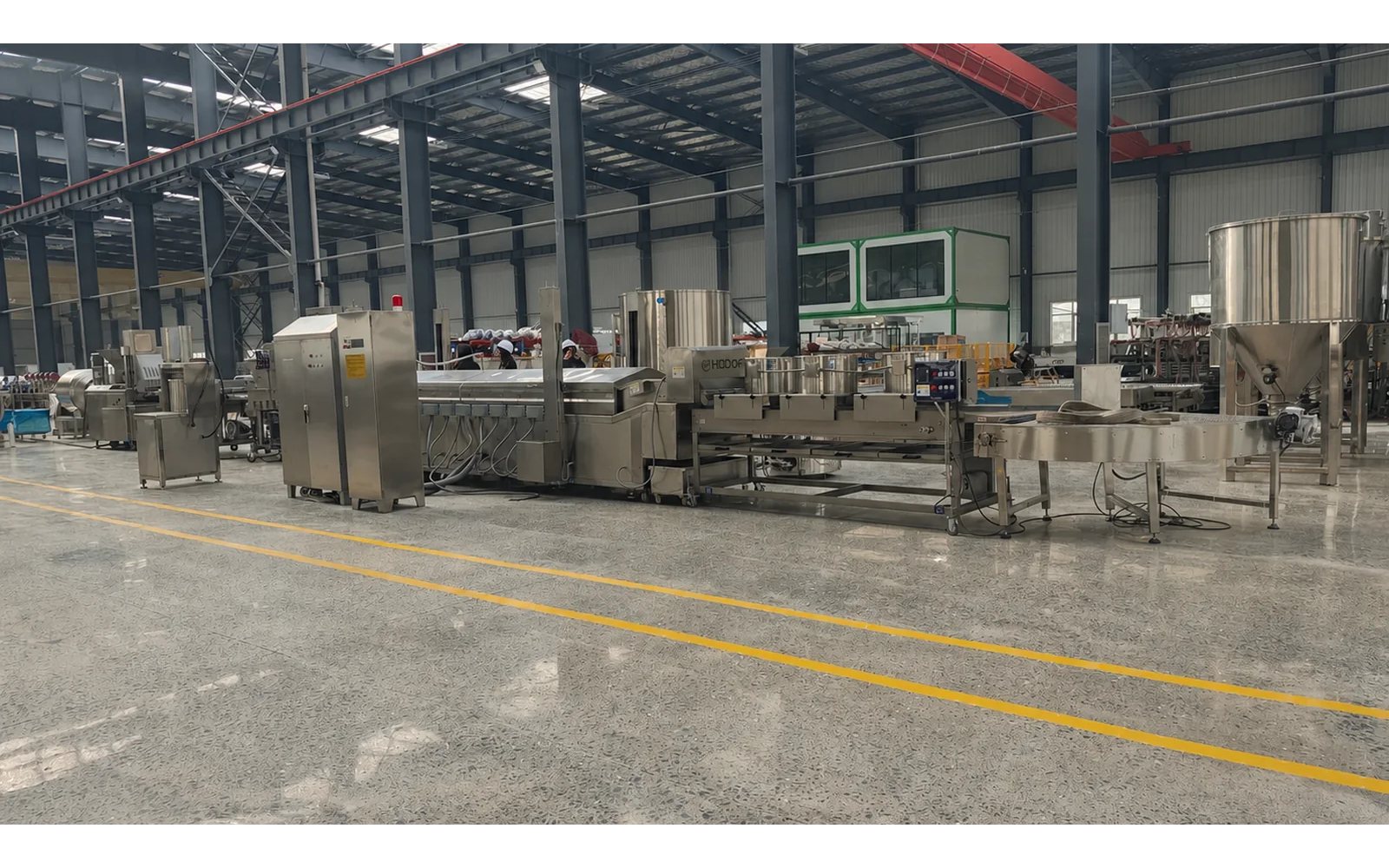
Frozen Food Processing Systems
Balance preparation, thermal processing, cooling, quick-freezing and refrigeration responsibilities from one approved frozen-product basis.