
IQF Freezing Tunnel
Review the process, equipment duties and project boundary from one defined basis.
Start With How the Product Loads and Separates
Published Hadof product information identifies granular, flake, strip and block products as application categories. Product behavior, not the category name alone, determines the technical review.
Peas, corn and separated pieces
Control bed loading and fluidization behavior.
French fries and cut vegetables
Balance warm-side condition before cold-side sizing.
Berries, mushrooms and delicate pieces
Protect shape while reaching the required endpoint.
Formed, cooked or coated products
Define support, spacing and thermal load as one duty.
Catalog-backed architecture
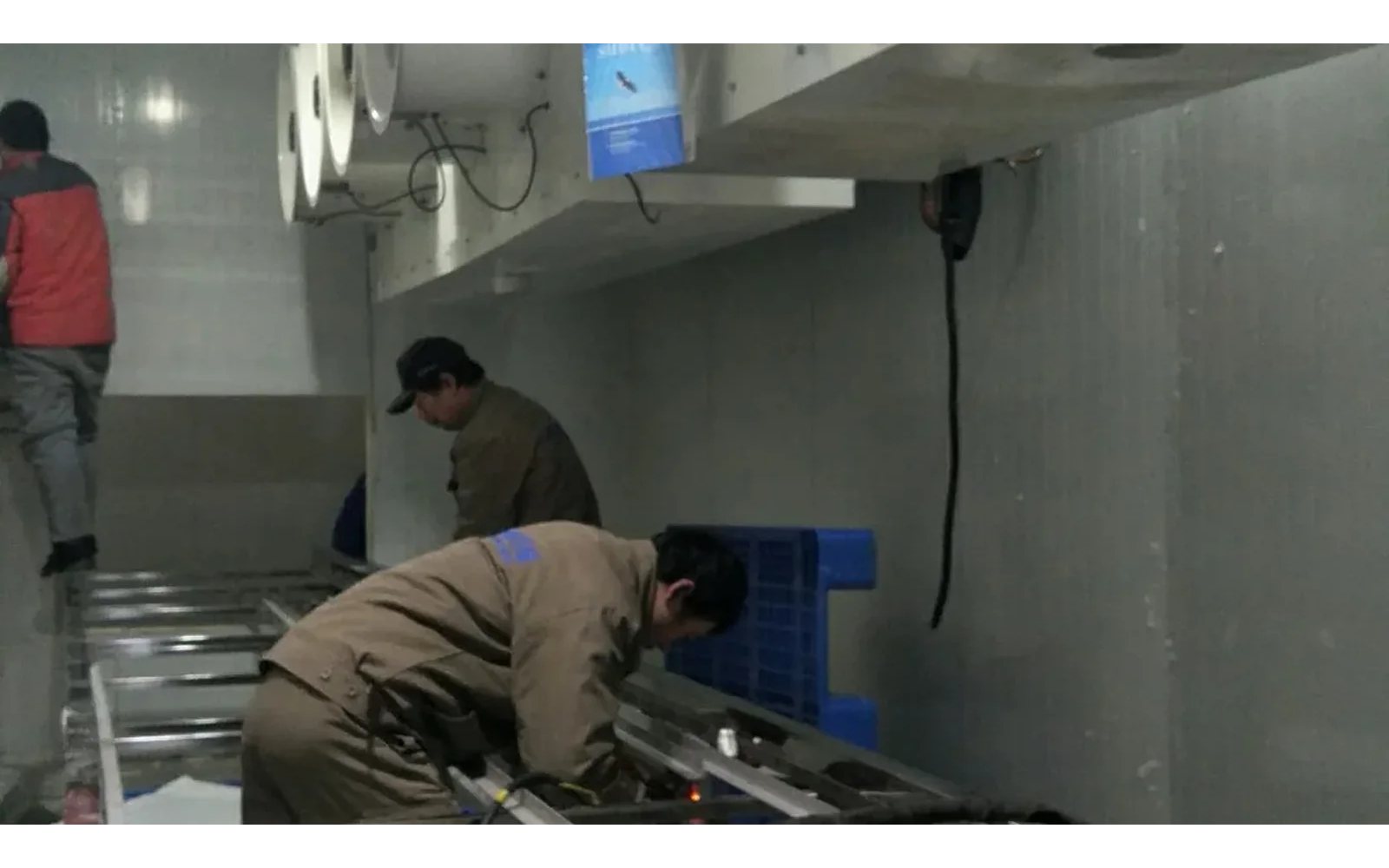
An IQF tunnel begins with how the product is loaded and kept separate. Record the product, its piece size, shape and surface moisture, and how it is fed onto the belt. Individual quick freezing only works if the pieces are separated and stay separated through the cold zone, so the feed system and the bed loading are as important as the refrigeration duty.
Confirm the bed depth and the air velocity that keep the product fluidised without blowing light pieces out of the tunnel. Small, light products such as diced herbs behave differently from dense, wet products such as berries, and the same tunnel cannot freeze both well without adjusting the fan speed and the feed rate. Define the product bed before quoting a tunnel length or a capacity.
Choose the Fluidized-Bed Route After Product Review
The Hadof catalog names single-stage, two-stage and four-bar fluidized-bed arrangements.
One controlled freezing zone
ReviewWhether one load and airflow regime can achieve the agreed result
InterfaceFeed spread, belt loading and discharge condition
BoundaryNo product-independent output is claimed
Separate initial crusting and final freezing duties
ReviewWhether product behavior changes after the first cold exposure
InterfaceZone loading, transfer and control coordination
BoundaryZone duty follows the approved thermal calculation
Product-specific mechanical fluidization route
ReviewSeparation behavior, fragility and mechanical agitation need
InterfaceDrive, sanitation, service access and control responsibility
BoundarySuitability requires representative-product review
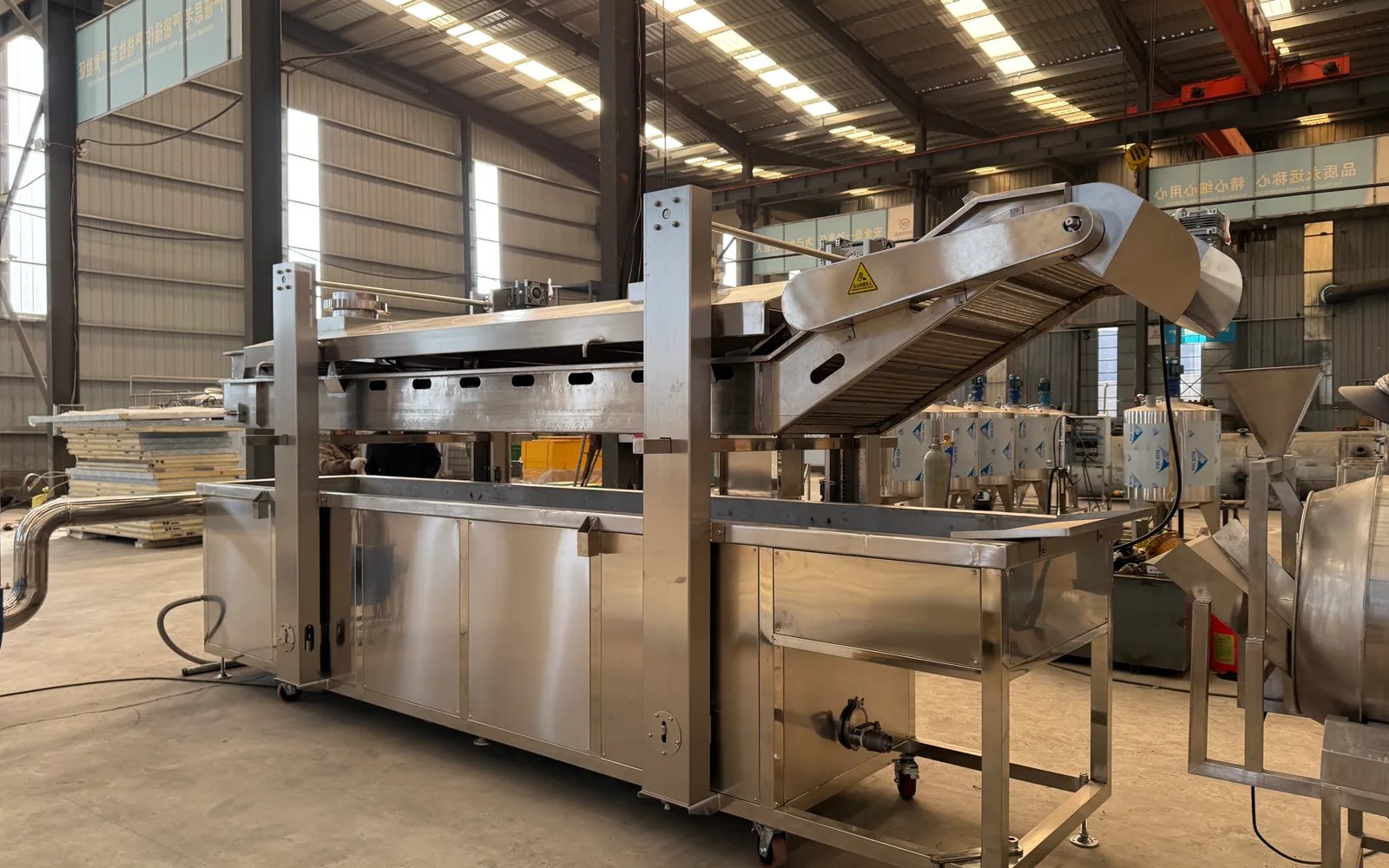
Choose the fluidised-bed route only after reviewing the product. The tunnel must lift and tumble the product enough to freeze pieces individually, but not so much that fragile product breaks or light product is carried away. The air velocity, the belt mesh and the tunnel length all depend on the product's size, density and surface moisture, so a single generic tunnel cannot cover every product family.
Run the numbers with the actual product rather than a reference capacity. Convert the required output into bed loading per square metre and freezing time per piece, then check the air temperature and velocity the tunnel can deliver. A product that clumps because it enters too wet will freeze as a block no matter how cold the tunnel is, so the feed condition is part of the freezing review.
Balance the Tunnel With Every Upstream and Downstream Duty
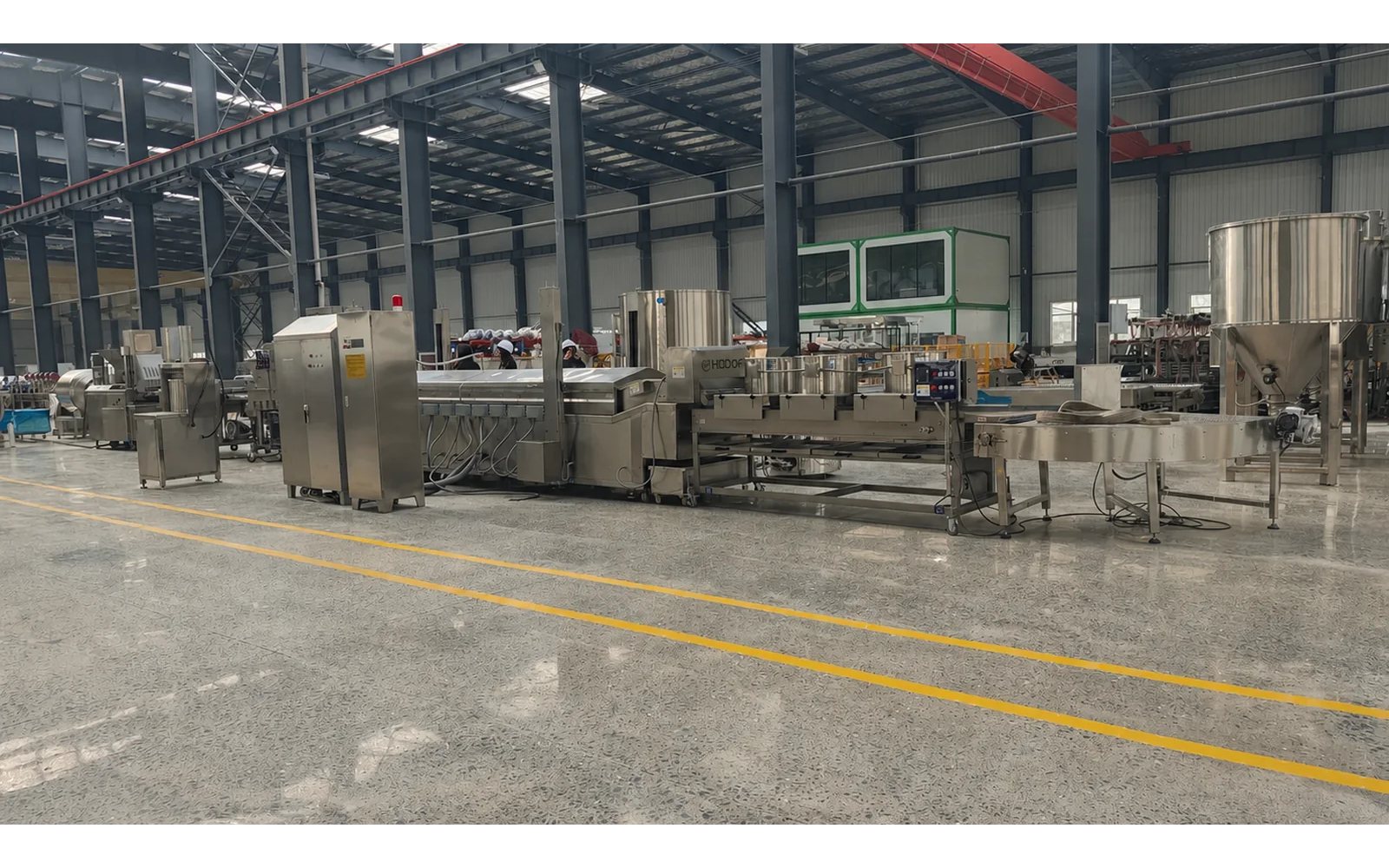
The wrong selection often begins outside the freezer. Feed temperature, surface water, belt distribution, room envelope and packer capacity all change the actual operating load.
- 01ConditionCool, drain and define feed state
- 02DistributeControl depth and overlap
- 03FreezeApply the approved thermal duty
- 04SeparateManage adhesion and clustering
- 05DischargeProtect frozen product condition
- 06PackMatch buffer and packaging rate
The tunnel only works as part of a balanced cold-side line. Match the upstream feed to the tunnel's bed loading and the downstream discharge to the packing or cold-store route. If the upstream blancher or fryer delivers product in surges, the tunnel freezes unevenly; if the downstream packing line cannot take the frozen flow, product sits and clumps.
Define the handoffs explicitly. Confirm the infeed elevation, the belt width, the discharge temperature of the product, and how the frozen product is transferred without breaking or bridging. The tunnel's refrigeration is sized from the product's heat load, but the line's real output is set by the weakest handoff, so every interface must be reviewed with the same care as the tunnel itself.
Treat the feed rate and the discharge temperature as part of the freezing review, because a tunnel cannot correct a surge upstream or a packing line that cannot accept the frozen flow.
Installation Access Is Part of the Technical Configuration
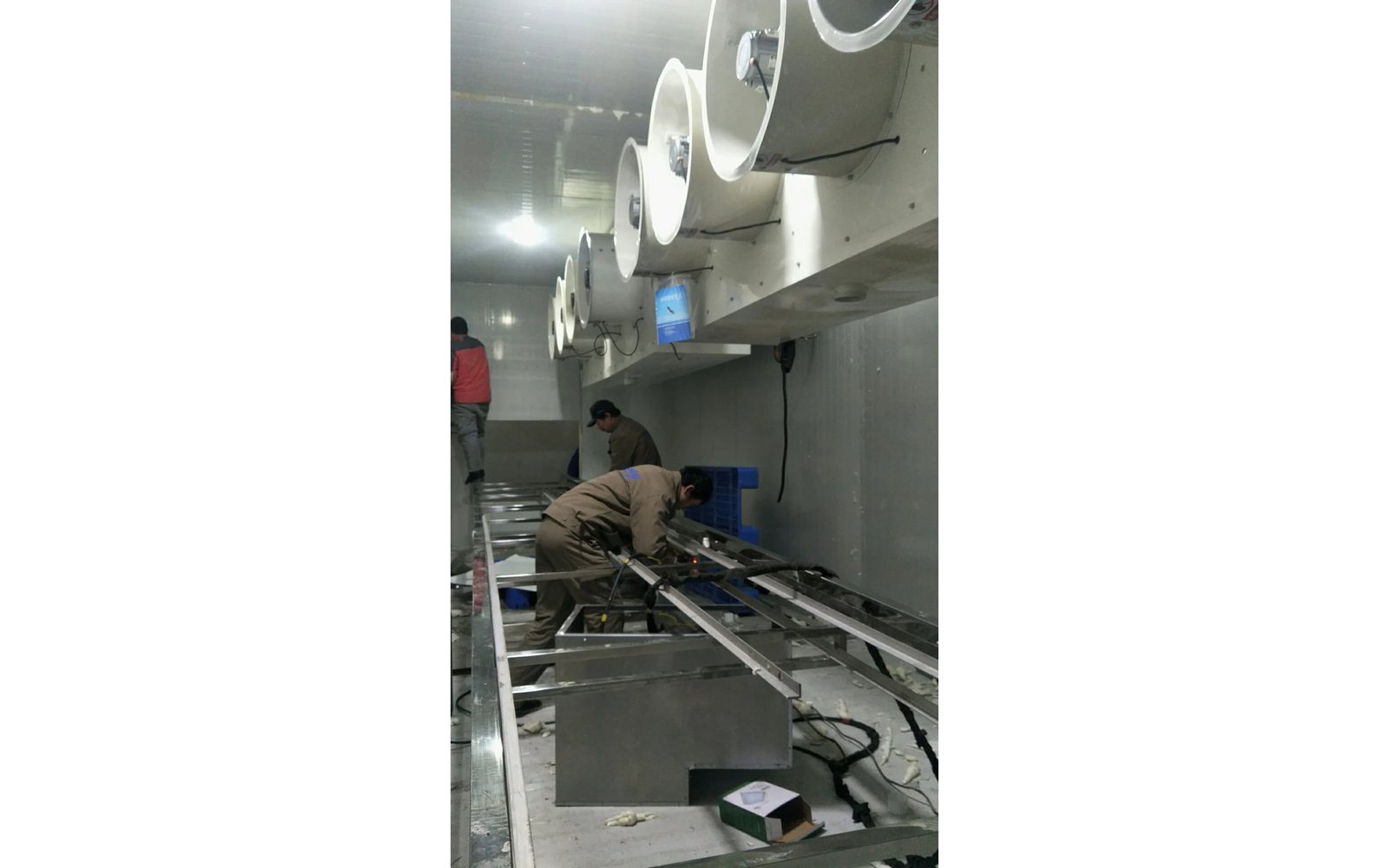
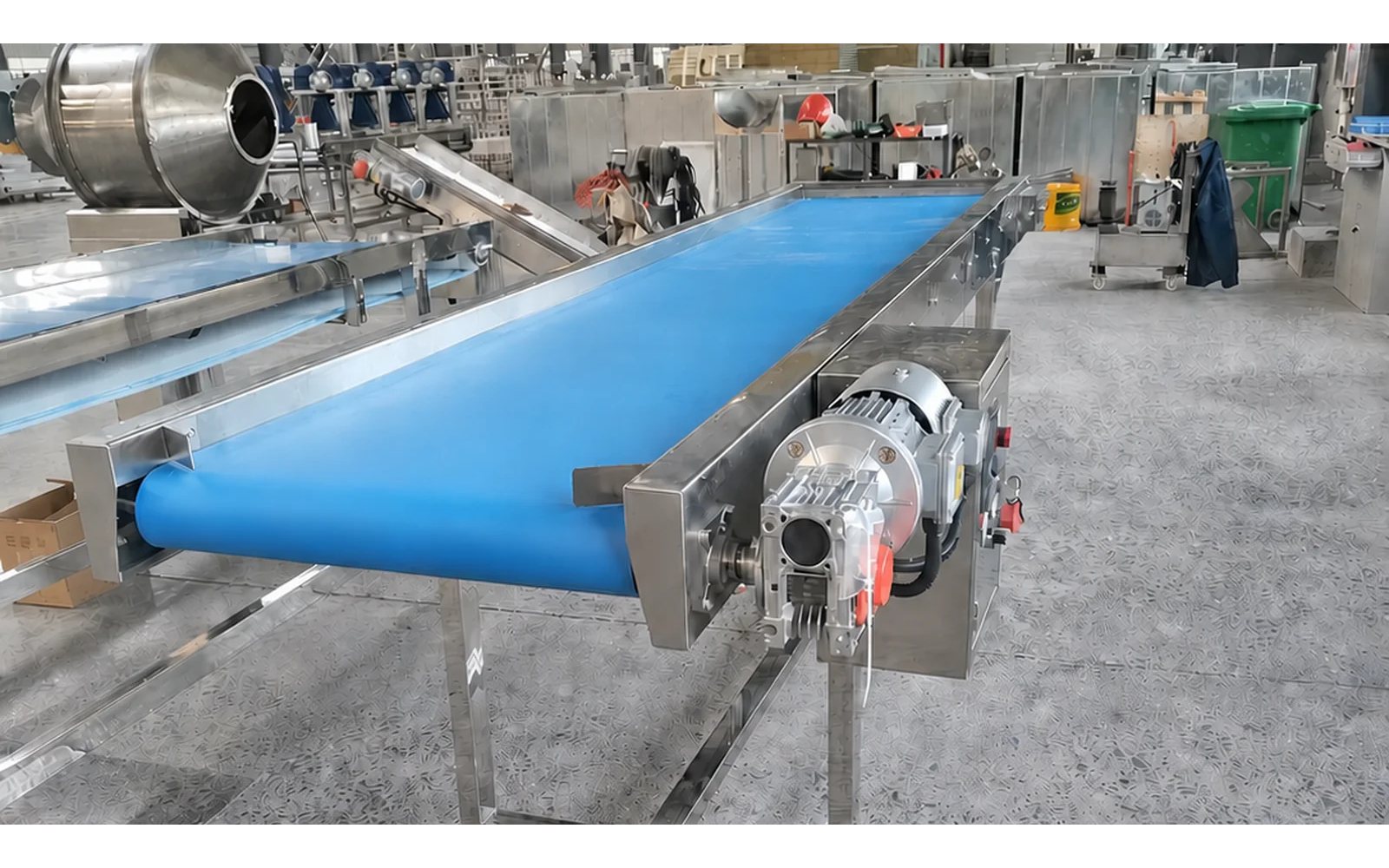
The local photograph shows internal tunnel work, fan locations and conveyor structure. It supports an installation-boundary discussion: room access, assembly sequence, service clearance and responsibility must be fixed before delivery.
| FAT test basis | Representative product, loading, run duration, measurement points and agreed limits |
|---|---|
| Site readiness | Room envelope, floor, drainage, electrical supply, refrigeration connections and lifting route |
| Acceptance basis | Defined frozen endpoint, distribution, separation, product integrity and record format |
| Support scope | Installation guidance, commissioning responsibility, operator training, spares and maintenance access |
Installation access is part of the technical configuration, not a site detail. An IQF tunnel is a long, heavy machine that must fit through doors, around columns and under ceiling heights, and its refrigeration piping and fans need service access. Measure the route into the building and the clearances around the tunnel before the layout is approved.
Plan for cleaning and defrost at the same time. The tunnel must be opened, washed and dried on a schedule, and the floor must drain the melt water. Confirm the electrical supply, the refrigerant connection point and the control interface with the site's cold store, because a tunnel that cannot be defrosted or serviced in place becomes a hygiene risk and an operating bottleneck.
Keep the Thermal Basis and Quotation Scope Together
The quotation should identify the freezer equipment, refrigeration boundary, controls, defrost and condensate responsibilities, room interfaces, testing method, packing, delivery, installation and commissioning support.
| Catalog architecture references | Single-stage / two-stage / four-bar fluidized-bed arrangements |
|---|---|
| Published application categories | Granular / flake / strip / block products |
| Freezing amount basis | Configured to the approved product load and project demand |
| Selection basis | Geometry, feed temperature, surface water, belt loading, frozen endpoint and refrigeration boundary |
Frequently asked questions
Which product data controls IQF tunnel configuration?
Does one universal IQF capacity apply to every product?
Is the refrigeration package automatically included with the tunnel?
How should the frozen endpoint be accepted?
Which installation details are required before delivery?
Keep the thermal basis attached to the quotation. State the product, its inlet and outlet temperatures, the required output and the refrigerant conditions, and check that the tunnel's evaporator and fan capacity match that basis. A tunnel quoted for a warm product at high output is a different machine from one quoted for a cold, light product at low output, and the quotation must say which one you are buying.
Compare quotations on the same thermal basis so the prices are meaningful. Itemise the tunnel, the feed and discharge conveyors, the refrigeration interface, the controls and the commissioning, and note where the refrigeration plant is supplied by the site rather than the machine supplier. When the thermal basis and the scope stay together, the buyer can hold the supplier to a number instead of an opinion.
Define the Freezing Result and Acceptance Before Order
Agree what frozen means
Before ordering, define what a frozen result actually means. Agree the product's centre temperature at discharge, the permitted temperature spread across the bed, and how individual pieces are confirmed to be frozen without clumping. A tunnel that discharges product at minus 18 degrees Celsius at the surface but warmer at the centre has not met the duty, and the only way to know is to agree the measurement first.
Write the acceptance test around that definition. Load the tunnel with the real product at the real feed rate, measure core temperatures at several positions across the belt, and record the fan speeds and refrigerant conditions during the run. That record is the evidence the tunnel performs, and it is the basis for comparing the tunnel in your factory with the tunnel that was demonstrated before purchase.
Agree the core-temperature probe method and the positions to be measured, since the acceptance result is only meaningful if the same measurement is repeated in the same way at the factory and on site.
Repeating the same core-temperature measurement at the factory and on site is what makes the acceptance test evidence rather than a demonstration.
Agreeing the probe method and the positions in advance is what makes the frozen result a measurable, repeatable claim.
Related pages
Frozen French Fries Production Line
Review potato preparation, strip conditioning, pre-frying, cooling, IQF freezing, equipment references and factory interfaces as one line.
Frozen Food Processing Systems
Balance preparation, thermal processing, cooling, quick-freezing and refrigeration responsibilities from one approved frozen-product basis.
IQF Freezing Throughput Balancing
Balance IQF loading, inlet temperature, surface water, airflow, residence, refrigeration duty, defrost and downstream cold-chain handling.
Egypt Food Processing Market
Documented Egypt food processing demand: frozen fruit and vegetables, orange juice, red meat and packaging with Halal and ACID requirements.
UAE Food Processing Market
Documented UAE food processing demand: dairy, bakery, Halal lines and cold chain with GCC duty and VAT entry requirements.
Berry IQF Freezing Line
Configure berry pre-washing, inspection, colour protection, IQF freezing and packing for whole frozen berries.