
Bulk Powder and Granule Packaging Systems
Review the process, equipment duties and project boundary from one defined basis.
Confirm the Product, Pack and Line Interfaces Before Comparing Speed
Define the product-pack route first
Powder and granule packaging starts with the material, not the machine. Record the bulk density, particle size distribution, flow behaviour, moisture sensitivity and whether the product is free-flowing, cohesive, dusty, hygroscopic or abrasive. A free-flowing granulated sugar fills with a simple volumetric cup, while a sticky vitamin premix may need an auger with agitation and a dust-tight enclosure, and the two cannot be compared on bags-per-minute.
Define the pack and its interfaces at the same time. Film, pre-made pouch or bottle; the fill weight tolerance; whether the pack must hold an inert-gas flush or a desiccant; and how the filled pack is transferred to checkweighing, sealing and case packing. For powders that compact or bridge, confirm the hopper geometry, the feed screw pitch and the agitation method with a representative material sample rather than a published average.
Test the powder's flow behaviour, not just its average density, because a material that bridges in the hopper or packs under vibration will force a different feed system than a free-flowing granule.
Record the material's behaviour under vibration and moisture, because both change the hopper and the sealing duty.
The more exactly the material is described, the more exactly the machine can be matched.
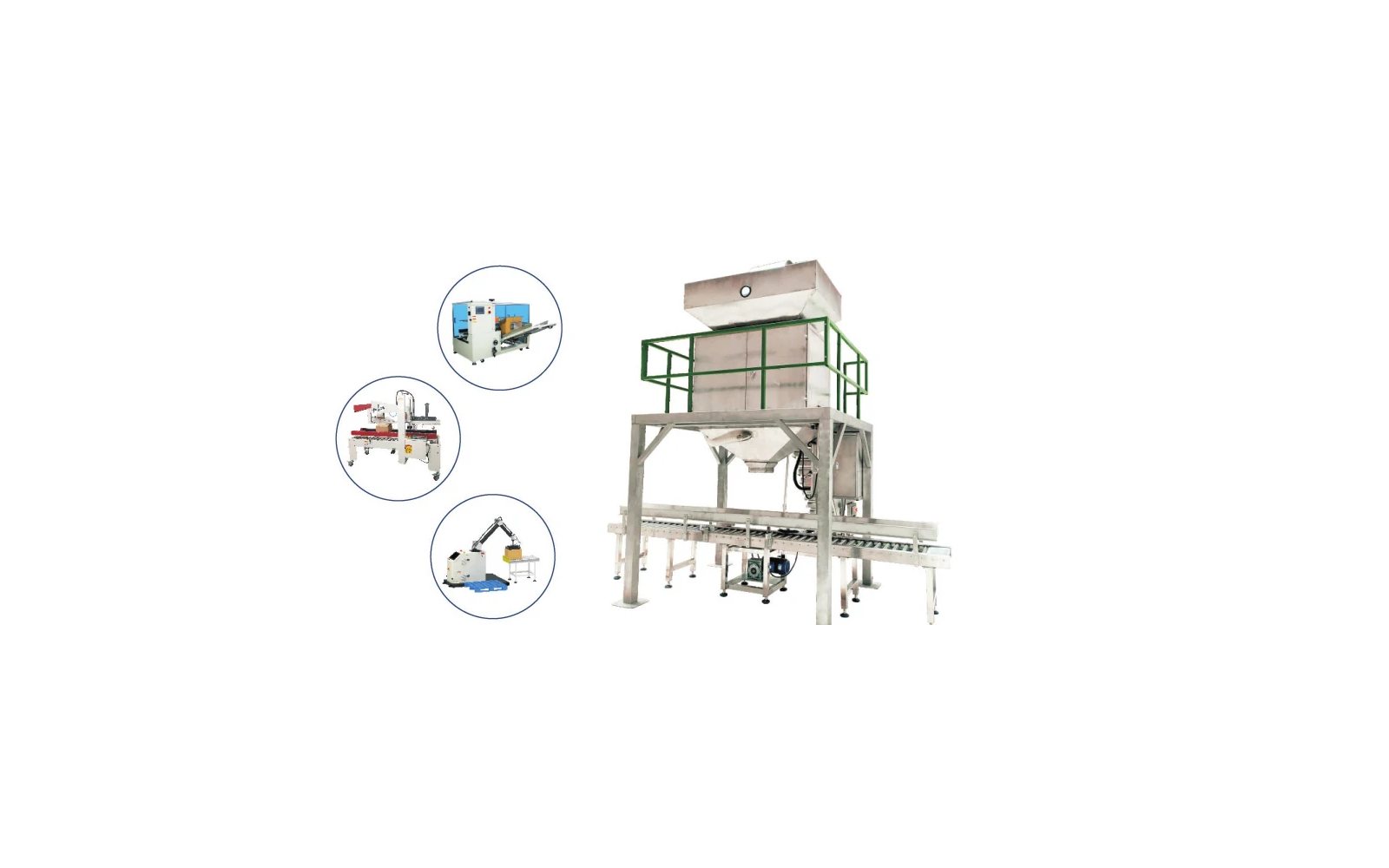
Balance Product Flow, Pack Formation and Line Handoff
Packaging route and parameter consequences
For bulk filling, the balance problem is between dosing accuracy and line rhythm. The filler must discharge an accurate dose without surging, bridging or dusting, and the bag or bottle must be formed, presented and closed at the same cadence. A mismatch shows up as double doses, torn film, short weights or powder spilled onto the seal area, and it usually appears after a speed increase that looked safe on paper.
Build buffer and feedback around the filler. A checkweigher in feedback control lets the filler trim the dose continuously instead of drifting out of tolerance, while a small accumulation section absorbs film splices and label changes. Route rejected packs away from the accepted flow, and specify dust extraction at the fill point so airborne powder cannot settle on sealing jaws, sensors or the next pack.
Control the dust at the fill point and route rejects cleanly away, because powder settling on the sealing jaws or the sensors is the fastest way to turn a small dosing error into a run of wasted packs.
Keep the fill point enclosed and the rejects separated, or the dust that escapes will become the next stoppage.
Control the dust and the rejects, and the line keeps its rhythm.
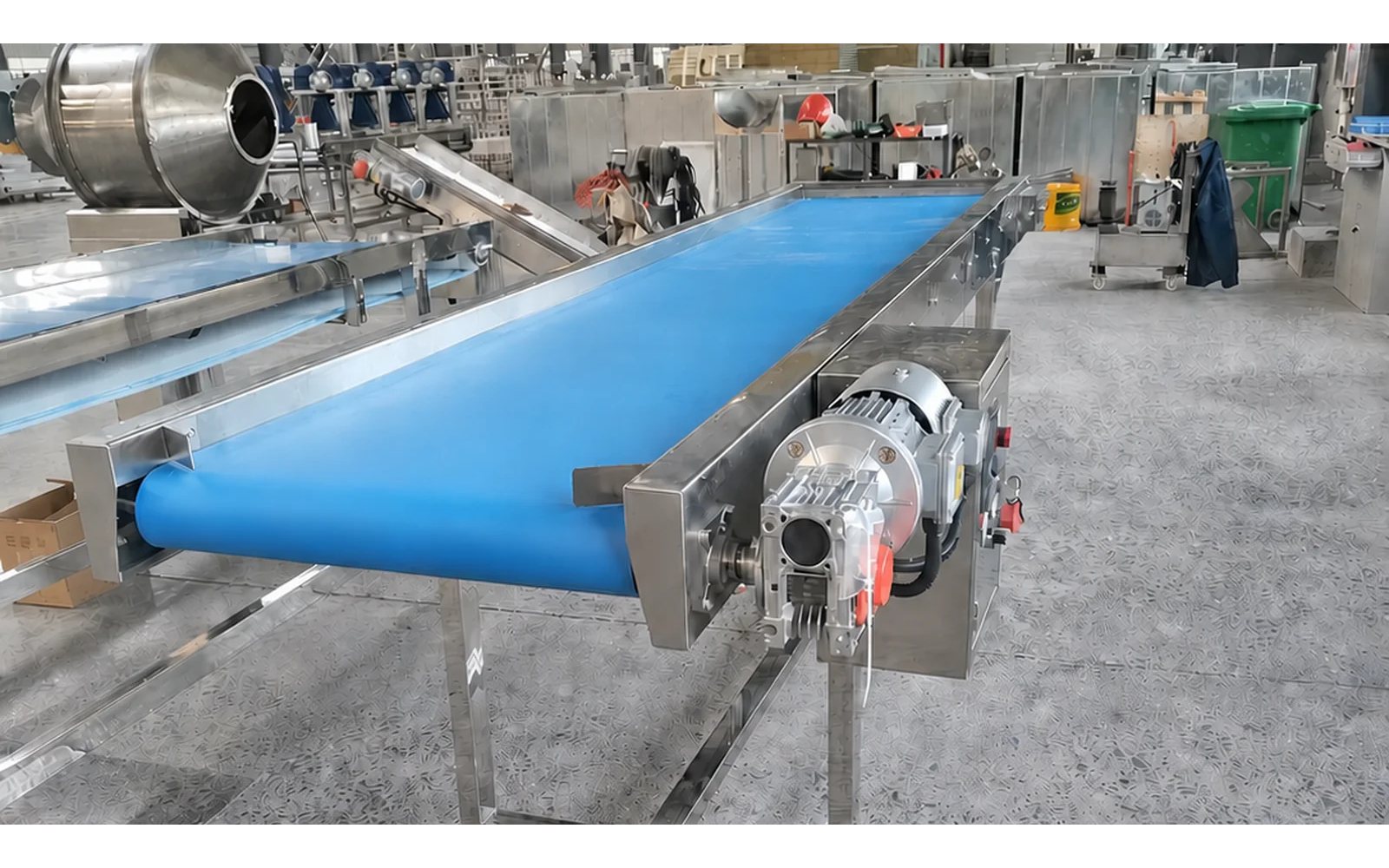
Compare Each Model Against One Product-Pack Basis
Models and technical parameters
Compare bulk fillers on one declared basis: product, target weight, pack dimensions, film or container specification, accuracy expressed as a standard deviation, and the production pattern with changeovers included. Published outputs are often stated for one easy, free-flowing product at maximum film speed, which tells you little about a cohesive powder in a gusseted bag.
Normalise what the accuracy figure means. Ask whether the quoted variation is for one fill head or the whole machine, whether it is a short-term reading or a shift-long record, and how the machine responds to density changes as the hopper empties. Request a trial with your actual product and pack so the speed, dust level and fill accuracy are measured together rather than assembled from separate brochures.
Ask for the accuracy as a standard deviation over a full run, not a single best sample, and confirm whether the machine compensates for density drift as the hopper empties.
A full-shift standard deviation on your own powder tells you more than a brochure figure on a free-flowing reference product.
One written basis keeps the comparison honest across every supplier.
Keep that basis unchanged across every supplier so the comparison stays honest.
The basis keeps the comparison honest.
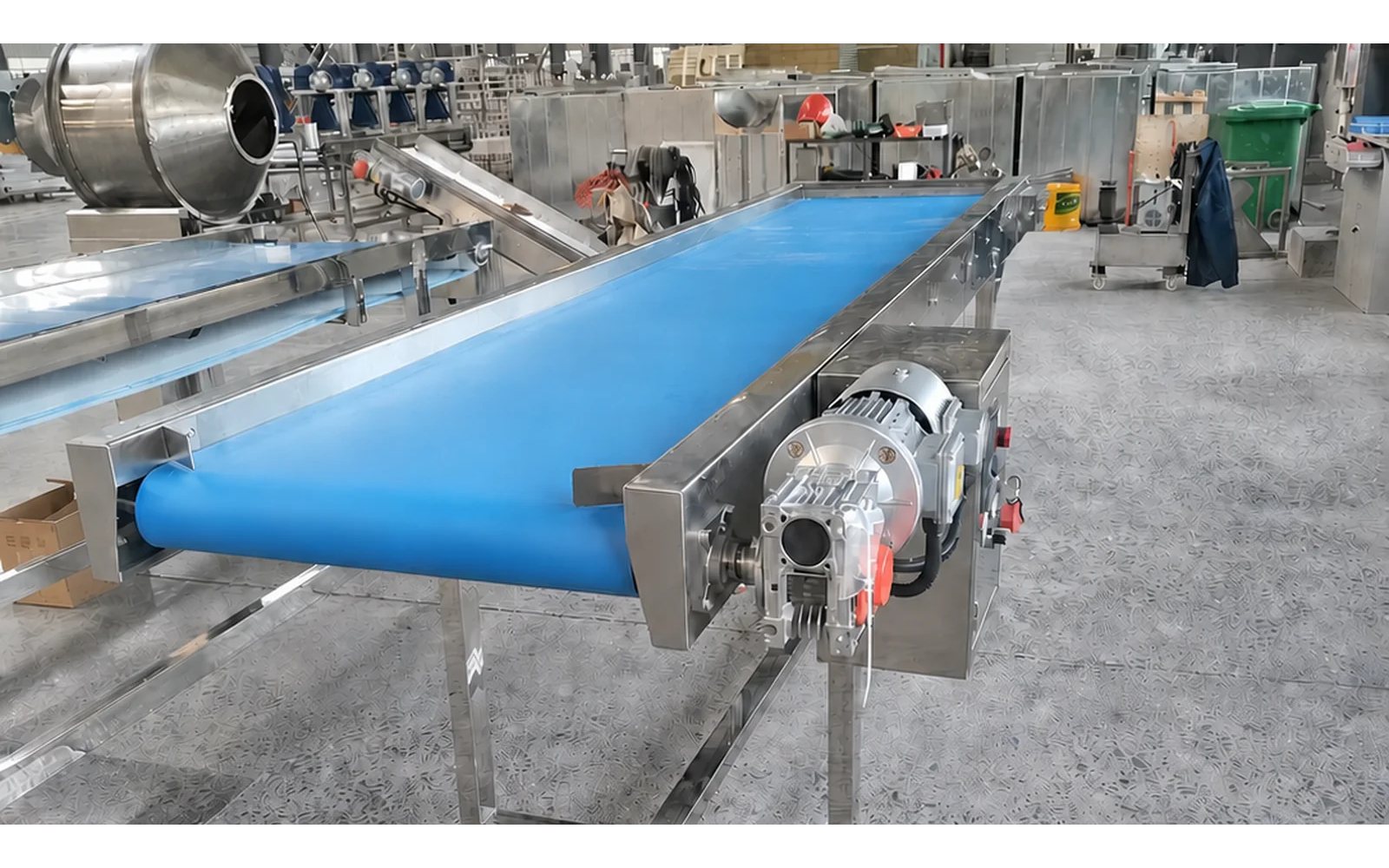
Resolve Four Connected Decisions Before Quotation
Selection logic and configuration boundary
- 01 / ProductDefine behavior at the metering interface.Record flow, temperature, dust, fragility, bulk density where relevant, refill method and representative product variation.
- 02 / Dose and packKeep target, container and material together.Confirm nominal dose, tolerance, pack dimensions, film or pouch structure, closure, code, label and presentation requirements.
- 03 / Seal and verifySet an observable package acceptance rule.Define sealing conditions, contamination risk, leak or closure checks, weight or inspection limits, reject behavior and records.
- 04 / Line interfaceBalance every upstream and downstream handoff.Release infeed, refill, elevation, buffering, discharge, accumulation, guarding, utilities, controls, data and responsible parties.
Four decisions shape the quotation. First, the metering principle: cup, auger, net-weight or a combination, selected from the product's flow behaviour and your accuracy target. Second, the sealing technology and film specification, because a poor seal on a dusty powder is a leak waiting for a warehouse shelf. Third, changeover and cleaning, including how the machine is purged between products and how long that takes. Fourth, controls: feedback from checkweighing, recipe storage and batch traceability.
These decisions interact. A net-weight filler improves accuracy but slows the cycle; an auger is fast but sensitive to density changes; a vertical form-fill-seal machine changes the film width and format range you must commit to. Work through the four choices with the actual product before comparing prices, so the quotation includes the configuration that can run the material instead of the configuration that won the spreadsheet.
Turn the Catalog Row Into a Testable Project Record
Quality, testing, evidence and acceptance
The acceptance plan should state which catalog values are inspected, which functions are demonstrated, which product measurements are available at the factory and which checks can occur only after installation.
Model row, pack drawing, material, dose basis, layout, utilities, options, interfaces, responsibilities and evidence plan.
Identity, construction, controls, safety, product path, tooling, seal functions, inspection and agreed dry-run records.
Test product and material, refill condition, speed window, dose result, seal or closure result, rejects and declared limits.
Installation, utilities, upstream and downstream balance, product run, recipes, training and closure of open items.
Turn the chosen model into a testable record by writing down the product, fill weight, pack, speed, accuracy and the measurement method before the trial begins. For a 1 kg granule bag, state whether acceptance is a mean weight check, a minimum-weight legal requirement, a standard deviation target, or all three, and who supplies the product and film for the run.
Agree a factory acceptance test that logs a full sequence of fills with a calibrated scale and records rejects, dust and stoppages, followed by a site test under your conditions. For regulated or high-value products, keep the qualification protocol and the acceptance data together so the machine's evidence trail supports the food safety system instead of duplicating it.
Confirm Responsibilities Beyond the Machine Name
Quotation, delivery and support scope
Semi-automatic powder fillers
Select a model to inspect its dimensions, duty and utilities. Compare values within the same family and operating basis.
| Range | 10-5000 g |
|---|---|
| Method | Auger |
| Accuracy level | 1.0 catalog level |
| Speed | 1200-2500 bags/h |
| Power | 2000 W / 220 or 380 V |
| Hopper | 50 L |
| Control | Button screen |
| Weight | 200 kg |
| Envelope | 800×750×2000 mm |
| Range | 10-5000 g |
|---|---|
| Method | Auger |
| Accuracy level | 1.0 catalog level |
| Speed | 1200-2500 bags/h |
| Power | 2000 W / 220 or 380 V |
| Hopper | 50 L |
| Control | PLC touch screen |
| Weight | 200 kg |
| Envelope | 800×750×2000 mm |
| Range | 10-5000 g |
|---|---|
| Method | Auger |
| Accuracy level | 1.0 catalog level |
| Speed | 400-1000 bags/h |
| Power | 2000 W / 220 or 380 V |
| Hopper | 70 L |
| Control | PLC touch screen |
| Weight | 260 kg |
| Envelope | 900×900×3000 mm |
| Range | 5-25 kg |
|---|---|
| Method | Screw impulse filling |
| Accuracy level | ≤±3% nominal |
| Speed | 1-2 bags/min |
| Power | 5 kW / 380 V |
| Hopper | 50-70 L option |
| Control | Project-selected |
| Weight | 450 kg |
| Envelope | 1280×1150×3200 mm |
Granule scale packers
| Range | 100-2500 g |
|---|---|
| Power | 2.2 kW |
| Error | ≤±1% |
| Speed | 600-1500 bags/h |
| Weight | 170 kg |
| Envelope | 720×720×1900 mm |
| Range | 100-3000 g |
|---|---|
| Power | 2.5 kW |
| Error | ≤±1% |
| Speed | 500-1200 bags/h |
| Weight | 200 kg |
| Envelope | 1120×900×2150 mm |
| Range | 100-5000 g |
|---|---|
| Power | 3 kW |
| Error | ≤±1% |
| Speed | 350-1000 bags/h |
| Weight | 280 kg |
| Envelope | 810×780×2200 mm |
| Range | 10-800 g |
|---|---|
| Power | 0.75 kW |
| Error | ±1% |
| Speed | 1200-1800 bags/h |
| Weight | 160 kg |
| Envelope | 1250×1000×2100 mm |
| Range | 20-1000 g |
|---|---|
| Power | 4 kW |
| Error | ±1% |
| Speed | 1200-2200 bags/h |
| Weight | 280 kg |
| Envelope | 1250×1000×2100 mm |
| Range | 1-5 kg |
|---|---|
| Power | 1 kW |
| Error | ±1% |
| Speed | 300-1000 bags/h |
| Weight | 160 kg |
| Envelope | 1050×690×2370 mm |
| Range | 1-8 kg |
|---|---|
| Power | 1 kW |
| Error | ±1% |
| Speed | 300-900 bags/h |
| Weight | 180 kg |
| Envelope | 1150×730×2400 mm |
| Range | 1-12 kg |
|---|---|
| Power | 1.3 kW |
| Error | ±1% |
| Speed | 300-800 bags/h |
| Weight | 200 kg |
| Envelope | 1300×730×2500 mm |
| Range | 10-50 kg |
|---|---|
| Power | 1.5 kW |
| Error | ±3% |
| Speed | 3-10 bags/min |
| Weight | 500 kg |
| Envelope | Project layout |
| Range | 20-50 kg |
|---|---|
| Power | 0.4 kW |
| Error | ±1% |
| Speed | 300-500 bags/h |
| Weight | 350 kg |
| Envelope | 1050×730×2400 mm |
| Range | 10-50 kg |
|---|---|
| Power | 3.5 kW |
| Error | ±0.3% nominal |
| Speed | 3-6 bags/min |
| Weight | 280 kg |
| Envelope | 1040×1200×2550 mm |
Horizontal mixers
| Motor | 3 kW |
|---|---|
| Voltage | 380 V |
| Volume | 0.28 m³ |
| Tank size | 1.5×0.5×0.6 m |
| Reducer | 200 |
| Heating | 6 kW |
| Motor | 4 kW |
|---|---|
| Voltage | 380 V |
| Volume | 0.48 m³ |
| Tank size | 1.2×0.65×0.7 m |
| Reducer | 250 |
| Heating | 6 kW |
| Motor | 5.5 kW |
|---|---|
| Voltage | 380 V |
| Volume | 0.7 m³ |
| Tank size | 1.22×0.73×0.85 m |
| Reducer | 250 |
| Heating | 18 kW |
| Motor | 7.5 kW |
|---|---|
| Voltage | 380 V |
| Volume | 1.5 m³ |
| Tank size | 1.8×0.9×1.05 m |
| Reducer | 350 |
| Heating | 18 kW |
| Motor | 11 kW |
|---|---|
| Voltage | 380 V |
| Volume | 2.1 m³ |
| Tank size | 2×1×1.15 m |
| Reducer | 350 |
| Heating | 18 kW |
| Motor | 11-15 kW |
|---|---|
| Voltage | 380 V |
| Volume | 3.2 m³ |
| Tank size | 2.2×1.2×1.35 m |
| Reducer | 350 |
| Heating | 18 kW |
| Motor | 15-18.5 kW |
|---|---|
| Voltage | 380 V |
| Volume | 4.3 m³ |
| Tank size | 2.5×1.26×1.45 m |
| Reducer | 350 |
| Heating | 30 kW |
| Motor | 22 kW |
|---|---|
| Voltage | 380 V |
| Volume | 6.4 m³ |
| Tank size | 2.9×1.5×1.65 m |
| Reducer | 400 |
| Heating | 36 kW |
Vacuum feeders
| Throughput | 400 kg/h |
|---|---|
| Gas-source type | Whirlpool pump |
| Motor | 1.5 kW |
| Standard size | Ø220×820 mm |
| Compressed air | 0.6 MPa |
| Throughput | 600 kg/h |
|---|---|
| Gas-source type | Whirlpool pump |
| Motor | 2.2 kW |
| Standard size | Ø220×820 mm |
| Compressed air | 0.6 MPa |
| Throughput | 1200 kg/h |
|---|---|
| Gas-source type | Whirlpool pump |
| Motor | 3 kW |
| Standard size | Ø290×950 mm |
| Compressed air | 0.6 MPa |
| Throughput | 2000 kg/h |
|---|---|
| Gas-source type | Whirlpool pump |
| Motor | 4 kW |
| Standard size | Ø420×1350 mm |
| Compressed air | 0.6 MPa |
| Throughput | 2500 kg/h |
|---|---|
| Gas-source type | Roots blower |
| Motor | 5.5 kW |
| Standard size | Ø420×1450 mm |
| Compressed air | 0.6 MPa |
| Throughput | 3000 kg/h |
|---|---|
| Gas-source type | Roots blower |
| Motor | 5.5 kW |
| Standard size | Ø420×1450 mm |
| Compressed air | 0.6 MPa |
| Throughput | 5000 kg/h |
|---|---|
| Gas-source type | Roots blower |
| Motor | 7.5 kW |
| Standard size | Ø600×1645 mm |
| Compressed air | 0.6 MPa |
| Throughput | 6000 kg/h |
|---|---|
| Gas-source type | Roots blower |
| Motor | 11 kW |
| Standard size | Ø800×2000 mm |
| Compressed air | 0.6 MPa |
Elevators and conveyors
| Duty | Round-hopper screw elevator |
|---|---|
| Volume or width | 100 L |
| Throughput or speed | 1000-3000 kg/h |
| Power | 1.5 kW |
| Lift or envelope | 1.65 m lift; 880×650×810 mm |
| Weight | 70 kg |
| Duty | Square-hopper screw elevator |
|---|---|
| Volume or width | 118 L |
| Throughput or speed | 1000-3000 kg/h |
| Power | 1.5 kW |
| Lift or envelope | 1.65 m lift; 880×850×810 mm |
| Weight | 60 kg |
| Duty | Bucket elevator |
|---|---|
| Volume or width | 0.15 m³ |
| Throughput or speed | 1200 kg/h |
| Power | 1.3 or 3 kW |
| Lift or envelope | 1.9 m lift; 820×820×900 mm |
| Weight | 180 kg |
| Duty | Z elevator |
|---|---|
| Volume or width | 40 L |
| Throughput or speed | 4 m³/h |
| Power | 1.3 kW |
| Lift or envelope | 2.3 m lift; 3000×650×2950 mm |
| Weight | 350 kg |
| Duty | Slope bucket elevator |
|---|---|
| Volume or width | 0.13 m³ |
| Throughput or speed | 2 m³/h |
| Power | 750 W |
| Lift or envelope | 2.3 m lift; 2700×850×3000 mm |
| Weight | 180 kg |
| Duty | Chain conveyor |
|---|---|
| Volume or width | 114 mm |
| Throughput or speed | 30 m/min |
| Power | 120 W |
| Lift or envelope | 3000×130×700 mm |
| Weight | 35 kg |
| Duty | Belt conveyor |
|---|---|
| Volume or width | 300 mm |
| Throughput or speed | 30 m/min |
| Power | 750 W |
| Lift or envelope | 2000×300×400 mm |
| Weight | 40 kg |
| Duty | Finished-product conveyor |
|---|---|
| Volume or width | 300 mm |
| Throughput or speed | 30 m/min |
| Power | 400 W |
| Lift or envelope | 2110×130×700 mm |
| Weight | 20 kg |
| HDF-F01BT — Semi-automatic powder fillers | Range: 10-5000 g; Method: Auger; Accuracy level: 1.0 catalog level; Speed: 1200-2500 bags/h; Power: 2000 W / 220 or 380 V; Hopper: 50 L; Control: Button screen; Weight: 200 kg; Envelope: 800×750×2000 mm Catalog reference; PDF pp.8-14, printed pp.10-23 |
|---|---|
| HDF-F01AT — Semi-automatic powder fillers | Range: 10-5000 g; Method: Auger; Accuracy level: 1.0 catalog level; Speed: 1200-2500 bags/h; Power: 2000 W / 220 or 380 V; Hopper: 50 L; Control: PLC touch screen; Weight: 200 kg; Envelope: 800×750×2000 mm Catalog reference; PDF pp.8-14, printed pp.10-23 |
| HDF-F01SD — Semi-automatic powder fillers | Range: 10-5000 g; Method: Auger; Accuracy level: 1.0 catalog level; Speed: 400-1000 bags/h; Power: 2000 W / 220 or 380 V; Hopper: 70 L; Control: PLC touch screen; Weight: 260 kg; Envelope: 900×900×3000 mm Catalog reference; PDF pp.8-14, printed pp.10-23 |
| HDF-J25 — Semi-automatic powder fillers | Range: 5-25 kg; Method: Screw impulse filling; Accuracy level: ≤±3% catalog reference; Speed: 1-2 bags/min; Power: 5 kW / 380 V; Hopper: 50-70 L option; Control: Project-selected; Weight: 450 kg; Envelope: 1280×1150×3200 mm Catalog reference; PDF pp.8-14, printed pp.10-23 |
| HDF-C02 standard — Granule scale packers | Range: 100-2500 g; Power: 2.2 kW; Error: ≤±1%; Speed: 600-1500 bags/h; Weight: 170 kg; Envelope: 720×720×1900 mm Catalog reference; PDF pp.8-14, printed pp.10-23 |
| HDF-C02 medium — Granule scale packers | Range: 100-3000 g; Power: 2.5 kW; Error: ≤±1%; Speed: 500-1200 bags/h; Weight: 200 kg; Envelope: 1120×900×2150 mm Catalog reference; PDF pp.8-14, printed pp.10-23 |
| HDF-C02 mainframe — Granule scale packers | Range: 100-5000 g; Power: 3 kW; Error: ≤±1%; Speed: 350-1000 bags/h; Weight: 280 kg; Envelope: 810×780×2200 mm Catalog reference; PDF pp.8-14, printed pp.10-23 |
| HDF-C04 single vibration — Granule scale packers | Range: 10-800 g; Power: 0.75 kW; Error: ±1%; Speed: 1200-1800 bags/h; Weight: 160 kg; Envelope: 1250×1000×2100 mm Catalog reference; PDF pp.8-14, printed pp.10-23 |
| HDF-C04 double vibration — Granule scale packers | Range: 20-1000 g; Power: 4 kW; Error: ±1%; Speed: 1200-2200 bags/h; Weight: 280 kg; Envelope: 1250×1000×2100 mm Catalog reference; PDF pp.8-14, printed pp.10-23 |
| HDF-ZC02 standard — Granule scale packers | Range: 1-5 kg; Power: 1 kW; Error: ±1%; Speed: 300-1000 bags/h; Weight: 160 kg; Envelope: 1050×690×2370 mm Catalog reference; PDF pp.8-14, printed pp.10-23 |
| HDF-ZC02 medium — Granule scale packers | Range: 1-8 kg; Power: 1 kW; Error: ±1%; Speed: 300-900 bags/h; Weight: 180 kg; Envelope: 1150×730×2400 mm Catalog reference; PDF pp.8-14, printed pp.10-23 |
| HDF-ZC02 mainframe — Granule scale packers | Range: 1-12 kg; Power: 1.3 kW; Error: ±1%; Speed: 300-800 bags/h; Weight: 200 kg; Envelope: 1300×730×2500 mm Catalog reference; PDF pp.8-14, printed pp.10-23 |
| HDF-ZC50 — Granule scale packers | Range: 10-50 kg; Power: 1.5 kW; Error: ±3%; Speed: 3-10 bags/min; Weight: 500 kg; Envelope: Project layout Catalog reference; PDF pp.8-14, printed pp.10-23 |
| HDF-JC01 — Granule scale packers | Range: 20-50 kg; Power: 0.4 kW; Error: ±1%; Speed: 300-500 bags/h; Weight: 350 kg; Envelope: 1050×730×2400 mm Catalog reference; PDF pp.8-14, printed pp.10-23 |
| HDF-JC25 — Granule scale packers | Range: 10-50 kg; Power: 3.5 kW; Error: ±0.3% catalog reference; Speed: 3-6 bags/min; Weight: 280 kg; Envelope: 1040×1200×2550 mm Catalog reference; PDF pp.8-14, printed pp.10-23 |
| HDF-100 — Horizontal mixers | Motor: 3 kW; Voltage: 380 V; Volume: 0.28 m³; Tank size: 1.5×0.5×0.6 m; Reducer: 200; Heating: 6 kW Catalog reference; PDF pp.8-14, printed pp.10-23 |
| HDF-300 — Horizontal mixers | Motor: 4 kW; Voltage: 380 V; Volume: 0.48 m³; Tank size: 1.2×0.65×0.7 m; Reducer: 250; Heating: 6 kW Catalog reference; PDF pp.8-14, printed pp.10-23 |
| HDF-500 — Horizontal mixers | Motor: 5.5 kW; Voltage: 380 V; Volume: 0.7 m³; Tank size: 1.22×0.73×0.85 m; Reducer: 250; Heating: 18 kW Catalog reference; PDF pp.8-14, printed pp.10-23 |
| HDF-1000 — Horizontal mixers | Motor: 7.5 kW; Voltage: 380 V; Volume: 1.5 m³; Tank size: 1.8×0.9×1.05 m; Reducer: 350; Heating: 18 kW Catalog reference; PDF pp.8-14, printed pp.10-23 |
| HDF-1500 — Horizontal mixers | Motor: 11 kW; Voltage: 380 V; Volume: 2.1 m³; Tank size: 2×1×1.15 m; Reducer: 350; Heating: 18 kW Catalog reference; PDF pp.8-14, printed pp.10-23 |
| HDF-2000 — Horizontal mixers | Motor: 11-15 kW; Voltage: 380 V; Volume: 3.2 m³; Tank size: 2.2×1.2×1.35 m; Reducer: 350; Heating: 18 kW Catalog reference; PDF pp.8-14, printed pp.10-23 |
| HDF-3000 — Horizontal mixers | Motor: 15-18.5 kW; Voltage: 380 V; Volume: 4.3 m³; Tank size: 2.5×1.26×1.45 m; Reducer: 350; Heating: 30 kW Catalog reference; PDF pp.8-14, printed pp.10-23 |
| HDF-5000 — Horizontal mixers | Motor: 22 kW; Voltage: 380 V; Volume: 6.4 m³; Tank size: 2.9×1.5×1.65 m; Reducer: 400; Heating: 36 kW Catalog reference; PDF pp.8-14, printed pp.10-23 |
| HDF-1 — Vacuum feeders | Throughput: 400 kg/h; Gas-source type: Whirlpool pump; Motor: 1.5 kW; Standard size: Ø220×820 mm; Compressed air: 0.6 MPa Catalog reference; PDF pp.8-14, printed pp.10-23 |
| HDF-2 — Vacuum feeders | Throughput: 600 kg/h; Gas-source type: Whirlpool pump; Motor: 2.2 kW; Standard size: Ø220×820 mm; Compressed air: 0.6 MPa Catalog reference; PDF pp.8-14, printed pp.10-23 |
| HDF-3 — Vacuum feeders | Throughput: 1200 kg/h; Gas-source type: Whirlpool pump; Motor: 3 kW; Standard size: Ø290×950 mm; Compressed air: 0.6 MPa Catalog reference; PDF pp.8-14, printed pp.10-23 |
| HDF-4 — Vacuum feeders | Throughput: 2000 kg/h; Gas-source type: Whirlpool pump; Motor: 4 kW; Standard size: Ø420×1350 mm; Compressed air: 0.6 MPa Catalog reference; PDF pp.8-14, printed pp.10-23 |
| HDF-5 — Vacuum feeders | Throughput: 2500 kg/h; Gas-source type: Roots blower; Motor: 5.5 kW; Standard size: Ø420×1450 mm; Compressed air: 0.6 MPa Catalog reference; PDF pp.8-14, printed pp.10-23 |
| HDF-6 — Vacuum feeders | Throughput: 3000 kg/h; Gas-source type: Roots blower; Motor: 5.5 kW; Standard size: Ø420×1450 mm; Compressed air: 0.6 MPa Catalog reference; PDF pp.8-14, printed pp.10-23 |
| HDF-7 — Vacuum feeders | Throughput: 5000 kg/h; Gas-source type: Roots blower; Motor: 7.5 kW; Standard size: Ø600×1645 mm; Compressed air: 0.6 MPa Catalog reference; PDF pp.8-14, printed pp.10-23 |
| HDF-8 — Vacuum feeders | Throughput: 6000 kg/h; Gas-source type: Roots blower; Motor: 11 kW; Standard size: Ø800×2000 mm; Compressed air: 0.6 MPa Catalog reference; PDF pp.8-14, printed pp.10-23 |
| HDF-T01X — Elevators and conveyors | Duty: Round-hopper screw elevator; Volume or width: 100 L; Throughput or speed: 1000-3000 kg/h; Power: 1.5 kW; Lift or envelope: 1.65 m lift; 880×650×810 mm; Weight: 70 kg Catalog reference; PDF pp.8-14, printed pp.10-23 |
| HDF-T01 — Elevators and conveyors | Duty: Square-hopper screw elevator; Volume or width: 118 L; Throughput or speed: 1000-3000 kg/h; Power: 1.5 kW; Lift or envelope: 1.65 m lift; 880×850×810 mm; Weight: 60 kg Catalog reference; PDF pp.8-14, printed pp.10-23 |
| HDF-DT03 — Elevators and conveyors | Duty: Bucket elevator; Volume or width: 0.15 m³; Throughput or speed: 1200 kg/h; Power: 1.3 or 3 kW; Lift or envelope: 1.9 m lift; 820×820×900 mm; Weight: 180 kg Catalog reference; PDF pp.8-14, printed pp.10-23 |
| HDF-ZT01 — Elevators and conveyors | Duty: Z elevator; Volume or width: 40 L; Throughput or speed: 4 m³/h; Power: 1.3 kW; Lift or envelope: 2.3 m lift; 3000×650×2950 mm; Weight: 350 kg Catalog reference; PDF pp.8-14, printed pp.10-23 |
| HDF-PT02 — Elevators and conveyors | Duty: Slope bucket elevator; Volume or width: 0.13 m³; Throughput or speed: 2 m³/h; Power: 750 W; Lift or envelope: 2.3 m lift; 2700×850×3000 mm; Weight: 180 kg Catalog reference; PDF pp.8-14, printed pp.10-23 |
| HDF-SS01 — Elevators and conveyors | Duty: Chain conveyor; Volume or width: 114 mm; Throughput or speed: 30 m/min; Power: 120 W; Lift or envelope: 3000×130×700 mm; Weight: 35 kg Catalog reference; PDF pp.8-14, printed pp.10-23 |
| HDF-SS02 — Elevators and conveyors | Duty: Belt conveyor; Volume or width: 300 mm; Throughput or speed: 30 m/min; Power: 750 W; Lift or envelope: 2000×300×400 mm; Weight: 40 kg Catalog reference; PDF pp.8-14, printed pp.10-23 |
| HDF-SS03 — Elevators and conveyors | Duty: Finished-product conveyor; Volume or width: 300 mm; Throughput or speed: 30 m/min; Power: 400 W; Lift or envelope: 2110×130×700 mm; Weight: 20 kg Catalog reference; PDF pp.8-14, printed pp.10-23 |
Frequently asked questions
How should the Bulk Powder and Granule Packaging Systems catalog values be used?
Does a catalog capacity guarantee net production output?
Which inputs are required before model selection?
How are testing and acceptance defined?
Which commercial items remain project-specific?
Beyond the filler, name the boundaries. Confirm who supplies the film, the air compressor and its filtration class, the dust extraction system, the hopper feed conveyor, the checkweigher, and the case packer. For powders, the dust collection scope is a common gap: a filler that vents into an undersized system will spread product through the room and fail a hygiene audit.
Record who is responsible for guarding and compliance marking, electrical connection, training, spare parts and the first service interval. When the scope is written into the quotation and the layout, the buyer can compare proposals on equal terms and the installation team can arrive with the right utilities instead of discovering missing air or extraction during commissioning.
Related pages
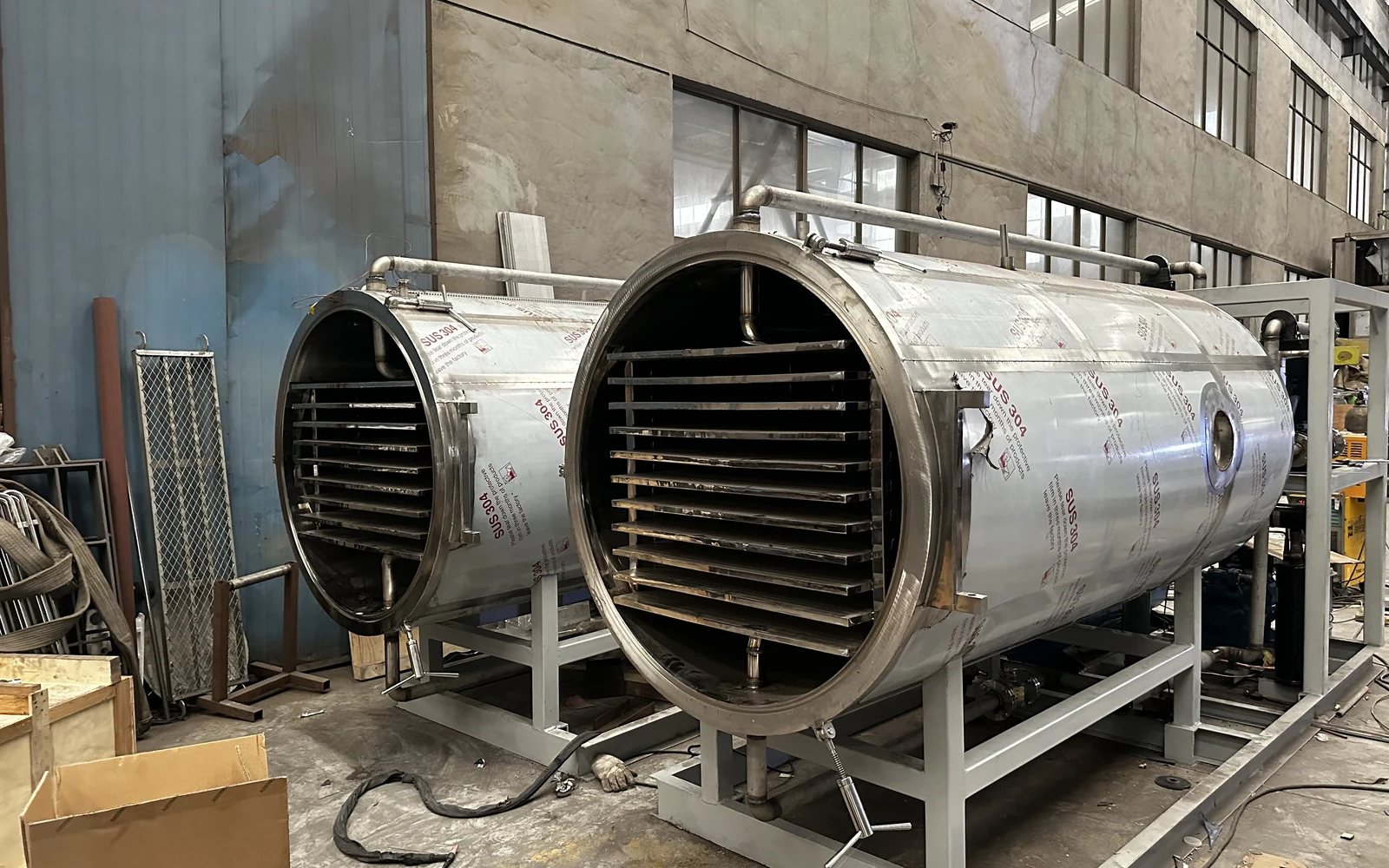
Food Freeze-Drying Production Line
Plan food preparation, tray loading, pre-freezing, vacuum freeze drying, unloading, protective packaging, utilities and project acceptance.
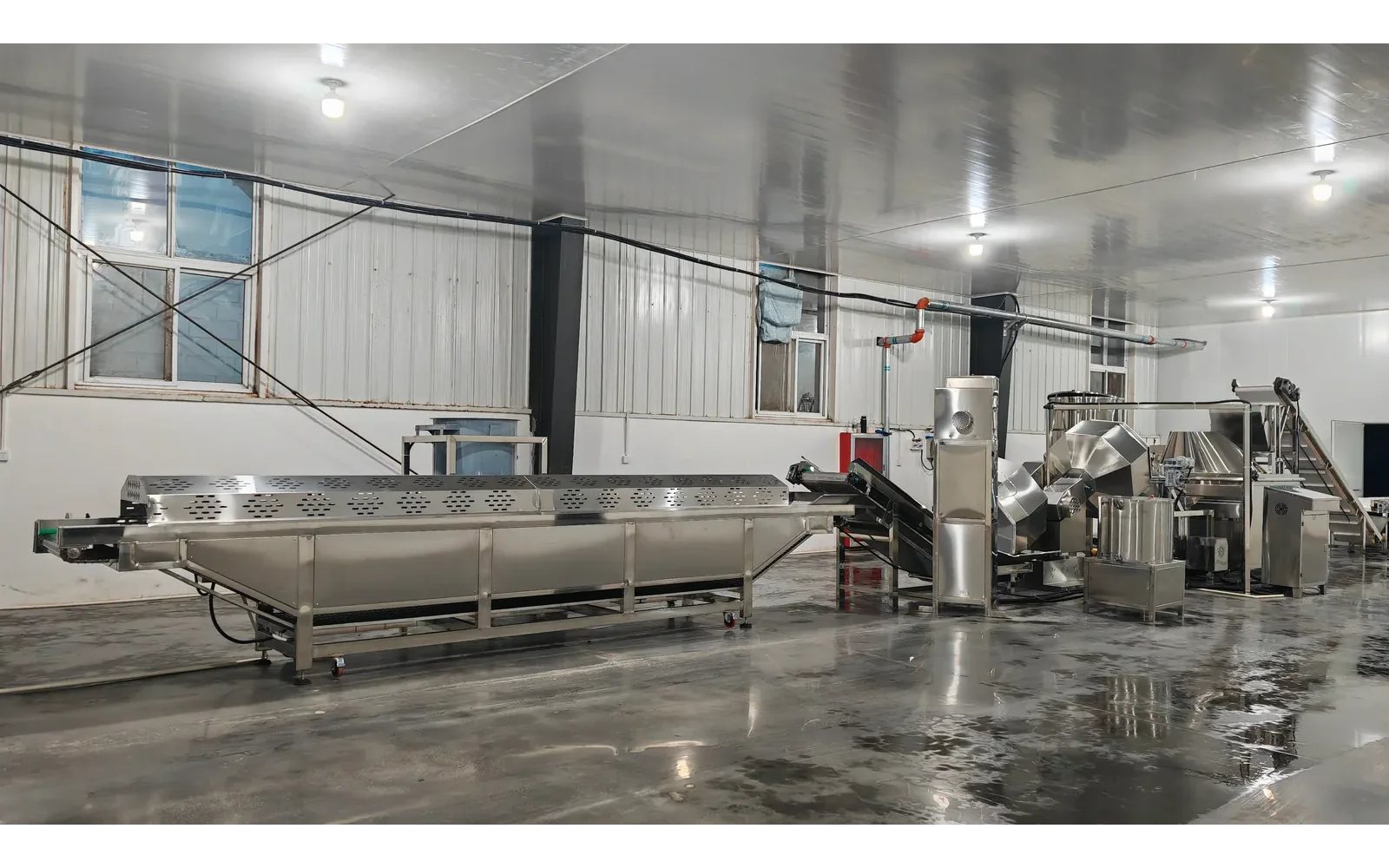
Snack Food Seasoning System
Compare batch and continuous snack seasoning routes, Hadof catalog model references, dosing controls, line interfaces and acceptance criteria.
Dehydrated Vegetable Line
Configure vegetable washing, cutting, blanching, drying and packing for dehydrated vegetables and powders.
Freeze-Dried Fruit & Vegetable Crisps Line
Configure fruit and vegetable preparation, tray loading, pre-freezing, vacuum freeze drying and packing for crisp products.