
IQF Freezing Throughput Balancing
Review the process, equipment duties and project boundary from one defined basis.
Why Does Nominal Freezer Throughput Fail to Define Line Output?
Technical question and source basis
The freezer receives a product load, not an abstract mass flow. Product geometry, piece separation, feed temperature, surface water, belt distribution and the required frozen endpoint determine the duty presented to airflow and refrigeration. Published Hadof model information supports single-stage, two-stage and four-bar fluidized-bed architecture references for granular, flake, strip and block product categories. It also states that freezing amount is customized to product and project demand.
Those references define a selection framework, not a guaranteed net output. Usable production rate must be balanced with upstream cooling or dewatering, feed distribution, refrigeration supply, defrost planning and downstream packing or cold storage.
Nominal freezer throughput fails to define line output because the freezer is only one stage in a connected cold-side line. The published figure assumes a product, a bed loading and a discharge temperature that may not match the buyer's, and it says nothing about the feed, the packing line or the cold store around it. The line output is the slowest stage, not the freezer's nameplate.
The figure also hides the conditions that change it. A wetter product, a deeper bed or a warmer infeed all reduce the throughput a tunnel can deliver, and the same nominal figure then describes a different machine. The line output is a system result, and it has to be calculated from the real product and the real handoffs.
Fix the Load Basis Before Comparing Tunnel Architectures
Required product and operating inputs
Food identity, geometry range, piece mass, surface condition, tendency to stick and acceptable breakage.
Temperature entering the freezer, required discharge or core endpoint and the approved measurement location and method.
Normal and peak feed, hours per shift, product sequence, cleaning interval, defrost strategy and permitted buffer time.
Refrigeration boundary, refrigerant or secondary-fluid responsibility, room conditions, power, drainage, access and downstream cold-chain interface.
Fix the load basis before comparing tunnel architectures, because the architectures differ in how they load and fluidise the product. State the product, its size and surface moisture, the bed depth and the required core temperature, and compare each tunnel against that basis. A tunnel that fluidises one product well may clump another.
Then hold the load basis constant across the comparison. If the bed depth or the inlet temperature changes between options, the comparison is no longer between architectures but between different duties. The load basis is the fixed starting point from which the tunnel length, the air velocity and the refrigeration duty are derived.
State the product, its size and surface moisture, the bed depth and the required core temperature, and compare each tunnel against that fixed basis.
Hold the load basis constant across the comparison, because if the bed depth or the inlet temperature changes, the comparison is no longer between architectures but between different duties.
Translate Load and Airflow Variables Into Selection Risk
Parameter consequences
A higher product depth can reduce exposure and separation even when hourly mass appears acceptable. Distribution should be reviewed across effective belt width.
A warmer or less stable feed condition increases the refrigeration duty presented to the tunnel and can disturb the planned operating window.
Carry-over water and sticky surfaces can influence clumping, belt release, ice formation and the need for upstream dewatering or separation.
Product geometry and bed resistance influence how air reaches each piece. Architecture selection must follow product behavior rather than a generic product label.
The required frozen condition and measurement method influence usable residence. A discharge-air reading cannot replace an agreed product measurement.
Longer campaigns, moisture load and cleaning rhythm affect availability and must be included when converting test rate into production planning.
Wrong-selection risk: comparing only nominal kilograms per hour can create an undersized refrigeration boundary, unstable product separation, overloaded belt zones, unplanned defrost losses or a downstream packer that cannot receive the frozen flow.
Translate the load and airflow variables into selection risk rather than leaving them as engineering details. A deep bed risks clumping, a high air velocity risks blowing light product away, and a wet inlet risks freezing product into a block. Each variable is a risk that the selection must manage, and the architecture is chosen to control them.
Rank the risks for the product and confirm each one has a control. Bed depth is controlled by the feed, air velocity by the fan and the belt, and surface moisture by the upstream dewatering. The selection is then a set of risk controls, and the tunnel is judged by how well it holds them.
Review the Cold Side as a Connected Operating Window
- Define the representative product range and the most demanding approved inlet condition.
- Measure or agree the feed distribution, surface condition and normal-to-peak production rhythm.
- Set the frozen endpoint and sampling method before evaluating residence or belt speed.
- Calculate refrigeration duty within the named equipment and site boundary, including who supplies the refrigeration package and controls.
- Check upstream dewatering or cooling, freezer availability, defrost, discharge transfer, packaging and cold storage as one schedule.
- Record the accepted operating basis and every open value by owner and required evidence.
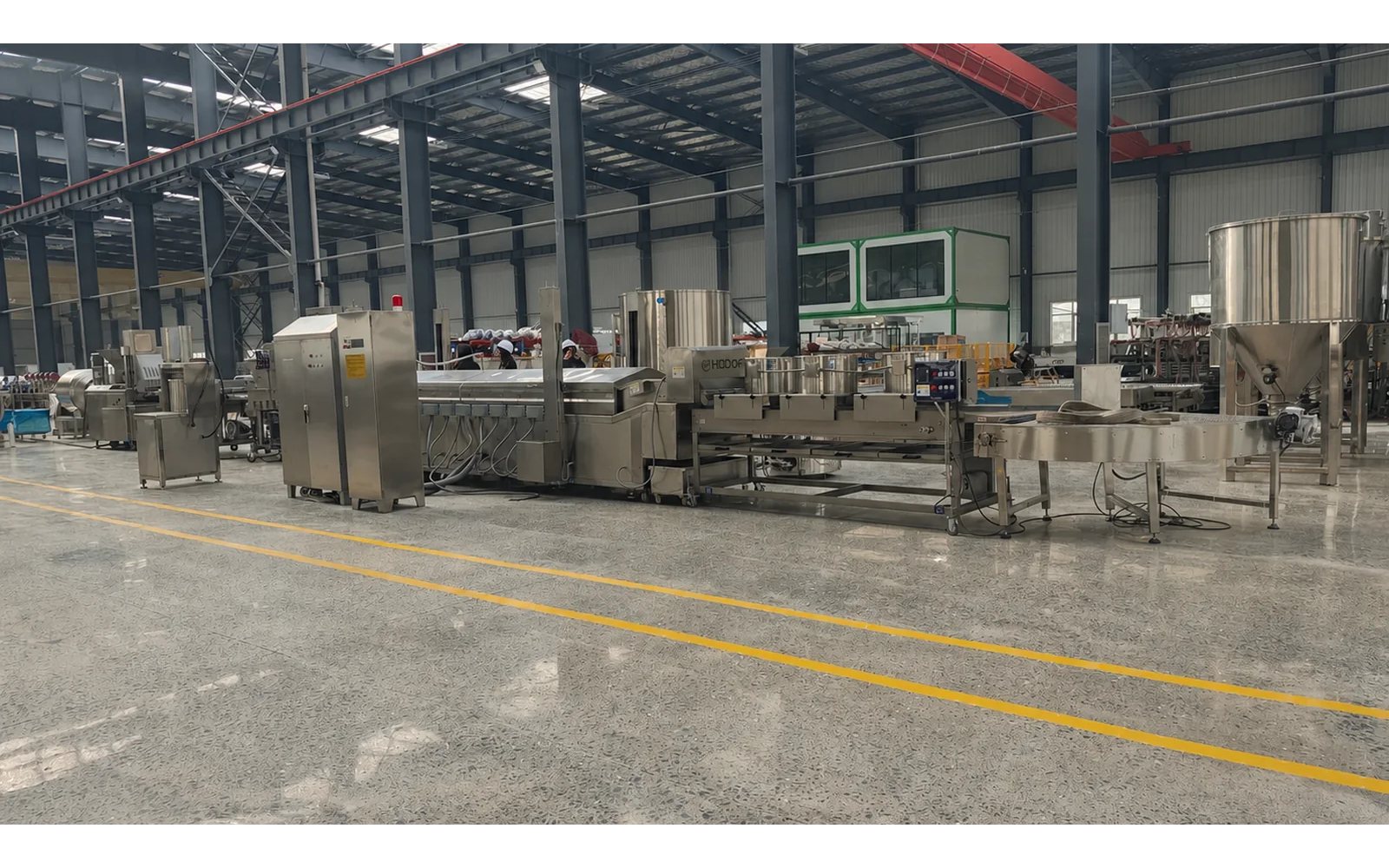
Review the cold side as a connected operating window rather than as a freezer plus some conveyors. The feed, the tunnel, the discharge and the packing line all operate within a temperature and time window, and the product must pass through the whole window without thawing or clumping. The window is the unit of review.
Confirm the handoffs inside the window. The product must enter the tunnel as a separated bed and leave it at the target core temperature, then move to packing without warming. A tunnel that meets its discharge temperature but hands off to a slow packer still fails the window, and the review must catch that before the equipment is bought.
Separate Standard, Higher-Duty and Custom Reviews
Configuration boundary
Standard review
A defined product category, stable inlet condition, continuous feed, agreed endpoint and an available refrigeration boundary.
Higher-duty review
Variable geometry, elevated inlet temperature, high surface water, adhesion risk, long operating campaigns or tighter frozen-state consistency.
Custom project review
Multiple products, staged or multi-zone fluidization, existing refrigeration integration, constrained footprint, shared controls or a special cleaning and defrost strategy.
Separate the standard, higher-duty and custom reviews, because they answer different questions and cost different amounts. A standard review covers a product within the published envelope; a higher-duty review pushes one variable, such as a wetter product or a faster feed; a custom review changes the architecture. Mixing them leads to a standard quotation for a custom duty.
State which review the project needs before requesting a proposal. If the product sits outside the standard envelope, say so, and ask for the higher-duty or custom path with its own trial and its own price. The separation keeps the quotation honest and the supplier's assumptions visible.
State which review the project needs before requesting a proposal, and ask for the higher-duty or custom path with its own trial and price when the product leaves the standard envelope.
Mixing the paths leads to a standard quotation for a custom duty, so the separation keeps the quotation honest.
The separation keeps the quotation honest and the supplier's assumptions visible.
A standard review covers a product inside the published envelope, a higher-duty review pushes one variable, and a custom review changes the architecture, and each has its own trial and price.
That separation is what keeps the quotation honest and the assumptions visible.
Accept the System Against an Agreed Product and Measurement Plan
Testing, FAT and maintenance basis
- Pre-test record: identify product lot, geometry range, inlet temperature, surface condition, feed mass and planned distribution.
- Operating record: capture belt setting, run duration, observed loading, refrigeration conditions and interruptions included in scope.
- Product record: sample agreed positions and times using the defined discharge or core measurement method.
- FAT boundary: state whether the factory test is mechanical, water-based or product-based and which site refrigeration conditions cannot be reproduced.
- Acceptance boundary: distinguish equipment operation from complete-line throughput and product-result acceptance.
- Maintenance basis: confirm cleaning access, belt inspection, fan and drive access, defrost procedure and model-specific service instructions before handoff.
No maintenance interval is published here because the reviewed public source does not provide one for a named selected model.
Accept the system against an agreed product and measurement plan rather than against a demonstration. The plan names the product, the load, the core-temperature target and the positions to be measured, and it is the same at the factory and on site. Acceptance is then a comparison of two measurements of the same thing.
Record the plan with the project and refuse to accept a result that was measured differently. A freezer that passes on a light, dry product and fails on the buyer's wet product has not met the duty, and the agreed plan is what makes that failure visible instead of debatable.
Carry the Same Basis Into Product, Solution and Project Review
Related evidence and decisions
Review IQF architecture, application categories and model-selection inputs.
Trace the warm-process and cold-side handoff in a frozen French fries line.
Review frozen prepared-food factory interfaces and operating risks.
Prepare product, output, utilities, layout and acceptance inputs for technical review.
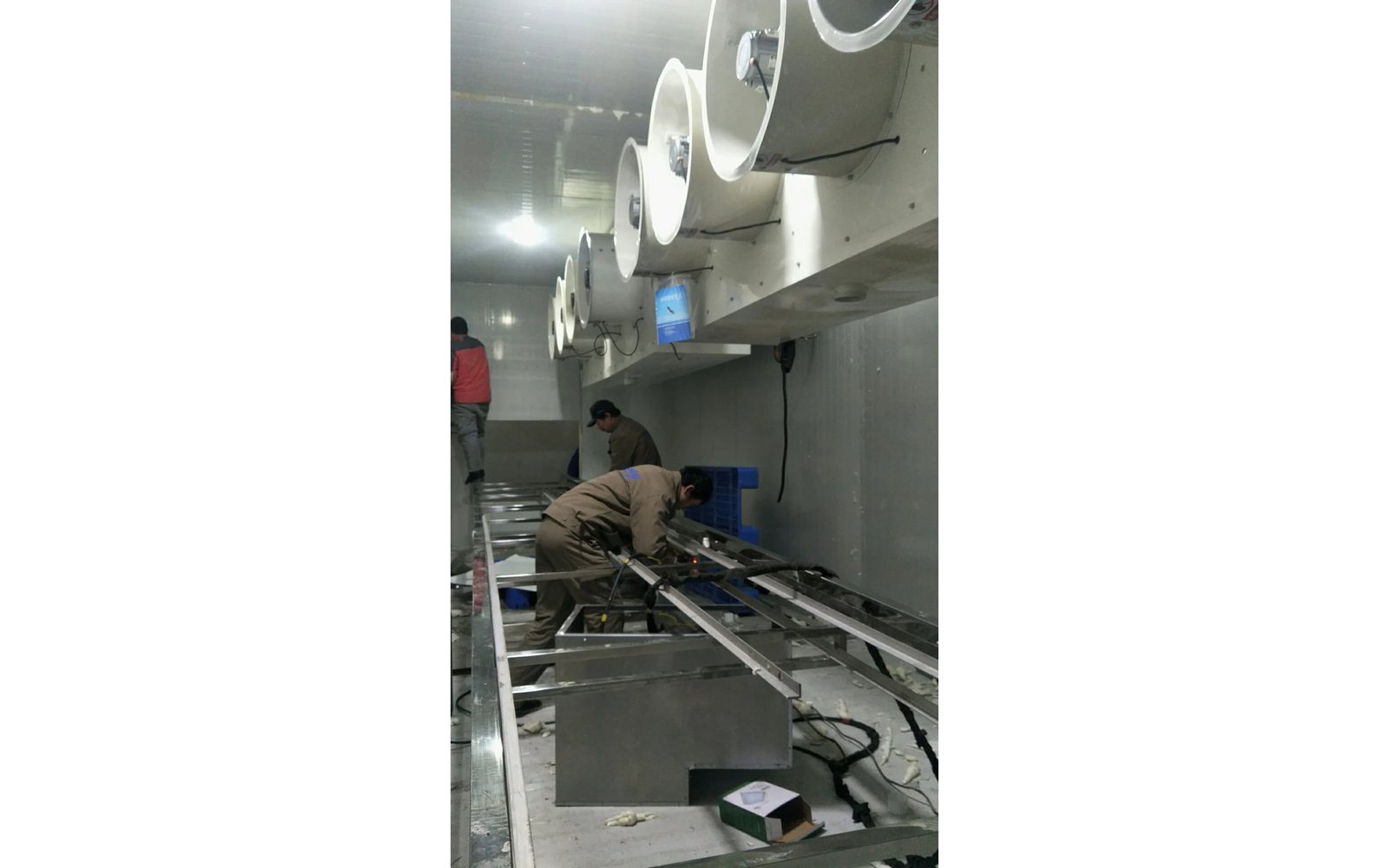
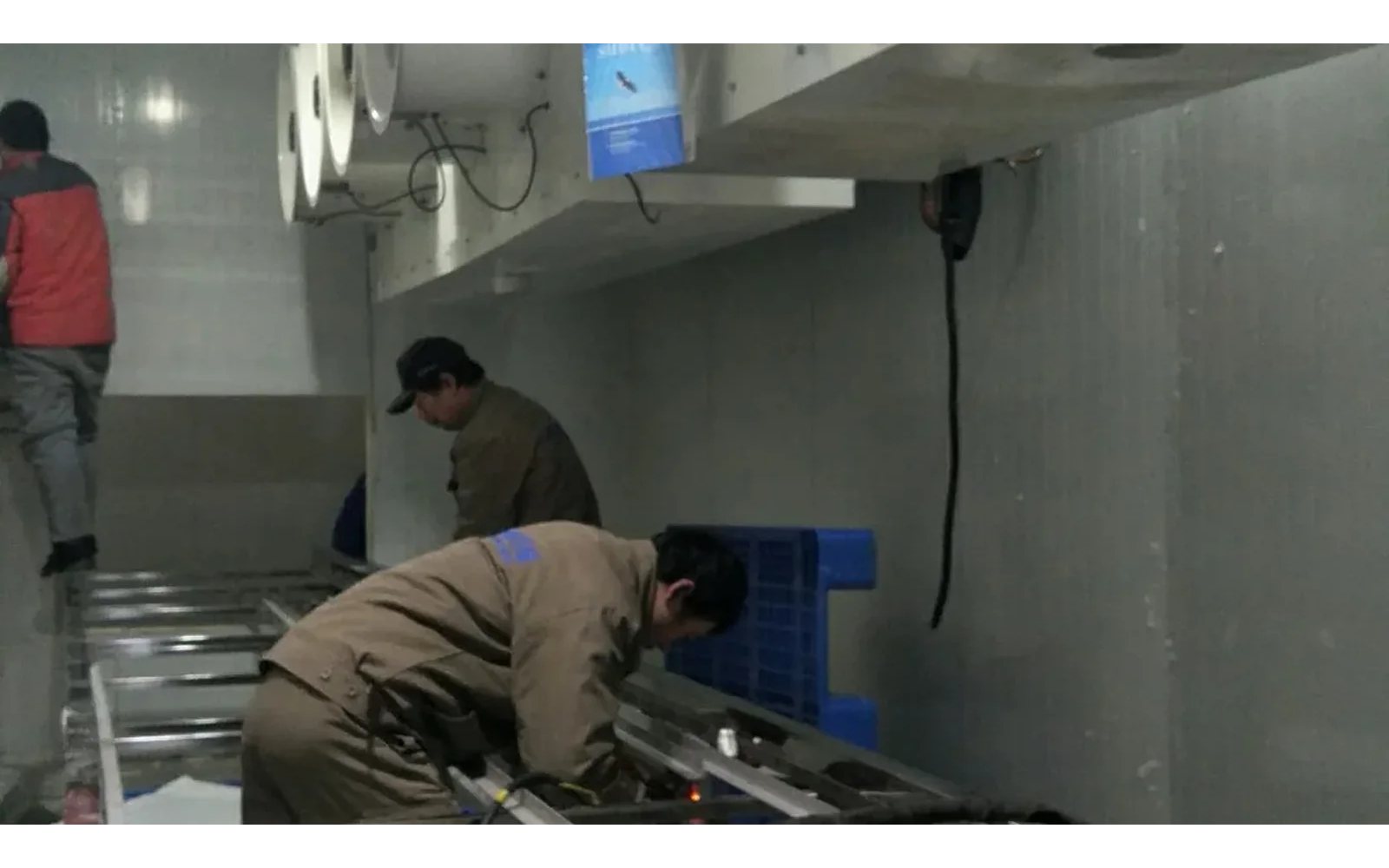
The installation photograph and model values support equipment-family and engineering context only. They do not verify a customer, destination, operating result or universal capacity.
| Catalog architecture references | Single-stage / two-stage / four-bar fluidized-bed arrangements |
|---|---|
| Published application categories | Granular / flake / strip / block products |
| Required thermal basis | Product geometry, inlet temperature, surface water, loading and required frozen endpoint |
| Required operating basis | Normal and peak feed, campaign length, cleaning, defrost, downstream packing and cold storage |
| Project result boundary | Net output and refrigeration duty require project calculation and an agreed product acceptance method |
Frequently asked questions
Why is nominal IQF capacity not the same as usable line output?
Which product data is required for IQF balancing?
When is a custom IQF configuration review required?
What should an IQF acceptance test record?
Is the refrigeration package automatically included?
Carry the same basis into the product, solution and project review so the three reviews do not drift apart. The product review fixes the load and the target temperature; the solution review turns that into a tunnel and a line; the project review adds the scope, the utilities and the acceptance plan. If each review starts from a different basis, the three no longer describe the same machine.
Use one written basis throughout and update it in one place. A change in the product updates the load, which updates the solution and the project in turn. The continuity is what keeps the freezer that was specified, quoted and accepted as the same freezer, and it is the cheapest insurance against a mismatch at commissioning.
Related pages
IQF Freezing Tunnel
Review IQF product loading, fluidized-bed arrangements, frozen endpoint, refrigeration boundary, installation evidence and acceptance scope.
Frozen French Fries Production Line
Review potato preparation, strip conditioning, pre-frying, cooling, IQF freezing, equipment references and factory interfaces as one line.
Frozen Food Processing Systems
Balance preparation, thermal processing, cooling, quick-freezing and refrigeration responsibilities from one approved frozen-product basis.
Berry IQF Freezing Line
Configure berry pre-washing, inspection, colour protection, IQF freezing and packing for whole frozen berries.
Mixed Vegetable IQF Freezing Line
Configure corn, pea, carrot and avocado preparation, blanching, IQF freezing and packing into a mixed-vegetable line.