
Technical selection question
Continuous Fryer Selection Engineering
Review the process, equipment duties and project boundary from one defined basis.
Which Configuration Can Perform the Required Frying Duty in This Factory?
Technical selection question
Use model, heating route, output reference, power, dimensions and weight to identify candidates. Approve the configuration against the actual food, operating condition and required finished result.
Published values narrow the candidates; representative product and project inputs confirm the choice.
| Model range | Compare four electric configurations and one gas-heated configuration. |
|---|---|
| Project inputs | Define product condition, loading, utilities, interfaces and acceptance method for the current inquiry. |
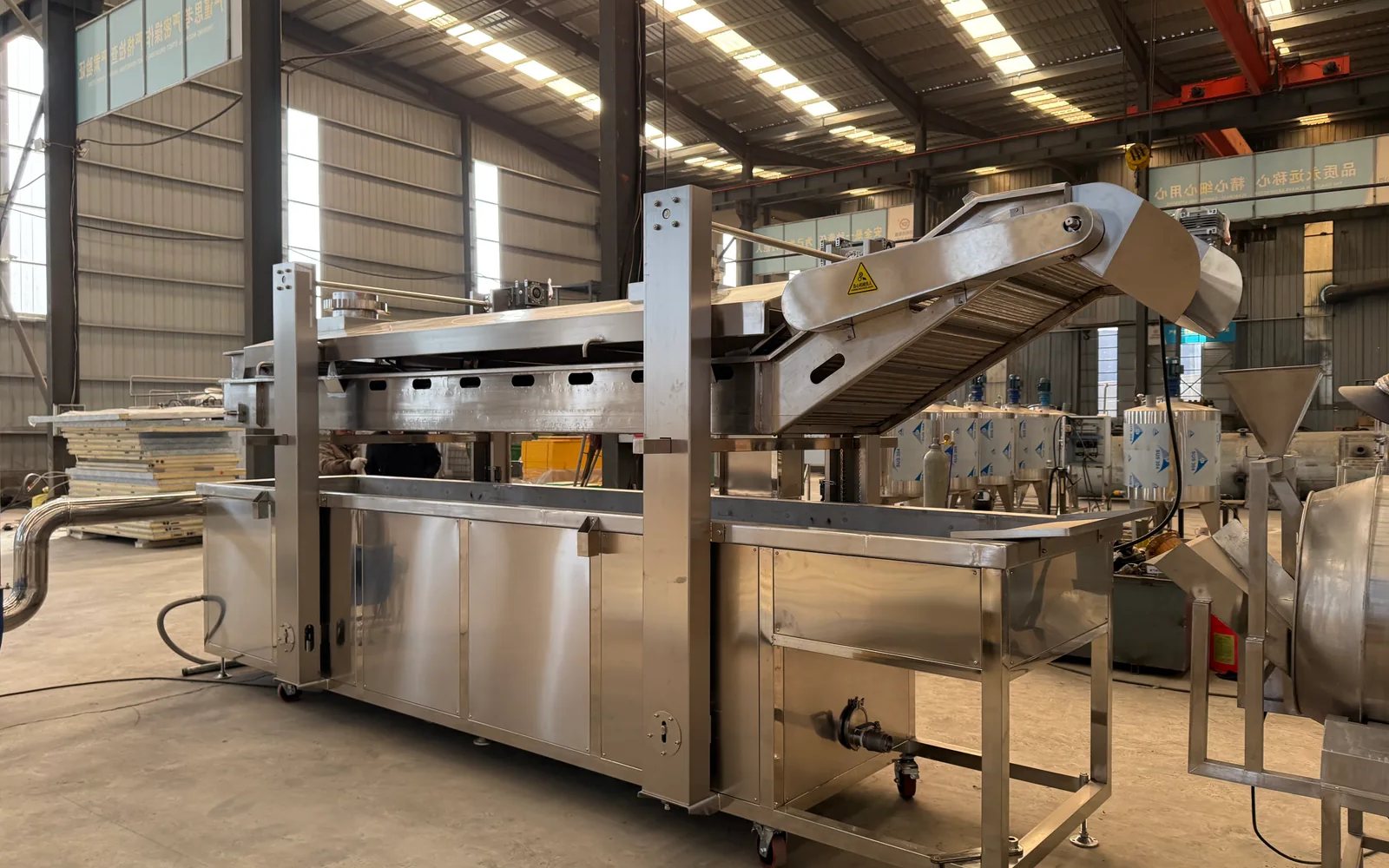
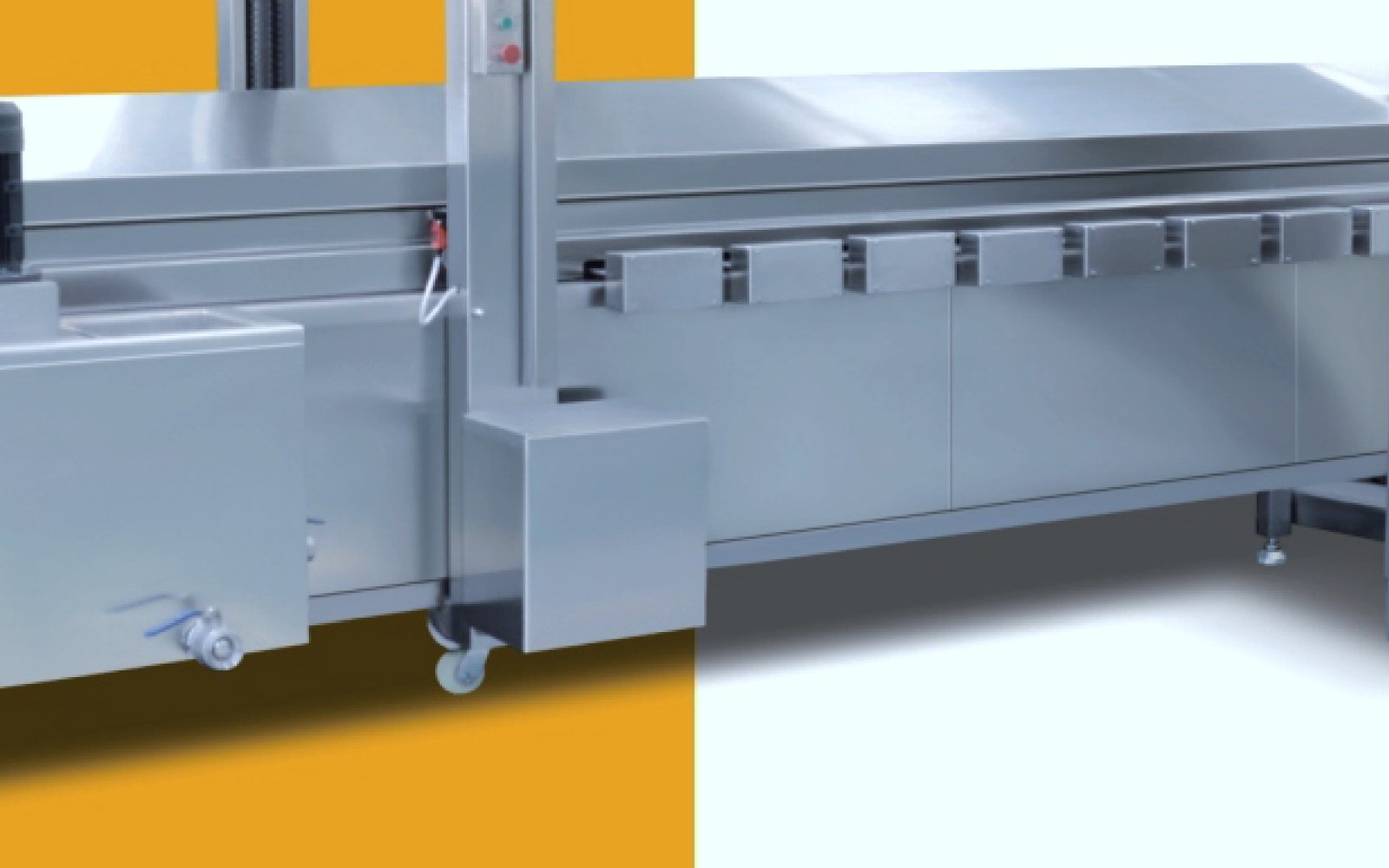
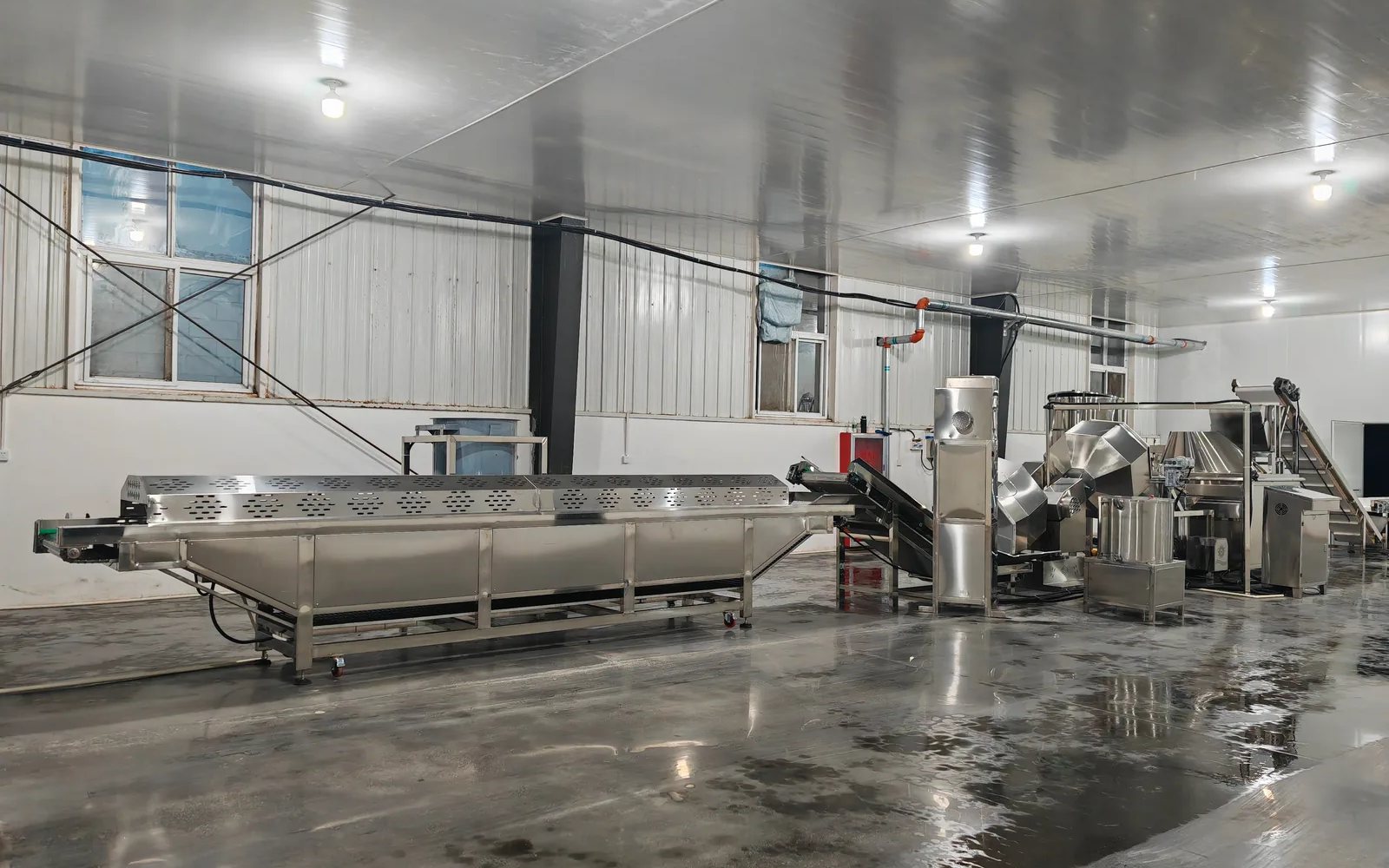
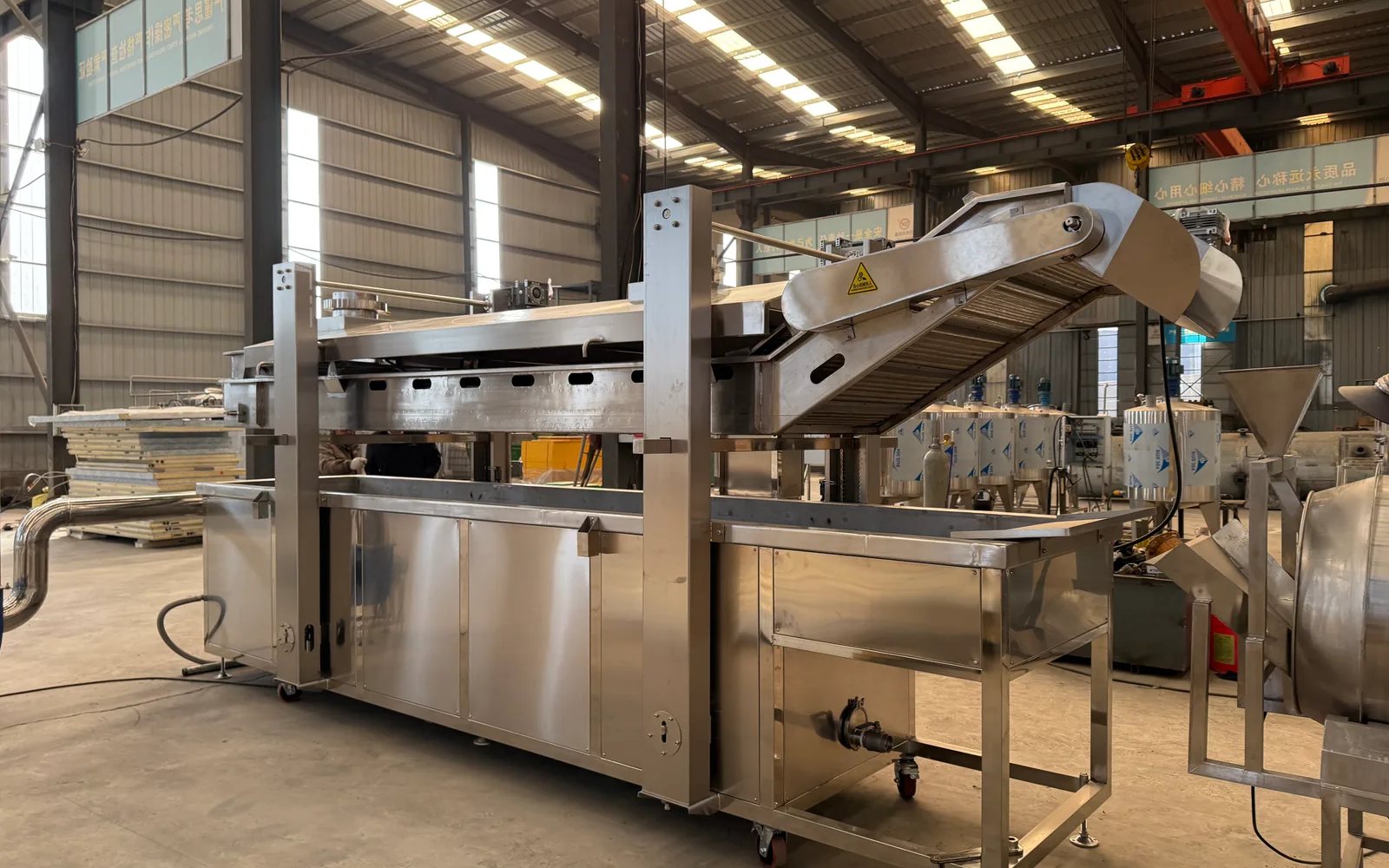
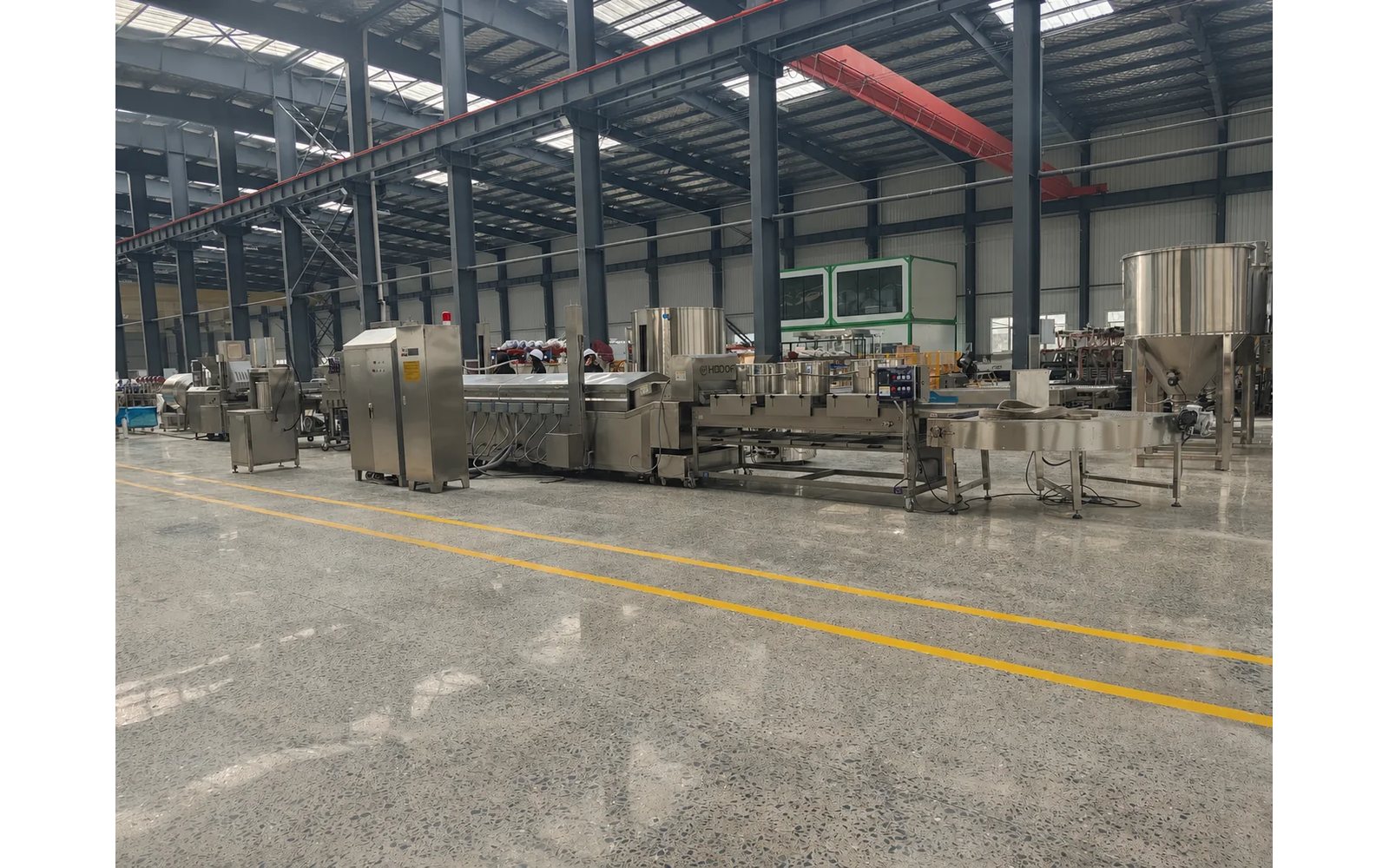
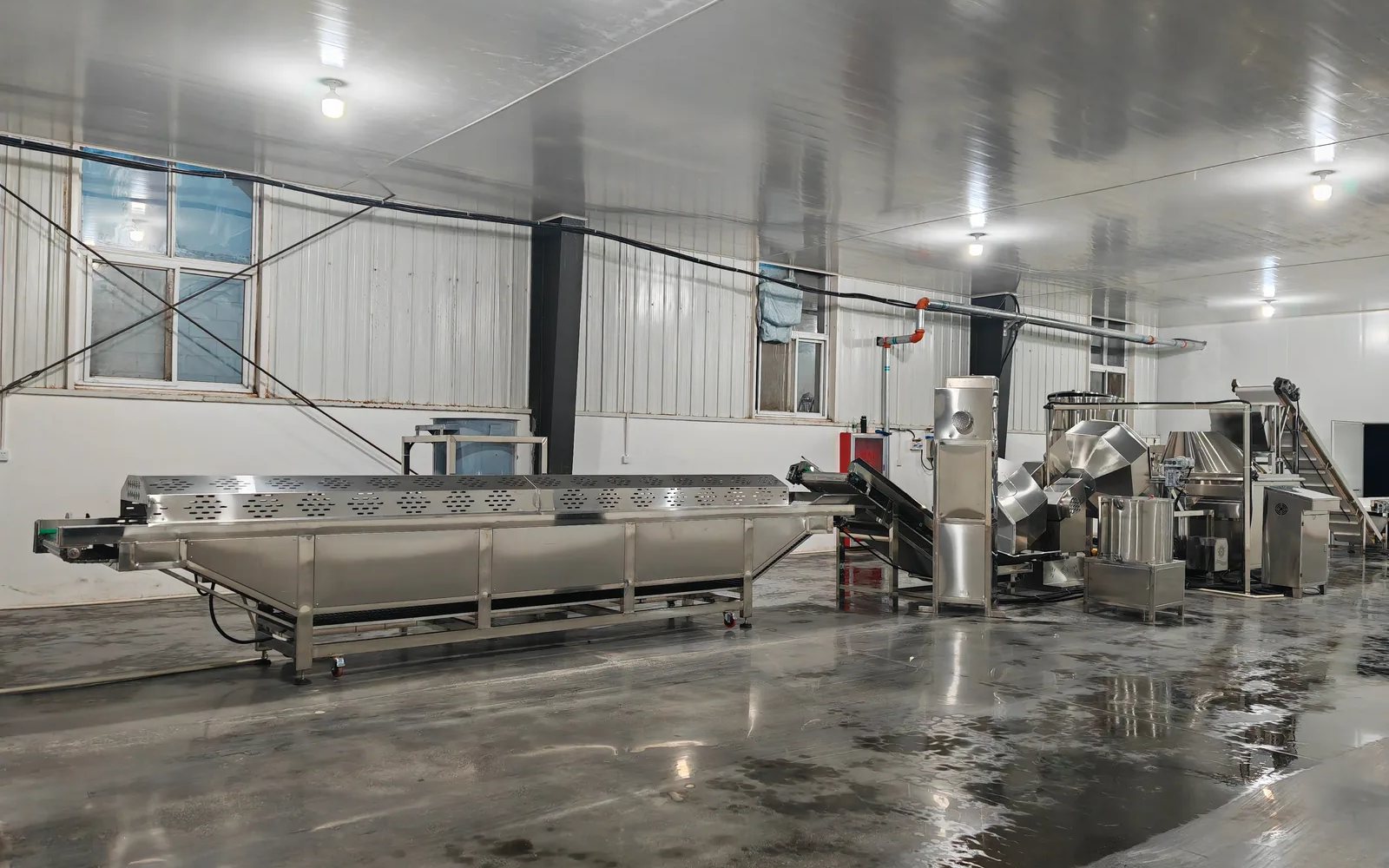
| Workshop context | Use equipment photography to review construction and access, not to assume a specific operating result. |
| Comparable scope | The HDF34 example includes fryer and oil-filter duties; the current product, output and performance basis still require confirmation. |
Begin with the configuration question rather than a model question, because the frying duty is defined by the product and the factory together. The product sets the temperature, the residence time and the belt loading; the factory sets the fuel, the space and the extraction. A configuration is right only when it can perform that duty in that factory.
Write the duty down before comparing references. State the product and its moisture, the required output and the finished moisture or colour, then add the available utilities and the site constraints. The configuration question is answered by reconciling those facts, and no catalog can answer it on its own.
Freeze five inputs before comparing references.
Required product and operating inputs
A change in one input can change heating duty, residence review, oil circuit, belt loading, downstream condition or factory scope.
Food
Geometry, coating, composition and fragility.
Feed
Temperature, surface water, distribution and rate.
Result
Buyer-defined thermal and finished condition.
Operation
Net output, hours, changeovers and cleaning window.
Available electricity or fuel, extraction, drainage, oil handling, room geometry, controls and downstream transfer complete the selection input.
Freeze five inputs before comparing references: the product, the output, the finished result, the heating utility and the site constraints. Any one of these left open changes the comparison, and a reference that fits one set of inputs does not fit another. Freezing the inputs is what makes the reference review meaningful.
Record the inputs in one place and keep them unchanged through the comparison. When a supplier asks to change an input, the comparison should restart from the new input set, not quietly absorb the change. Five frozen inputs are the fixed basis that every reference is measured against.
Record the inputs in one place and keep them unchanged, and when a supplier asks to change one, restart the comparison from the new input set.
Five frozen inputs are the fixed basis that every reference is measured against.
Read what each number changes.
Parameter consequence map
Do not compare a value until the team agrees what operating consequence it represents.
A reference is not a line guarantee.
Food loading, feed condition, residence requirement, operating window and adjacent-stage balance change what the line can sustain.
The value changes more than operating cost.
It affects utility provision, control design, installation responsibility and how the thermal duty is reviewed for the food.
An envelope does not prove factory fit.
Add transfer heights, extraction, cleaning movement, maintenance clearance, component removal, lifting and operator routes.
The oil circuit is a system boundary.
Replenishment, filtration, cleaning, return, safety review and project-party ownership should appear in the scope and test plan.
Read what each number changes rather than accepting it at face value. A fryer reference lists a belt length, an oil volume, a heat input and an output, and each number changes the others. A longer belt changes the residence time, a larger oil volume changes the temperature recovery, and a higher heat input changes the energy cost.
Trace the numbers through the product. Convert the output into belt loading and oil residence, and check whether the heat input recovers temperature after a cold load. The numbers only mean something when they are read together with the product they must serve, and the review is about those connections, not about the largest figure.
Four shortcuts create avoidable project uncertainty.
Wrong-selection risks
Output-only comparison
Ignores the food and condition behind the reference.
Fuel-only decision
Misses utility, extraction, controls and installation consequences.
Machine-only scope
Leaves feed, oil, discharge and signal interfaces unresolved.
Late acceptance planning
Creates disagreement about product, duration, records and sign-off.
Four shortcuts create avoidable project uncertainty, and each one is a way of skipping the product basis. Choosing a model by capacity alone, copying a reference without the product, fixing the belt before the oil system, and pricing the fryer without the filtration and extraction all produce a configuration that looks decided but is not.
Recognise the shortcuts and refuse them. The model follows the duty, the reference is read with its product, the belt and the oil system are sized together, and the price includes the complete frying responsibility. Avoiding the four shortcuts is what keeps the project from being reopened later at greater cost.
The model follows the duty, the reference is read with its product, the belt and the oil system are sized together, and the price includes the complete frying responsibility.
Avoiding the four shortcuts is what keeps the project from being reopened later at greater cost.
The price includes the complete frying responsibility.
Escalate the review when the operating basis changes.
Standard, higher-duty and custom boundaries
Catalog-reference review
Known food, stable feed, standard interfaces and documented local utilities.
Higher-duty review
Longer operation, difficult loading, additional filtration, tighter controls or demanding cleaning access.
Custom project review
Nonstandard transfer geometry, controls integration, documentation, materials or factory limits.
Open commercial scope
Quotation changes with the approved configuration, testing, packing, delivery and support boundary.
Escalate the review when the operating basis changes instead of carrying the old configuration forward. A new product, a higher output, a different fuel or a different shift pattern all change the frying duty, and a configuration that was right before is not right after. The review should restart from the new basis.
Make the escalation explicit in the project. When the basis changes, record the change and re-check the configuration against it, rather than adjusting the old answer at the edges. Escalating early is cheap; discovering the mismatch during commissioning is not.
Record the change and re-check the configuration against it, rather than adjusting the old answer at the edges.
Escalating early is cheap; discovering the mismatch during commissioning is not.
Record the change and re-check the configuration against it, because a configuration that was right before is not right after.
A new product, a higher output, a different fuel or a different shift pattern all change the frying duty, and the review should restart from the new basis.
Escalating early is far cheaper than discovering the mismatch during commissioning.
Restart the review from the new basis instead of carrying the old configuration forward.
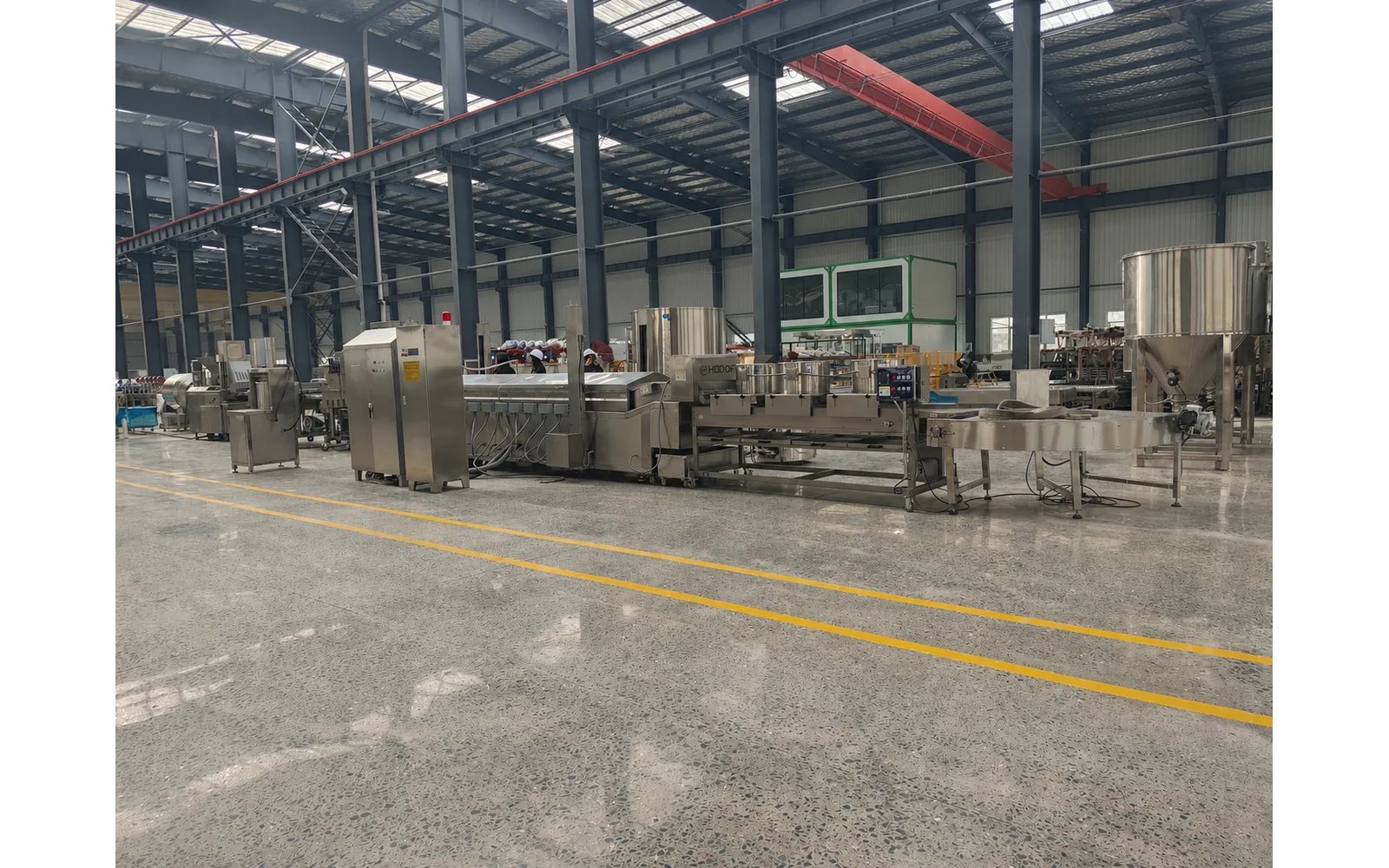
Define what the factory test can prove.
Test basis, FAT and maintenance basis
Record the representative food or approved substitute, loading, run duration, inspection points, data, responsibilities and limitations. Maintenance intervals and wear parts are taken from the approved selected-model manual and operating duty.
| Electric model references | HDF-4000 / HDF-5000 / HDF-6000 / HDF-8000 |
|---|---|
| Gas model reference | HDF-4000 |
| Published output reference range | 500-1500 kg/h |
| Selection basis | Product, feed condition, result, operating plan and factory interfaces |
Frequently asked questions
Which input most often changes continuous fryer selection?
Why should catalog output not be compared in isolation?
When is a higher-duty or custom review required?
What should be included in FAT planning?
Define what the factory test can prove before running it. A test can prove that the fryer holds temperature and residence for a specific product at a specific output, and it can measure the finished moisture and colour. It cannot prove how the fryer will perform for a different product or across a full year of operation.
Write the test limits into the plan and keep the result inside them. The factory test is evidence for the conditions it covered, and it is the buyer's job to decide whether those conditions match the production plan. A test that proves the right thing is invaluable; a test that proves the wrong thing is a comfort, not a control.
Related pages
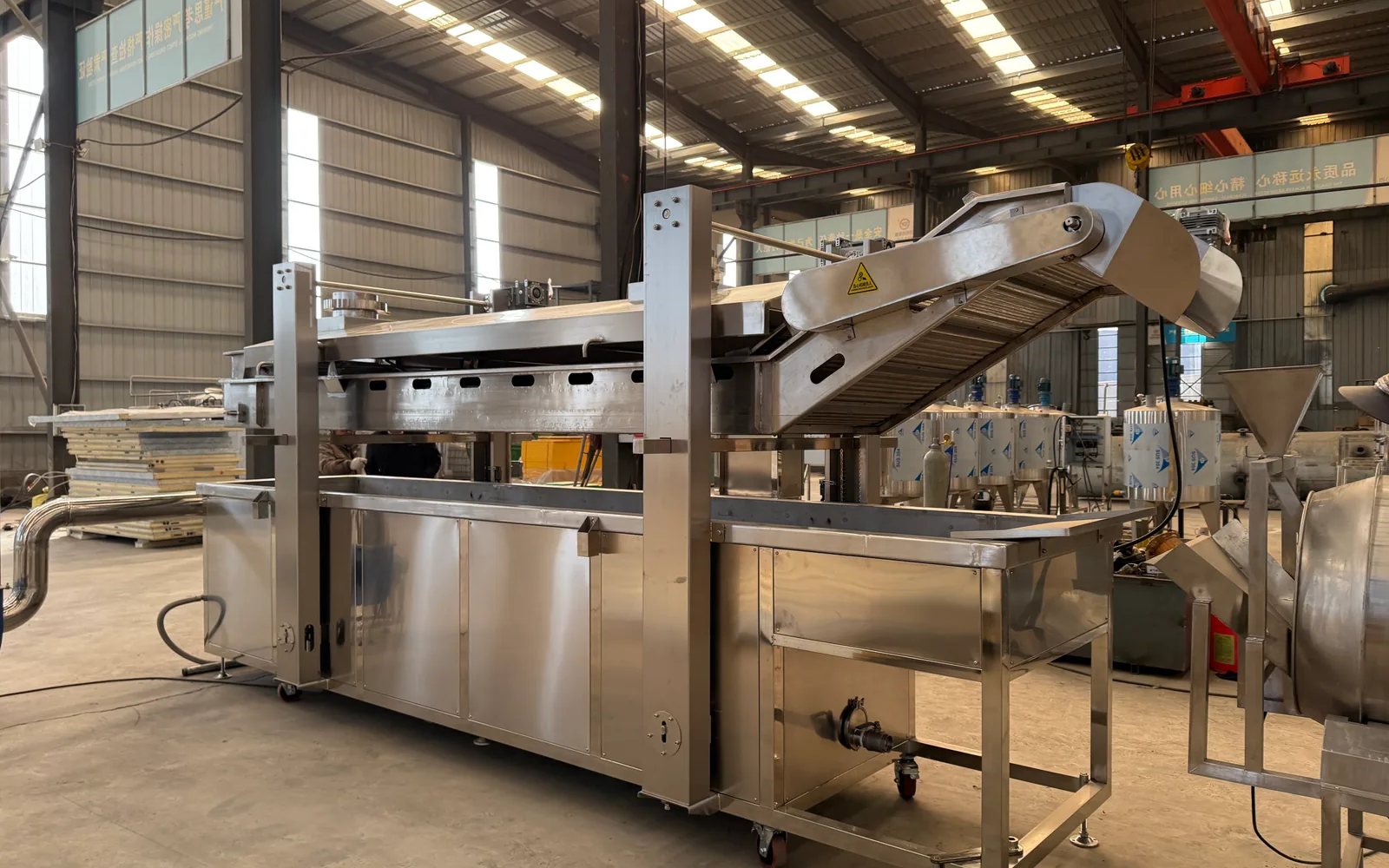
Continuous Fryer
Compare verified Hadof continuous fryer references, then review product loading, heating route, oil handling, factory interfaces and acceptance scope.
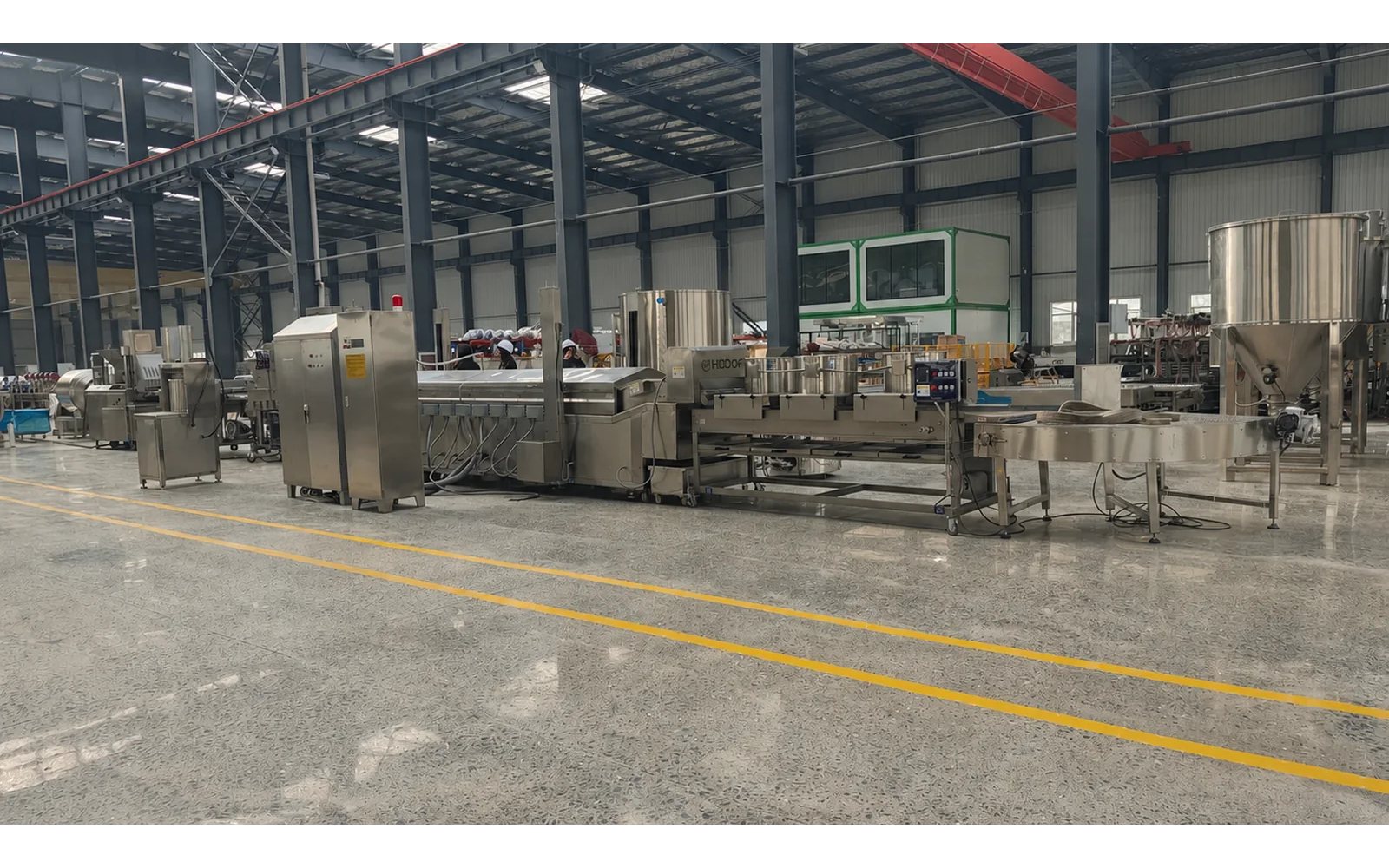
Potato Chips Production Line
Define the potato, finished chip and factory boundary before connecting preparation, frying, seasoning and packaging feed.
Fried Food Processing Line
Configure preparation, frying, oil handling, cooling, seasoning and freezing around the finished product, factory and acceptance basis.
Nut Frying Production Line
Configure nut and bean feeding, frying, oil handling, seasoning, cooling and packing around product evidence, utilities and acceptance criteria.

Continuous Fryer and Oil-Filtering Project
Review a verified Indonesia supply scope connecting a continuous frying machine with dedicated oil-filtering equipment and evidence limits.
Banana Chips Production Line
Configure banana or plantain peeling, slicing, treatment, batch or continuous frying, seasoning and packing from representative raw material.